Apple Podcasts
 Spotify
 PocketCasts
 RV PODCAST NEWS: Why are Campervans and Class B RVs so Expensive?!!

Jennifer and I just spent a week doing hands-on reviews of six small motorhomes - Class Bs and compact Class Cs.
And I have some things to say about what they cost. Strong things. Things that have been building for a while. We are going there today - including a hard look at the manufacturers who are trying to capture the low end of this market with rigs that are, frankly, not worth what people are paying for them.
Then - tariffs. On April 6th, new steel and aluminum duties took effect. And if you thought that Winnebago or that Newmar was already out of reach - this story is not going to make you feel better.
And we close with a story about 193 million acres of public land and a federal agency reorganization that could change how - and whether - you access your favorite camping territory.
Check out RVCommunity.com for a no ads, hassle free online community made up of real RVers.
Get our Trip Planning Bundle - 4 apps in one money-saving bundle - RVLifestyle.com//WebAppBundle
See the transctipt tab for complet6e shownotes, lins and sources to everything in this episode.
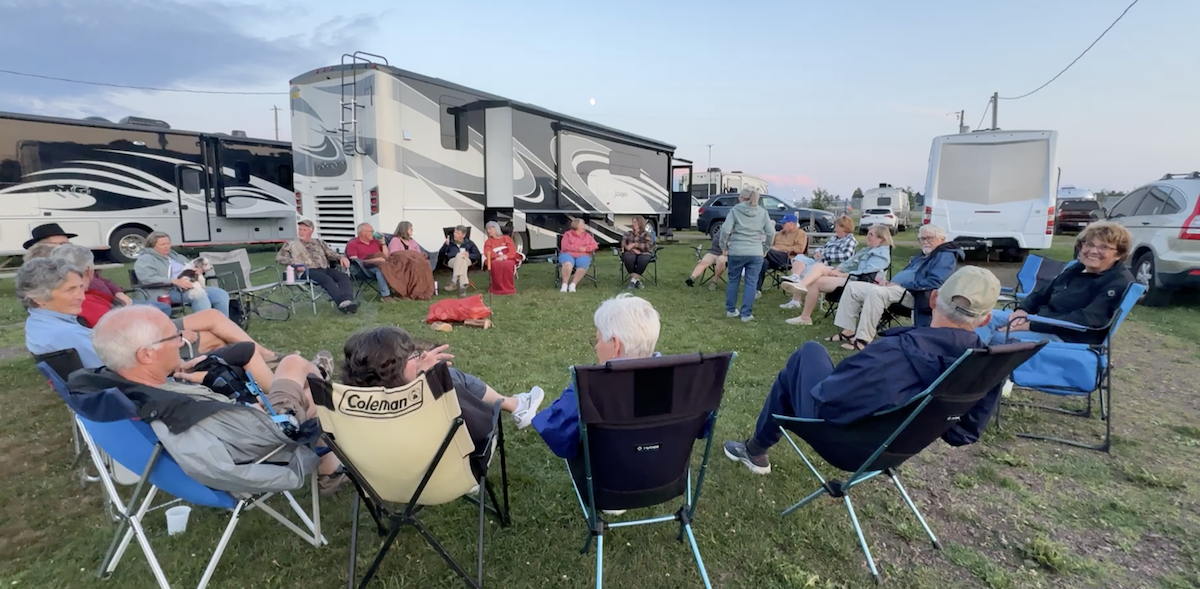
Become a part of the Internet's Best RV Community
Private. Ad Free. No Facebook Nastiness.
RV Travel Tips, Rallies and Meet-Ups, interactive livestreams, exclusive workshops, perks, discounts and Real Help from Real Rvers.
Good morning and welcome to the RV Lifestyle Podcast. I'm Mike Wendland.
Thirty years of journalism. Eighteen Emmy Awards. Wars, elections, investigative reporting, consumer affairs - I have covered a lot of ground in this business. And the one thing that never changes, no matter the story, no matter the beat, is this: the facts matter. Sources matter. You do not say something on air unless you can back it up.
That is how we do this show. Every story you hear this morning is sourced. Primary sources. Industry data. Official filings. Real owner accounts. And every link - every single one - is waiting for you in the full transcript at rvpodcast.com. Click, verify, dig deeper. That is how journalism is supposed to work, and that is how we do it here.
Three stories for you this Monday morning.
Jennifer and I just spent a week doing hands-on reviews of six small motorhomes - Class Bs and compact Class Cs. And I have some things to say about what they cost. Strong things. Things that have been building for a while. We are going there today - including a hard look at the manufacturers who are trying to capture the low end of this market with rigs that are, frankly, not worth what people are paying for them.
Then - tariffs. On April 6th, new steel and aluminum duties took effect. And if you thought that Winnebago or that Newmar was already out of reach - this story is not going to make you feel better.
And we close with a story about 193 million acres of public land and a federal agency reorganization that could change how - and whether - you access your favorite camping territory.
But first - before we get into any of that - I want to take sixty seconds and talk to you about RVCommunity.com.
RV COMMUNITY
If you have been listening to this show for any length of time, you know that Jennifer and I do not do things halfway. The community we built at RVCommunity.com is the same way. No ads. No promotions. No one trying to sell you something. Just a private, members-only space where serious RVers - people who actually live this lifestyle, not just talk about it - share what they know.
Trip reports from real roads. Gear recommendations from people who have actually used the gear. Honest answers to hard questions about rigs, routes, campgrounds, and everything in between. And access to everything we produce - the Masterclass, the guides, the workshops - all in one place.
We have got members who have been with us since the beginning and members who joined last week. What they have in common is that they take this lifestyle seriously. If that sounds like you - come find us. RVCommunity.com. First month is on us. Come see what it's about.
All right. Let's get into the news.
STORY 1: A Quarter of a Million Dollars. For a Camper Van. We Need to Have This Conversation.
I want to start today with something I have been sitting with all week.
Jennifer and I just finished a detailed, hands-on review week with six small motorhomes. Class Bs - the camper vans - and compact Class Cs. These are the rigs that promise freedom in a maneuverable package. Park anywhere. Drive anything. The urban adventurer's dream. The solo traveler's best friend. The couple-who-doesn't-want-to-deal-with-a-40-footer solution.
And after a full week crawling through all six of them for our detailed reviews - here is my verdict.
They are spectacular. And the prices are absolutely, completely, out-of-their-minds insane.
I am not being dramatic. Let me give you the actual numbers from the rigs we reviewed, because I want you to hear this.
The Coachmen Beyond Li3 - a 22-foot Ford Transit-based camper van with all-wheel drive and a lithium battery system. Nice rig. Well thought out. MSRP just over $201,000.
The Winnebago View 24RB. A 25-foot Class C diesel built on a Mercedes-Benz Sprinter. Beautiful interior, solid off-grid capability. MSRP: $272,940.
The Newmar Freedom Aire. Newmar's entry into the compact luxury Class C market. Amish-built cabinetry, king Murphy bed, full-paint exterior, Lithionics lithium batteries. Twenty-six feet long. Pricing on the lot averages around $329,000.
A third of a million dollars. For a 26-foot motorhome.
Now look - I spent a week in these rigs. They are genuinely impressive. The craftsmanship in the Freedom Aire, especially. You open a cabinet door in that thing and it feels like furniture from a high-end home. The Winnebago View is a legitimate road machine. The Coachmen Beyond punches way above its size class. These are not bad products. Not even close.
But here's the question: Why does a van that sleeps two people cost more than a house in many parts of this country?
And the answer - when you actually dig into it - is not simple greed. There are real structural reasons these rigs cost what they cost. Jennifer and I have been doing this for 15 years and have been in every type of RV ever built. So let me break it down for you the way I understand it after a week of kicking tires on these things.
First - the chassis. Before a single cabinet goes in, you are starting with a Mercedes-Benz Sprinter or a Ford Transit or a Ram Promaster. The cost of the base van is relatively high - and the camper van's small size then limits the available living space, further increasing cost per square foot. You are paying premium vehicle prices for your foundation, before the RV builder has touched a thing.
Second - the custom engineering. While a larger RV is essentially two structures - a vehicle and a living area - a Class B is all one unit. Everything needs to be specially designed to fit a smaller space. Companies cannot just use products built for larger motorhomes because they will likely be too large. Every cabinet, every appliance, every electrical component in these rigs is purpose-built or custom-specified for that exact footprint. That is not cheap. That is not fast. That is hand-craftsmanship by skilled workers in tight spaces.
Third - and this one surprised some people I've talked to - in a Class A or Class C motorhome, only the chassis has to meet automotive crash standards. The living space is just a box they bolt on, an RV addition if you will. But in a Class B, or small Class C - which marketers call a B+ - the living space is built directly into the vehicle body, requiring the entire rig to be tested to automotive safety standards. That is a completely different and significantly more expensive compliance process.
Fourth - low production volumes. Leisure Travel Vans, one of the gold-standard Class B+ builders, produces about 600 units a year, and most are sold before they even hit dealer lots. Six hundred units. For the whole world. When you make 600 of something, every single one has to carry a much larger share of the company's overhead, engineering costs, and tooling. There are no economies of scale to pass on to the buyer. Most mave an MSRP of well over a quarter of a million dollar.
And fifth - premium materials and technology. Class B camper vans often include advanced features such as solar panels, lithium-ion batteries, and intelligent home automation systems - all of which significantly increase cost. The Newmar Freedom Aire we reviewed had Lithionics lithium batteries, hydronic heating, an all-electric induction cooktop, Starlink prep, and Amish hardwood cabinetry. In 26 feet. The level of systems integration is genuinely impressive - and genuinely expensive.
So yes. I get it. I understand why these rigs cost what they cost.
But understanding the cost structure does not mean we should all just shrug and move on. Because there is a market failure happening here that is starting to price real people out of the lifestyle they love.
Analysts note that compact Class B vans cater to urban buyers seeking versatility and maneuverability - but that their high pricing limits broader market penetration. That is a polite way of saying: a lot of people want these rigs and cannot afford them.
And it is not just the vans. Airstream travel trailers - which we also reviewed this week - are almost uniformly over $100,000 now, with many flagship models well beyond that. Same story with premium fifth wheels. Same story with toy haulers with serious features. The entire upper tier of the RV market has drifted into territory where the middle-class buyer is increasingly a spectator.
I have heard from people in our community - at rallies, in the emails that come in every week, in our private RVCommunity.com membership group - who have been saving for years to get into a compact motorhome. They want something manageable, capable, and self-contained. They look at the sticker on and they are stopped cold.
Now. Before you industry execs in Elkhart fire off that email telling me I'm wrong - I know the industry will push back. The marketing wiz’s will say quality costs money. They will say demand drives price. They will say the people who are buying these rigs can afford them. And they are not entirely wrong.
The people writing checks for Newmar Freedom Aires and Winnebago Views are not exactly clipping coupons. Manufacturers have moved deliberately upmarket, chasing the margins that come with buyers who do not finance their way into a rig. That is a legitimate business strategy. I understand it.
But here is what I also watched this week, right alongside those six reviews. I dug into the industry's own data. And the picture it paints is not comfortable.
The RV industry posted a 14-plus percent year-over-year shipment decline in January 2026. Not a rounding error. Not a seasonal blip. Fourteen percent. Dealers are sitting on inventory levels roughly 16 percent higher than demand can absorb. This is not a healthy industry right now.
And yet - in that same environment, the compact motorhome segment keeps growing. Market analysts are projecting the Class B category expanding at 6 to 7 percent annually through the end of the decade. Not shrinking. Growing. People love these rigs. The demand is absolutely real.
So here is the question that has been sitting with me all week. The broad RV market is contracting. The highest-priced-per-square-foot segment is expanding. How do those two things coexist without something eventually breaking?
Because loving something and being able to afford it are two completely different things.
And now here is the part that really gets under my skin. There is another response happening in this market. And it is not good.
Some manufacturers - and you know who they are - looked at all this pent-up demand for compact, affordable motorhomes and saw a business opportunity. And their answer was not to build a better product at a lower price point. Their answer was to crank out a parade of cheap Class Bs and entry-level compact Class Cs, priced in the low $100,000s, some in the high $90,000s. New models, new floorplans, new names - roll them out, get them on dealer lots, move the metal.
In Thor's own filings with the SEC, the company identifies itself as an entry-level manufacturer. And RVers in the online forums have been asking the same question for years: who builds a cheaper motorhome than Thor? With continuously diminishing quality over the last couple years, why are people still overpaying for lower quality - for the same components and layout?
That is not my editorial. That is what RV owners are saying on the forums. And the complaints are documented and consistent. On one review site, a buyer of a brand-new 2025 Thor Gemini described a water heater installed backwards, wrong coolant, misinstalled electronics, and mismatched batteries that did not work with the solar setup - all from day one. Five months in, the manufacturer's rep stopped returning emails. A buyer of a 2025 Thor Outlaw described water pouring in from the rear roof AC unit after a single trip from Michigan to Kentucky - and Thor refused the repair.
These are not rare stories. Search any RV owner forum for cheap Class B quality and you will find pages of them. Delamination. Mislabeled fuse boxes. Wiring that rubs through on a slide. Cabinets that come apart. Systems that were never properly tested before the rig left the factory.
Here is the business model that produces this: manufacturers roll out new model year products where the updates are mostly graphics or trim - not true redesigns. To keep prices down - or profits up - manufacturers quietly swap out solid-surface countertops for pressed laminate, remove drawers, downgrade entertainment systems, or cut out little touches like sink covers or power awnings. Industry insiders call it de-contenting. You get a rig with a brand-new model year badge, a splashy new name, a fresh floor plan drawing - and cheaper guts than the version it replaced.
Industry executives themselves have confirmed this publicly. Staying competitive in this market forces them to do de-contenting - reducing features and vehicle offerings.
And the volume play makes it worse. Industry analysts tracking wholesale data note the industry is overproducing again. More units, faster, with thinner margins - that is not a recipe for quality control.
So what you end up with is a Class B market split down the middle. On one side, the builders doing it right - Pleasure-Way, Leisure Travel Vans, Airstream, Coachmen's upper-tier products, the Newmars and Winnebagos and Grand Designs of the world - charging serious money because serious money is what it actually costs to build a Class B or B+ correctly.
On the other side, manufacturers trying to capture the budget end of a market that has no real budget option - and delivering rigs that frustrate owners, generate warranty headaches, depreciate fast, and ultimately damage the reputation of the whole category.
Neither end of this market is serving that retired couple who saved for years, wants something capable and honest and priced for a real person. The premium end is out of reach. The budget end is a gamble they cannot afford to lose.
Thor themselves told Wall Street analysts that going forward, product mix would continue to favor lower-cost, lower-margin units. Here this again: The largest RV manufacturer in North America is publicly signaling a race to the bottom. That is where the volume is. That is where the sales are. And quality, as far as that statement is concerned, is someone else's problem.
Something is going to give. A market cannot sustain itself long-term on a choice between unaffordable quality and affordable junk. Eventually a manufacturer figures out how to build something honest in the middle - or the category stalls out. The answer may already be in the used market, where smart buyers are finding three and four-year-old rigs from quality builders at significantly reduced prices.
That is where a lot of our community has landed, and honestly, for now, it might be the best answer available.
But new? At these prices? With these tariffs coming? Hold onto that thought. Because story two is about why the cost of your next compact motorhome is not going down. Not even a little.
Loving and affording are two different things. Something is going to give. Rich buyers
And I haven't even gotten to the part where prices are about to get worse. Because that is story two.
Sources:
● Coachmen Beyond Li3 pricing: leachrv.com/product-coachmen-rv/beyond-motor-home-class-b
● Winnebago View 24R MSRP: lichtsinn.com/product/new-2025-winnebago-view-24r-2769750-17
● Newmar Freedom Aire pricing: rvtrader.com/Newmar-Freedom-Aire/rvs-for-sale
● Trail and Summit - Why Are Class B Motorhomes So Expensive: trailandsummit.com/why-are-class-b-motorhomes-so-expensive
● RVing Know How - Full Cost Breakdown: rvingknowhow.com/class-b-rvs-so-expensive
● Expedition Rides - Cost Factors: expeditionrides.com/why-are-class-b-camper-vans-so-expensive
● iRV2 Forums - Class B Discussions: irv2.com/forums/class-b-motorhome-discussions.1629
● Go RV Rentals - Industry Sales Data April 2026: gorvrentals.com/blog/top-10-rv-industry-news-of-april-2026
STORY 2: Tariff Squeeze Now Hitting the RV Factory Floor
Still with me? Good. Because I promised you the reason those prices are not going down - and here it is.
On April 6th - two weeks ago - a new round of Section 232 tariffs on steel, aluminum, and copper took effect. And the numbers in these new rules are not small.
Under the new structure, products made almost entirely of steel, aluminum, or copper - things like steel coils and aluminum sheet - now face a flat 50 percent tariff on their full value. Derivative products - meaning things substantially made of those metals - face a flat 25 percent tariff on their full value.
Now connect that directly back to everything I just told you. The Sprinter chassis is steel and aluminum. The Ford Transit frame is steel and aluminum. The custom cabinetry hardware, the wiring, the plumbing, the HVAC - all of it contains metal. The imported components that make a Mercedes-Benz Sprinter a Mercedes-Benz Sprinter are subject to these rules. Every single input cost in that $200,000 camper van just got more expensive.
According to the RV Industry Association, the revised tariff structure affects more than raw materials. Components commonly used in RV production - appliances, wiring, plumbing fixtures, and HVAC systems - often contain steel, aluminum, or copper, and imported parts that fall under the derivative category could face higher costs because the tariff applies to the full value of the item, not just its metal content.
The RVIA notes some exceptions. Products made abroad but using only American-sourced metals face a lower 10 percent rate. Items where metal content is 15 percent or less are exempt. But for the vast majority of imported components going into these rigs, the tariff applies in full.
Here is what that means for your wallet. Higher input costs have to go somewhere. For RV manufacturers, those higher input costs could ultimately be reflected in wholesale pricing, MSRP adjustments, or temporary material surcharges that may be passed on to consumers.
And here is the thing that makes this especially frustrating. The latest changes follow a June 2025 action that already raised Section 232 tariffs on steel and aluminum to 50 percent. So manufacturers have been absorbing this pressure for nearly a year. There is a limit to how long you absorb 50 percent tariffs on your primary raw materials before it flows into the sticker price. We are approaching that limit.
I started today by taking you through $200,000 to $330,000 compact motorhomes. Rigs that people love and most people cannot afford. And now I am telling you that the primary raw materials going into those rigs just got hit with a new round of cost increases on top of the ones from last year.
Tariffs are not going to bring those prices down. The direction is one way. And before you ask - yes, this affects the cheap stuff too. De-contented or not, those low-end Class Bs are built from the same steel and aluminum as everyone else's. The race to the bottom just got a steeper hill to climb.
We will stay on this story.
Sources:
● Camper Report - New Tariff Changes and RV Cost Impact: camperreport.com/new-tariff-changes-could-raise-rv-costs-for-consumers
● RVIA Latest Tariff Developments (Updated April 3, 2026): rvia.org/news-insights/latest-tariff-developments
STORY 3: Questions About What Comes Next for Public Land
Let's close with the story that is hardest to get a clean read on - but that matters enormously to anyone who camps on federal land. And if you are listening to this show, that is most of you.
The U.S. Forest Service has announced a sweeping reorganization. Its headquarters is leaving Washington, D.C. and moving to Salt Lake City, Utah. The agency is dismantling its nine regional offices and replacing them with 15 state-based offices, most of them in the West.
Forest Service Chief Tom Schultz made the case directly. He said the agency is moving where the work is - where the customer base is, where people recreate, ski, and manage timber resources. He frames it as getting decision-makers closer to the forests they manage.
The logic is not crazy on its face. The Forest Service manages 193 million acres of federal public land, and the preponderance of those lands and programs are in the West. Putting the people running the agency closer to the land they are running - there is an argument there.
But here is where it gets complicated.
As part of the reorganization, research and development is being consolidated under a single director. At least 57 of the agency's 77 research stations across 31 states are closing. That is not trimming the fat. That is a significant reduction in the scientific infrastructure that informs how public lands get managed - from fire behavior research to wildlife habitat to water quality. Those are not abstract concerns for RVers. Those are the things that determine whether your favorite national forest campground is accessible, maintained, and safe.
Western elected officials including Utah Governor Spencer Cox welcomed the move. Conservation groups and former Forest Service employees are concerned, arguing the reorganization shifts the agency from a national perspective to a more state-focused one. Their worry is not just philosophical. It is practical. When you reorganize an agency this large this fast, institutional knowledge - the people who know where the bodies are buried, who know the history of a particular watershed or a fire corridor - walks out the door.
There is a recent historical parallel worth knowing about. Early in the first Trump administration, the Bureau of Land Management moved its headquarters from Washington to Grand Junction, Colorado. A government audit found that of the roughly 300 positions affected, the vast majority of people declined to relocate or simply left the agency. The institutional knowledge walked out the door. The move was reversed in 2021.
I am not predicting the same outcome here. The Forest Service is a different agency, this is a different moment, and the argument for putting western land managers in the West has more geographic logic than the BLM move did. But the pattern is worth watching.
Here is why I bring this to our community specifically. Forest Service land is the backbone of dispersed camping in this country. National forest campgrounds, scenic byways, trailhead access roads, permit systems, fire closure management - all of that flows from how this agency is staffed, funded, and organized. When it goes through turbulence, you feel it on the ground. Campgrounds that do not get maintained. Roads that do not get cleared. Permit systems that go sideways. Closures that come without warning.
The Forest Service chief estimates 112 million of those 193 million acres are at risk from insects and wildfires. That is the actual mission on the table here - protecting the land that we love to travel through. Whether this reorganization helps or hurts that mission, nobody can say for certain right now.
What I can say is this. Pay attention. When you encounter a staffing problem, a delayed permit, a closed access road, an unresponsive ranger district - understand it may have roots in what is happening right now. And when you have an experience - good or bad - with public land management this season, I want to hear about it. That is the kind of ground-level intelligence that matters.
We will stay on this story too.
Sources:
● Deseret News - Why Is the Forest Service Moving to Salt Lake City: deseret.com/environment/2026/04/11/forest-service-move-utah-tom-schultz-wildfire-land-management
● Coeur d'Alene Press - Forest Service Restructure and Idaho: cdapress.com/news/2026/apr/16/forest-service-restructure-will-see-idaho-managed-under-new-state-office
Natchez Trace Detour
One more item before I let you go - and this one is relevant if you travel the Natchez Trace Parkway in Tennessee.
The National Park Service closed the Double Arch Bridge on April 15th - this past Tuesday - and it will stay closed through spring 2027. That is the full stretch between milepost 437 at Highway 96 and milepost 440 at Big Tree Overlook up by Nashville. Vehicles, cyclists, pedestrians - all of it closed. A 7.5-mile detour is in place.
The reason for the closure is important and worth saying clearly. The National Park Service is installing a permanent pedestrian safety barrier on the bridge. More than 40 people have died by suicide at the Double Arch Bridge since 2000. A temporary chain-link fence was installed in 2022 as an interim measure. This project replaces that with a permanent barrier, along with additional bridge maintenance.
The Natchez Trace Parkway is a beloved route for RVers - 444 miles of scenic, no-commercial-traffic driving through Tennessee, Alabama, and Mississippi. The Double Arch Bridge is one of its most recognizable landmarks. The bridge was built in 1994, spans more than 1,500 feet, and stands 155 feet above the valley.
If the Natchez Trace is on your travel plans this season or next, plan around the detour.
That is your Monday News Edition for April 20th, 2026.
We covered a lot of ground this morning. Small motorhomes that people love and most people cannot afford. A budget end of that same market where some manufacturers are racing to the bottom and calling it a deal. Tariffs that just made all of it more expensive. And 193 million acres of public land in the middle of an agency reorganization that bears watching all season long.
As always, every story, every statistic, every source we referenced this morning is linked in the full transcript at rvpodcast.com. That is our commitment to you. We do not just tell you things - we show you where it came from. Go read it. Go check it. That is how this should work.
Now - two quick things before I let you go.
First. If this show adds value to your week, the single best thing you can do to help us keep doing it is leave a review. On Apple Podcasts, on Spotify - wherever you are listening right now. It takes about 90 seconds and it makes an enormous difference in whether new people can find this show.
I am not going to be dramatic about it. I am just going to say that after nearly 600 episodes and more than a decade of doing this, the reviews still matter. They tell the platforms that this show is worth recommending to other RVers. And the more people who find it, the bigger and better this community gets. So if you have been meaning to do it - today is the day. Tap the stars, leave a few words. We read every single one. And we are genuinely grateful for every single one.
Now - the second thing. And this one connects directly to everything we talked about this morning.
We spent a lot of time today on the cost of this lifestyle. Rigs that cost a quarter of a million dollars. Tariffs pushing prices higher. The very real financial pressure that comes with living and traveling the way we do.
Here is the thing. You may not be able to control what Winnebago charges for a View or what the federal government does with steel tariffs. But you can absolutely control how well you manage your own RV budget - and that is where Jennifer and I can help you right now.
We built a bundle of four web-based planning tools specifically for RVers. And given everything we talked about this morning, I want to especially highlight the Budget Planner. It is a web app - meaning it runs in your browser, no download, no installation, works on your phone, your tablet, your laptop - and it is designed to help you track exactly what this lifestyle costs you. Campground fees, fuel, maintenance, groceries, repairs - the whole picture, organized and clear, so you actually know where your money is going instead of just feeling vaguely uneasy about it.
But that is just one of the four tools in the bundle. You also get the Trip Planning Dashboard - which Jennifer and I use personally to plan every trip we take. The Departure Checklist App, so you never pull out of the driveway having forgotten something you will regret. And the Ultimate Packing List, which is exactly what it sounds like and will save you a lot of improvised shopping at a Walmart two states from home.
All four tools. Instant access. Forty-seven dollars. One time. No subscription. Get the details at RVLifestyle.com//WebAppBundle
Go check it out. Given the financial conversation we had this morning, the Budget Planner alone is worth it. Again, it’s RVLifesttyle.com/WebAppBundle.
All right. Wednesday, Jennifer is back and we have got a great Stories from the Road episode for you.
Until then - keep the wheels rolling and the horizon ahead.
I'm Mike Wendland. This has been RV Lifestyle Podcast News Edition. Happy Trails!