
 Apple Podcasts
 Spotify
 PocketCasts
 Your RV Questions Answered, Tech, Travel, Lifestyle & More

This week on the RV Podcast, it's Questions From the Road.
We're answering listener questions about RV life, travel planning, campground strategies, RV technology, and some personal behind-the-scenes questions as well.
After more than 15 years on the road, we've learned a few things, sometimes the hard way, and in this episode we share honest, practical answers drawn from real RV experience.
Topics include:
• Trip planning and travel routines
• RV tech and connectivity
• Campground and routing questions
• Lifestyle decisions and lessons learned
• Personal questions from listeners
It is real conversation, real RV life, and hopefully some helpful encouragement for your own travels.
Thanks for listening to the RV Podcast with Mike and Jennifer Wendland.
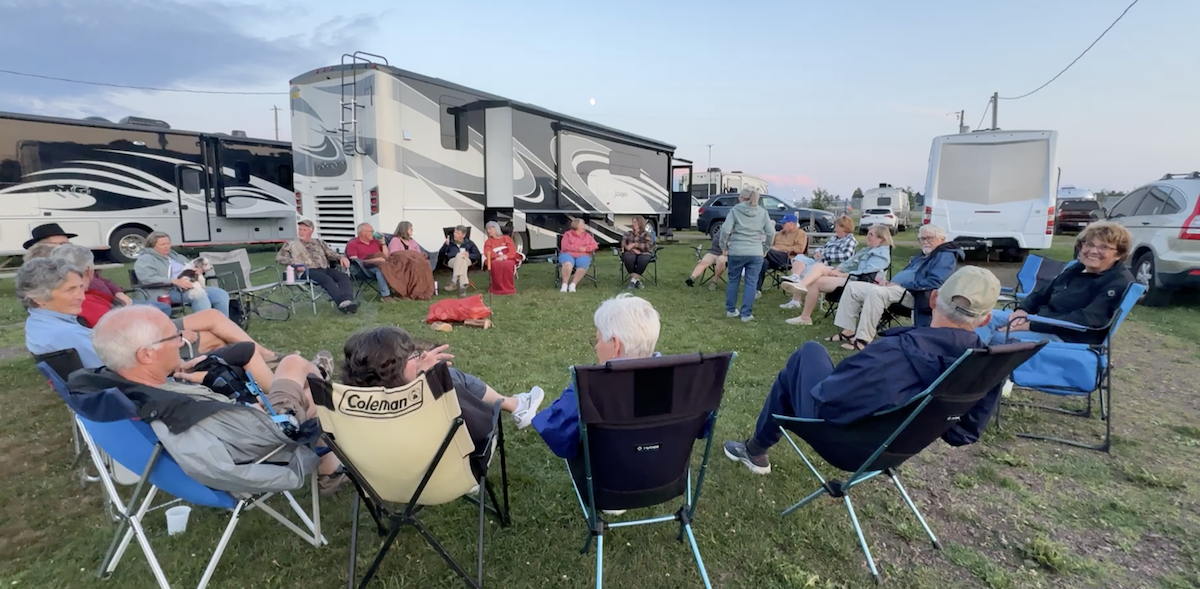
Become a part of the Internet's Best RV Community
Private. Ad Free. No Facebook Nastiness.
RV Travel Tips, Rallies and Meet-Ups, interactive livestreams, exclusive workshops, perks, discounts and Real Help from Real Rvers.
Mike Wendland (0:00): Welcome, everybody. Episode six twelve coming at you of the RV podcast. I'm Mike Wendland, and this is my cohost, my lifelong traveling companion, and my bride, Jennifer. Hello, my dear.
Unknown Speaker (0:12): Hello, my Michael. And this is the Stories from the Road, our Wednesday episode where Mike and I sit down together and talk about this life we have built on wheels. If you're new here, welcome. We've been doing this for more than fifteen years. We have traveled nearly half a million miles across the whole country and just about every type of RV you can imagine.
Mike Wendland (0:34): That's for sure. We started out really as tent campers, and then we worked our way up. We had pop ups, and we had travel trailers and class b's. We even tried some class, a's. We had class c motorhomes.
Mike Wendland (0:48): And right now, we're pulling a 35 foot long Brinkley fifth wheel. We call it the beauty, and we're pulling it with a Ford f three fifty. We call it the beast. We have built a whole ecosystem of RV lifestyle content because we genuinely believe that this lifestyle makes people's lives better. And everything we do, the podcast, the YouTube channel, our video livestreams, the private online rvcommunity.com, the trip planning guides we've written, the apps, all of it comes from that conviction.
Mike Wendland (1:22): We're not influencers. We're not sponsored spokespeople. We are RVers who happen to have a platform, and we take that responsibility very seriously.
Jennifer (1:32): Today's episode is one of our favorite to do. Instead of our normal stories from the road episode title, we're calling this one questions from the road.
Mike Wendland (1:42): Because it's an all question and answer episode. You ask, we answered, all audience questions. Every week, we try and answer one or two in the podcast, but we get many more. So, periodically, we devote an entire episode like this to catching up.
Unknown Speaker (1:59): Before we start, a quick word from our sponsor, RV Overnights. If you're like us and you're getting a little worn out paying top dollar for crowded RV parks, we have talked about this one before, and Mike and I keep coming back to it because it just works.
Mike Wendland (2:14): One of our favorite stays at RV Overnights was at a bison ranch in Indiana. I mean, real bison right outside the RV window. Huge animals. Absolutely incredible. And that's just one example.
Unknown Speaker (2:27): They have got wineries, farms, museums, even a lavender field all over the country. Canada too. Places you would never find in any campground directory, and it is really easy to use. Pull up the interactive map, see what is available along your route, book your overnight, done. No digging around, no guessing.
Mike Wendland (2:46): And these are unique memorable stays hosted by real people all across The US and Canada, and the whole thing is $49 for an entire year. And right now, they're offering our listeners 40% off if you use the promo code RVL deal. After more than fifteen years on the road, we don't recommend something unless we actually use it ourselves, and this one we really like. Rvlifestyle.com/overnights. Be sure and use that promo code RVL deal, and you'll save 40%.
Unknown Speaker (3:17): Okay. Back to the podcast and our questions from the road. We pulled these from our email inbox from rvcommunity.com, from our social media accounts. Questions covering everything, personal, technical, lifestyle, trip planning, real questions from real people who are either living this lifestyle or trying to figure out how to start.
Mike Wendland (3:38): Alright. So let's get into it. The first question is probably for both of us, and it's a personal question. It's from Carol T from Springfield, Missouri, and she writes, Mike and Jennifer, what was the single hardest moment in your first year of RVing, the one where you genuinely wondered if you had made a mistake?
Unknown Speaker (3:59): Oh, Carol, I appreciate that you asked this because I think people assume that because we have been doing this for almost fifteen years and we have a podcast and a YouTube channel, We must have had some charmed, seamless start. We did not. Our first year, we were still figuring everything out. I remember one specific evening. We were trying to back our then class b motor home into a site that was more narrow than anything we had practiced on.
Jennifer (4:28): It was getting dark. There were people watching from their lawn chairs, and Mike and I were communicating with each other in a way that was not our finest moment.
Mike Wendland (4:38): We were using what, I would call heightened communications.
Unknown Speaker (4:43): That is generous description. And I remember standing in that campground thinking, what are we doing? Is this actually fun? Because it did not feel like fun at that moment.
Mike Wendland (4:54): Well, here's what I would tell Carol. That moment passes. I mean, it passed for us. And, honestly, now that we have a fifth wheel, I I have to say that backing the Brinkley is still not my favorite activity on the planet, but we do have a system now. Jennifer is my eyes.
Mike Wendland (5:10): I trust her completely, and we laugh about the early days. But, yes, that first year had moments when we both looked at each other and just thought, this is harder than it looked.
Unknown Speaker (5:21): What got us through this was staying curious instead of frustrated. We just kept asking questions and learning, which come to think of it, is exactly what Carol is doing right now.
Mike Wendland (5:32): Good job, Carol. Alright. Question two is a technical one. This comes from Phil and Renee w from Chattanooga, Tennessee, and they write, Mike, we are shopping for our first fifth wheel, and every dealer we talk to has a different answer about whether we need a diesel truck or if a gas powered half ton can handle it. We're looking at rigs in the 32 to 36 foot range.
Mike Wendland (5:54): Can you give us a straight answer? Well, Phil and Renee, I'm gonna give you the straight answer, and you can take it to whatever dealer you want. In that 32 to 36 foot range, depending on the specific rig's loaded weight, you are very likely looking at a payload and a towing requirement that exceeds what a half ton truck can safely handle. And I wanna say safely because you will find dealers. They just wanna sell.
Mike Wendland (6:24): You know? And they'll tell you a half ton can tow that baby. That's not gonna happen. We had one guy tell us that, a half ton could tow this. And this is 35 feet long, and it can't.
Mike Wendland (6:36): Now maybe on paper, some of these guys will show you that the that you can do it, but in real life, towing at or near the edge of your truck's rated capacity is not the same as towing comfortably and safely with march and despair. So when we tow our 35 foot long Brinkley, we're behind a Ford f three fifty. It's a one ton truck. It's not overkill. It is right sized.
Mike Wendland (7:03): The beast handles that fifth wheel. It's diesel, handles it the way it should be handled. We had a three quarter ton that we tried towing a similar size unit, our previous Montana fifth wheel, and it's night and day between, the three quarter ton and the one ton, wouldn't you say?
Unknown Speaker (7:20): Yeah. And, you know, here's the question I'd tell you to ask. Not just what is the GVWR.
Mike Wendland (7:26): That stands for gross vehicle weight rating.
Jennifer (7:29): But what's the real loaded weight when you have your gear, your water, your food, and your dog? Because that number is almost always higher than the dry weight the sticker shows.
Mike Wendland (7:39): Always higher. So maybe at 32 feet, a three quarter ton at a minimum for that size, I would argue a one ton if you can swing it. And I know that changes the budget math, but I've seen what happens when people undersize their tow vehicle. And trust us, it is not worth it.
Unknown Speaker (7:59): And Phil and Renee, consider joining our private rvcommunity.com and ask this question there too. You'll get real world answers from people who have owned both, made both mistakes, and come out on the other side.
Mike Wendland (8:11): Yeah. You know, if you answer that on Facebook, you're gonna get all these nasty people. And but on our group, they're they're all friendly. They're all friends, and you'll get stuff you can take to the bank. It might cost you a little bit at the bank, but you'll get the the straight scoop.
Mike Wendland (8:26): Alright. Question three. Personal question. This one is from Gwen and Larry from Des Moines, Iowa, and they write, we're going to be honest. Thank you for doing that.
Mike Wendland (8:35): We've been watching you two for years, and we wanna know, do you and Mike ever genuinely disagree on the road, like argue? And if so, what do you argue about?
Unknown Speaker (8:45): Gwen and Larry, yes. Absolutely, positively, yes.
Unknown Speaker (8:50): 100%, yes.
Jennifer (8:52): Here is the thing about traveling with your spouse in a home that is 35 feet long. You are together all the time, and you're making decisions constantly. Where to stop? When to stop? How long to stay?
Unknown Speaker (9:04): Which route to take? Whether that sound the slide is making is normal or not normal? And Mike and I do not always agree.
Mike Wendland (9:11): I'd say the two things that we argue about most, is really basically just a couple. And the first is is the route. I I wanna push miles, and Jennifer wants to stop and look at things.
Unknown Speaker (9:25): Because the things are the point, Mike.
Mike Wendland (9:28): Well, she's not wrong. The the second thing, and I'm gonna be honest because Gwen and Larry ask an honest question, we argue about when to call it a night. I can keep driving, and Jennifer has a very clear sense of when the driving day should be over, and we should stop, set up, and be still for a while.
Unknown Speaker (9:46): And I am almost always right about that one.
Unknown Speaker (9:50): She is almost always right about that one.
Unknown Speaker (9:52): I I'm saying I'm always right.
Mike Wendland (9:54): Okay. She's almost always right about that. We won't see, we're arguing already. Yeah. But the times I have pushed it to when she said we should stop, it generally she'll say always, but it generally did not go well.
Mike Wendland (10:08): And what I've learned in in those fifteen years we've been doing this is that Jennifer has really good instincts on the road. And so I might argue a little, but, I'm doing better at listening.
Unknown Speaker (10:19): That is basically a summary of our marriage.
Mike Wendland (10:22): Probably every marriage really is. Alright. Question four. And this again is a lifestyle question, and this one is for Jennifer. It's from Dana s from Portland, Oregon.
Mike Wendland (10:33): She writes, Jennifer, my husband is completely on board with RVing, but I am honestly terrified of giving up the comforts of home. I am a homebody. I like my kitchen, my bed, my shower, my routine. How did you get past that?
Unknown Speaker (10:48): Dana, I hear you so clearly, and I want you to know you're not alone. I was that person. I am still a little bit that person, honestly. I like my things. I like knowing where everything is.
Unknown Speaker (10:59): I like a good shower with reliable pressure. I like sleeping in my own bed. And here is what I will tell you. The modern RV is not roughing it. Our fifth wheel has a queen-size bed.
Unknown Speaker (11:11): It has a full residential refrigerator. Actually enjoy. It has a kitchen where I can cook a real meal. Now does it have the exact square footage of our home? No.
Jennifer (11:23): But it has almost everything that made home comfortable in a package that moves. And what helped me most was a realization, the things I thought I could not live without, a lot of them I barely miss once we're out there because the outside took over. You wake up in the morning and the view is different. You have your coffee and you are looking at mountains or a lake or a stretch of desert that stops you cold and suddenly your routine is if not gone, it's just better. Start small, Dana.
Unknown Speaker (11:56): A weekend trip. Take your familiar things with you, like your pillow, your coffee maker, whatever your comfort anchors are. Give yourself permission to not love it immediately. Just give it a real chance.
Mike Wendland (12:10): Well, Jennifer did not love our first trip. I just wanna say that for the record.
Unknown Speaker (12:16): I remember we parked at this one campsite, and we were in a class b. And we're right two feet from the bathroom. And I went into the bathroom, and I thought, I got space in here. This is my bathroom. Because everybody else had big rigs with really nice bathrooms that I would this is my space.
Unknown Speaker (12:36): I have a big shower. This is my own private bathroom. Yeah. It just helped me psychologically because I wasn't used to being in a class b.
Unknown Speaker (12:43): But you you you did not like those that first trip. They're really probably the first couple of trips.
Unknown Speaker (12:48): Well, it took some adjusting. You know, this is completely true. And now you cannot keep me home.
Unknown Speaker (12:54): Yep.
Unknown Speaker (12:55): I get restless.
Unknown Speaker (12:55): You do.
Unknown Speaker (12:56): I wanna go.
Mike Wendland (12:56): You do. Okay. So let's get on to another question now. And, again, this is, if you're just joining this podcast, you can go back and listen to the first part. But this is our questions from the road edition where we're going a whole episode to answering the questions that you guys have been sending us.
Mike Wendland (13:14): We get a ton of email, and, well, sometimes we can't answer them all. So we're gonna try and do it now. Alright. Question five, it has to do with trip planning, and this is from Tom and Barb Kaye. They're from Columbus, Ohio.
Mike Wendland (13:28): And here's what they ask. Mike and Jennifer, we wanna do a big national parks trip this summer. We have four weeks, and we're based in Ohio. We wanna see as many parks as we can. Where would you start, and, how would you plan something like that?
Unknown Speaker (13:43): Tom and Barb, four weeks from Ohio with national parks is the goal. I love this. My first piece of advice is resist the temptation to try to hit 12 parks in four weeks. I know that sounds counterintuitive when you have four weeks to work with, but if you're driving hard to get from park to park, you're not experiencing the parks. You're checking them off a list.
Unknown Speaker (14:08): Trust me on this. We have done this. Don't do this. Pick a corridor for a summer trip from Ohio. I would look west.
Jennifer (14:16): Your natural arc would take you out through the Midwest up into South Dakota for the Badlands and Wind Cave, then swing towards Wyoming for the Grand Tetons and Yellowstone. And if you have energy and time, push to Glacier in Montana. That is a realistic, incredible loop that gives you depth at each stop rather than a quick snapshot.
Mike Wendland (14:39): Yeah. You will wanna spend more time at every park. I guarantee that. So trying to do too many is, is gonna cause you a lot of frustration. And here is the planning piece that Tom and Barb need to hear, I think, right now.
Mike Wendland (14:54): If you've not already made your campground reservations at least inside the national parks, open your laptop tonight. Most of those sites inside park boundaries have been booked for months. Yellowstone and Glacier, especially, you'll probably need to camp just outside the park boundaries, and then you day trip in. And that's really, I think, what most experienced RVers do, and it works it works beautifully. You have more space.
Mike Wendland (15:18): You have better amenities. They have real campgrounds outside the parks. You often have lower costs, and you still get everything that the park has to offer. Alright. Another question.
Mike Wendland (15:29): This is personal from Diane r from Albuquerque, New Mexico, home of the balloon fest there. And I I love that people are asking these personal questions, by the way. They're thinking about the lifestyle. Diane says this. Jennifer, what does a typical travel day actually look like for you two?
Mike Wendland (15:46): Not the highlight reel, the real version.
Unknown Speaker (15:49): Oh, Diane, I appreciate those questions so much because the highlight reel is real, but it is not the whole picture. A typical travel day for us starts earlier than most people imagine. We're usually up by six. Mike makes coffee. I don't drink coffee, so I am already at a slight disadvantage in the morning energy department, but I manage.
Unknown Speaker (16:09): She manages fine. She does.
Jennifer (16:12): So we do what we call the walk through. Before we hook anything or move the truck, we walk the outside of the rig together, tires, slide rooms, anything that was out the night before. It is a habit we built early and it has saved us more than once. Then we hook up the truck. I direct Mike out of the site, and we run through the our departure checklist.
Jennifer (16:37): Are the slides in? Are the jacks up? Is the antenna down? Is both secured? Is there anything on the roof or under the rig we might have forgotten?
Mike Wendland (16:45): Don't forget to your Starlink. So many people have forgotten their Starlinks when they put them out. Then we drive. Right?
Unknown Speaker (16:53): Yep. And in case you're wondering, Bo is our dog.
Unknown Speaker (16:56): Yep. Bo, our dog. Then we Everybody knows Bo. We think that. He's right at our feet right over here.
Unknown Speaker (17:02): Yeah. He's sitting out here with us right there.
Unknown Speaker (17:03): On the other side of the camera sitting there watching us right now.
Unknown Speaker (17:06): And depending on the day, that might be two hours or it might be six. Mike, handles the driving. I handle the navigation, snacks, and keeping an eye on conditions ahead.
Unknown Speaker (17:17): I like the snacks part especially.
Unknown Speaker (17:19): If I see a weather situation developing or a route change that makes sense, I say so. When we arrive, we find the site, get level, get the slides out, get plugged in. And this is the part the highlight reel does get right. We open the door, step outside, and whatever is out there, we are in
Mike Wendland (17:38): it. The in between parts are work. The arriving is the payoff every single time. And, you know, Diane's question about what a travel day looks like reminds me of something. You need a procedure.
Mike Wendland (17:52): You need a checklist. And when you arrive at a site and everything kinda piles up at once, it's getting dark. You know? The dog is losing his mind, and you can't remember what you have or have not done yet?
Unknown Speaker (18:05): Oh, that moment. Yes. We have all had that moment.
Mike Wendland (18:09): And and that is exactly why we built Camp Buddy. It's an app, one of our web apps. We have a whole bunch of them over at the RV trip planning center, and it's honestly one of the simplest, most useful things that we've made. We pull into our campsite, and I tap arrive and set up, and it literally walks me through every single step in the right order. I can put it on my phone, my laptop, my tablet, and I I just check it off.
Mike Wendland (18:34): It's a checklist, and it can be customized. I can add my own special things, to it. I can move things around. And whether you have a motor home, a fifth wheel, a travel trailer, class b van, it knows the difference, and it will adjust the checklist accordingly for you.
Jennifer (18:48): And it is not just arrival. When you're ready to leave, you tap break camp and leave, slides in, tanks dumped, hitch up, do your walk around, every step in order, nothing skipped, And you drive away knowing nothing is dragging. Nothing is out. Nothing was forgotten.
Mike Wendland (19:07): Here's the the part I really like. It also watches the weather. If there's rain in the forecast, it adds steps you need for wet conditions. You're someplace up in the mountains or it's in the fall or near winter or spring and freezing temps are rolling in. It reminds you about the things that matter when it's cold.
Mike Wendland (19:24): The checklist literally adjusts to what you're actually facing that day, not just a generic sunny day routine.
Jennifer (19:30): And it works on your phone, your tablet, your laptop. Everything syncs so both of us are on the same page. No App Store download. No waiting. No monthly subscription.
Mike Wendland (19:41): One time purchase, 1999, Sears, and, you get all the updates for it as we build them. We made this because we needed it ourselves. And after all our time in the road, we can tell you that the costly mistakes, the embarrassing ones, the potentially dangerous ones, they almost always happen because somebody skipped a step. Not because they were careless, but because they were tired or distracted and didn't have a system. Well, Camp Buddy is the system.
Jennifer (20:08): Find it at rvlifestyle.com/campbuddy.
Mike Wendland (20:11): Alright. Back to questions. It's a technical one. And, Jennifer, this is for you from Marcy L of Austin, Texas. She's what, Jennifer, do you actually use solar power for?
Mike Wendland (20:21): Do you use it? Is it worth the money? We keep seeing RVers talk about it, but our dealer said we probably don't need it.
Unknown Speaker (20:28): Marcy, short answer, yes. We have solar on our rig, and for the way we travel, it's absolutely burned its place. Now I wanna be fair here. Because your dealer is not entirely wrong. If you travel exclusively to full hookup campgrounds, plug in every night, never boondock, never dry camp, then solar may not be a priority.
Jennifer (20:50): You are always connected to shore power. It makes less sense for you. But if you ever want the freedom to pull off into a beautiful dispersed camping spot in a national forest road or a state park with no electric hookups or a spot where you just wanna stop for the night without running your generator, solar changes everything. It is quiet. It is free fuel from the sun.
Jennifer (21:14): You run your lights, your fans, your fridge, your devices, and you do not have to listen to a generator or worry about burning propane. We have 400 watts of solar and two lithium batteries on the beauty. And on a good sunny day, we are essentially energy independent. The honest caveat, solar is an investment. It is not cheap to do right.
Mike Wendland (21:37): Can you kinda say that, like, now I do have a caveat. Okay.
Unknown Speaker (21:43): Now I do have a caveat. Solar is an investment. It is not cheap to do right. And if you go too small, you're gonna be frustrated. Do your research on your actual power consumption before you buy.
Jennifer (21:55): But, Marcy, I would not trade ours for anything.
Mike Wendland (21:58): And we should also point out that it's not just solar. You need to have some really good batteries and probably lithium batteries. That's certainly the most effective that matches the best with solar, and they are very expensive. But, having solar and those lithium batteries has made us much better boondockers, which really opens up a whole category of camping that we wouldn't have otherwise done. Alright.
Mike Wendland (22:21): Here's our final question. This is a personal one from James and Sandra Oh from Nashville, Music City, Tennessee. Mike and Jennifer, what do you know now that you wish you had known on day one? Not a tip, not a trick, the big thing.
Jennifer (22:35): James and Sandra, the big thing? I have been thinking about this while Mike was reading it, and here is mine. I wish I had known earlier that the RV is not the point. The RV is just how you get there. We spend so much energy in the early years focusing on the rig, the features, the upgrades, what we should have bought instead, what was not working right.
Jennifer (22:58): And those things matter to a point, but the moment we stop thinking so much about the vehicle and start thinking about where it was taking us and who we were becoming out on the road. That is when everything shifted. The RV is just a tool, a wonderful, comfortable, mobile tool, but it's not the life. The life is what happens outside of it.
Mike Wendland (23:20): Mine, mine's a little simpler, and it kinda connects with what Jennifer said. I wish somebody had told me on day one, you don't have to have it all figured out before you go. I mean, I spent months overthinking our first trip, the route, the gear list, the contingencies. I researched myself nearly out of going. I get email all the time from people that, hey, we're about ready to take off next year on such and such, and I want to know this, that, and the other thing, and it's stuff that's going to be completely different in another year.
Mike Wendland (23:52): Or we get people say, I'm shopping for an RV and we plan to buy it in three years. What's the best one? Well, the best one today is not going to be the best one in three years. So understand you're not going to have it all figured out. The truth is you figure out this lifestyle by doing it.
Mike Wendland (24:08): Every trip teaches you something that could not have been learned in a parking lot or watching a YouTube video. That campground that looks great on the Internet or on paper was not. The detour that turned into the best two days of the trip, the strangers at the next site who became friends that you still stay in touch with for years after you met them. So just go and make a plan good enough to start, but go. The rest just comes.
Unknown Speaker (24:39): The rest really does just come.
Mike Wendland (24:42): Well, that's a wrap on our questions from the road episode. We still got a lot more we didn't answer, so we'll have to save those for a future episode. But thank you to everybody who wrote in. And, if your question didn't make it into this episode, keep watching. We'll we read everything.
Mike Wendland (24:56): We do try and answer them all, and we will, have another episode we devote strictly to questions in, in a few weeks or so.
Jennifer (25:03): And if today's episode made you wanna be part of a community where these conversations happen every single day, that is exactly what rvcommunity.com is. It is our private ad free membership community. No social media noise. No judgment. Just real RVers helping each other with everything from technical questions to trip planning to just swapping good stories around a virtual campfire.
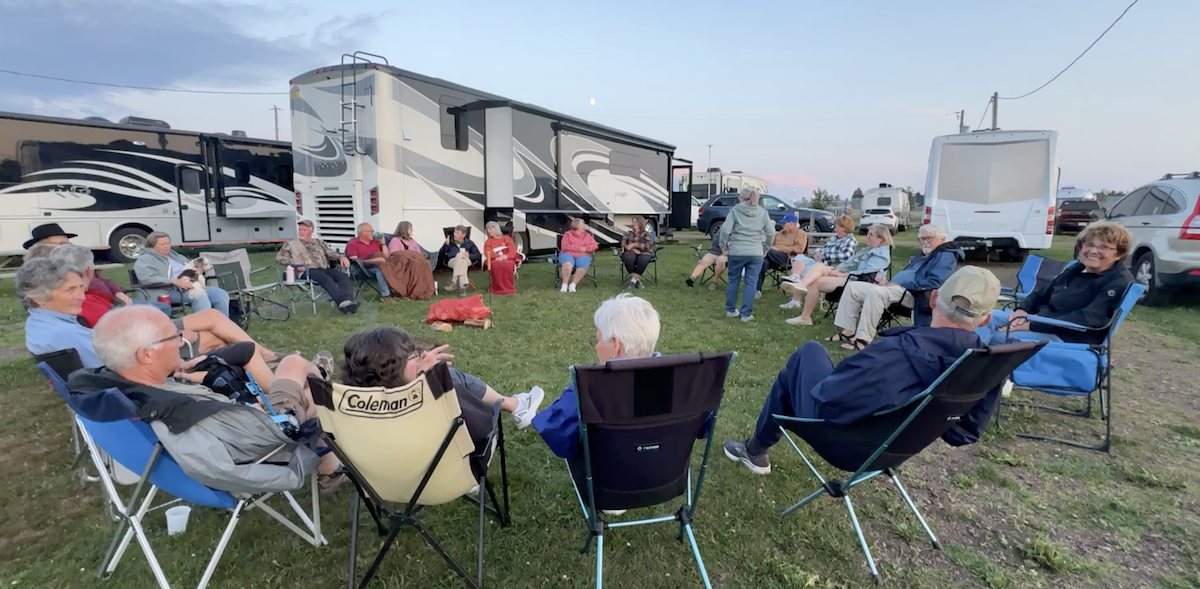
Mike Wendland (25:28): We also have rallies, in person rallies and camp ups and mini meetups happening all year round where you can meet fellow RVers in person, different parts of the country. Yeah. All the details, and we invite you to come join us. You'll find them at rvcommunity.com. And if you got value from today's episode, single best thing you can do for us is to leave a review wherever you listen to podcasts.
Mike Wendland (25:50): Just takes a couple of minutes, and it helps more people find the program. We are an Apple Podcast and Spotify, everywhere podcasts live. And every episode, Monday and Wednesday, you can find that at rvpodcast.com.
Unknown Speaker (26:03): Thank you for spending part of your Wednesday with us.
Unknown Speaker (26:06): Alright. Till the next time. We'll see you down the road.
Unknown Speaker (26:10): Happy trails.