Apple Podcasts
 Spotify
 PocketCasts
 Why Your RV Won't Cool Down (And What To Do About It)

Summer heat can be tough on RVs.
If you've ever wondered why your RV air conditioner struggles to keep up, why your refrigerator doesn't seem as cold as it should be, or what you can do to improve performance during hot-weather camping, this episode is for you.
Mike and Jennifer welcome Will Troyer, Director of Product Management for GE Appliances' Recreational Living Division, for an in-depth conversation about RV cooling systems.
Will explains how RV air conditioners and refrigerators work, why they perform differently than residential appliances, and what RVers can do to stay comfortable and keep food safe when temperatures climb.
Along the way, Mike and Jen answer listener questions, share practical summer RV tips, and announce the release of their brand-new North Carolina RV Travel Guide.
You'll come away with useful, actionable advice that can help make your summer travels cooler, safer, and more enjoyable.
Free Daily RV Newsletter:
North Carolina RV Travel Guide:
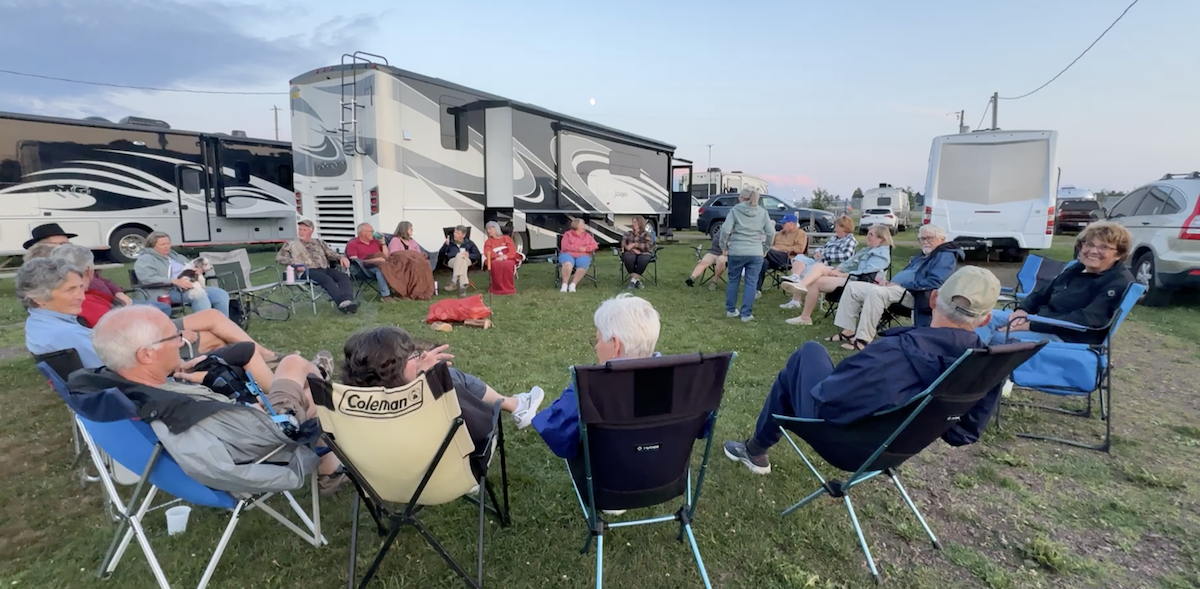
Become a part of the Internet's Best RV Community
Private. Ad Free. No Facebook Nastiness.
RV Travel Tips, Rallies and Meet-Ups, interactive livestreams, exclusive workshops, perks, discounts and Real Help from Real Rvers.
Mike Wendland (0:01): This is episode 614 of the RV podcast.
Unknown Speaker (0:05): And this week on the podcast
Will Troyer (0:07): You overpack a compressor refrigerator. You're gonna freeze things in the rear, and the stuff in the front's not gonna be frozen. So if you stick your eggs clear in the back, you're gonna end up with frozen eggs.
Mike Wendland (0:18): In this week's conversation of the week, we're gonna hear from Will Troyer. He is the director of product manager at GE Appliances Recreational Living Division. And as summer temperatures rise across North America, Will is gonna share some practical advice in getting the best performance from your RV air conditioner and your refrigerator along with some simple things you can do to stay cooler and protect your food during hot weather camping.
Jennifer Wendland (0:44): Plus, we'll share travel tips, answer your RV questions, and much more. This episode is being released on 06/03/2026.
Mike Wendland (0:52): And before we get started, don't forget. A lot of you don't know about this. Subscribe to our free daily newsletter. Yes. We do a free daily newsletter.
Mike Wendland (1:01): We send it out every morning, 07:30AM. Rvlifestyle.com/newsletter. You don't like it. You can just hit and subscribe, and you won't get it anymore. But sign up.
Mike Wendland (1:11): Rvlifestyle.com/newsletter. Lots of tips, all sorts of stuff.
Jennifer Wendland (1:16): And one more thing. Our newest travel guide was released today. It's our all new North Carolina RV travel guide packed with destinations, campgrounds, routes, attractions, and travel planning resources. You'll hear more about it later in the show, but you can check it out now at rvlifestyle.com/northcarolina.
Mike Wendland (1:37): And we'll put the links in the description below for you. So hello, everybody, and welcome to the RV podcast. I'm Mike Wendland, and this is my cohost, my lifelong traveling companion, and my bride, Jennifer. Hello, my dear.
Jennifer Wendland (1:51): Hello, my Michael, and this is the RV podcast stories from the road edition. You can find complete show notes for this episode at rvpodcast.com. And remember, we release two episodes every week. This edition, Stories from the Road, focuses on the RV lifestyle, the people, places, and experiences that make life on the road so special. Then every Monday, we bring you our RV news edition covering the biggest stories of the week that impact your travel.
Mike Wendland (2:22): Well, June is finally here, and that means summer RV season now is very much underway. You know?
Jennifer Wendland (2:29): You can certainly tell from the campground reservation requests we've been hearing about.
Mike Wendland (2:34): And from the emails. Lots and lots of emails about traveling and where to go and what to see, all that sort of stuff.
Jennifer Wendland (2:41): Especially the ones that start with help. My air conditioner can't keep up.
Mike Wendland (2:47): Or, why is my refrigerator so warm?
Unknown Speaker (2:50): My ice cream melted.
Mike Wendland (2:52): And that would always gets people attention, doesn't it?
Jennifer Wendland (2:54): You know, most RV owners don't really understand how much harder these appliances work compared to the ones in their homes.
Mike Wendland (3:01): Exactly. And in a house, you have insulation and you have bigger systems and more space for airflow. And in an RV, you're basically living, you know, inside a rolling box sitting in direct sunlight.
Jennifer Wendland (3:14): And sometimes it's 95 or a 100 degree weather.
Mike Wendland (3:19): Yeah. And that's why today's interview, conversation of the week, couldn't be more timely. But before we get to that, let's thank one of our sponsor, RV Overnights. Now if you're like us, you're getting a little worn out paying top dollar for crowded RV parks, and we've talked about this one before. Jennifer and I keep coming back to it because it just works.
Mike Wendland (3:39): Last year, we came across something that honestly changed the way we travel, rvovernights.com.
Jennifer Wendland (3:46): One of our favorite states was at a bison ranch in Indiana. Real bison right outside the RV window. Huge animals. Absolutely incredible.
Mike Wendland (3:55): We even got to feed them.
Jennifer Wendland (3:56): Yeah. And that's just one example. They've got wineries, farms, museums, even a lavender field all over the country, Canada too. Places you'd never find in the campground directory, and it's really easy to use. Pull up the interactive map, see what's available along your route, book your overnight.
Jennifer Wendland (4:15): Done.
Mike Wendland (4:16): Now these are not random parking lots. They are unique, memorable stays hosted by real people all across The US and Canada, and the whole thing is just $49 for an entire year. But right now, they're offering our listeners 40% off that price with the promo code RVL deal. So you wanna get it? You head over to rvlifestyle.com/rvovernights.
Mike Wendland (4:41): Use that promo code RVL deal to save 40%. And now it's time for the RV conversation of the week. Summer's here, and that can tax your RV appliances as we've been saying.
Jennifer Wendland (4:53): Uh-huh. To help us understand how to get the best performance from our RV air conditioners and refrigerators during the hot summer travel season, We're joined by Will Troyer, director of product management for GE Appliances, recreational living division. So lean in because this conversation topic couldn't be more timely. There are some tips you don't wanna miss. So welcome, Will.
Unknown Speaker (5:18): How you doing, Will? You staying cool? Yeah.
Will Troyer (5:22): It's a little rainy here in Louisville, but, yeah, we're doing good.
Mike Wendland (5:25): Yeah. I saw that you had a lot of rain there last couple of days as we record this here. Let's just start because it is the summer season. Everybody is heading out there. And let's talk a little bit about we'll start with air conditioners, then we'll go into refrigerators.
Mike Wendland (5:40): But first of all, with an air conditioner, how is an air RV air conditioner different than, say, a home air conditioner?
Will Troyer (5:51): Yeah. Well, usually size is kinda the first thing. I mean, you in the residential segment, if you look at your air conditioners, a lot of times, they're referred to as tonnage. Right? Three three ton, four ton, five ton systems.
Will Troyer (6:07): One ton system is usually equivalent to about 12,000 BTU. So it kinda gives you a little bit of a gauge there to kinda explain the the cooling capacity versus what you're traditionally used to seeing. The other thing is the residential
Mike Wendland (6:23): Just a quick question. Yeah. Just a quick question. When it talks about one ton, does that doesn't mean how much the air conditioner weighs. Does that mean how much air what is that one ton measuring?
Will Troyer (6:34): Well, so one ton is 12,000 BTUs. But if I remember this correctly, it takes 12,000 BTUs to melt one ton of ice. So BTU versus the ton is it calculates back to how much energy it took to melt one ton of ice. It's been around for a long time. So I'm I'm sure there's some HVAC guys out there that'll correct me a little bit, but that's base that's the basis of what it is.
Mike Wendland (7:10): Okay. Got it. So I'm not gonna be measure I'm not gonna be melting any ice. No. I just wanna get that ice to cool me off.
Mike Wendland (7:18): Well, one of the things that when we talk about the differences is it seems, am I right, that an RV air conditioning unit struggles a lot more in extreme heat than a home system would.
Will Troyer (7:34): Yeah. Well, in a so a couple different things with home versus RV is most of your home systems, traditional home systems, are split systems. So the evaporator lives inside where the air mover is, and the condenser lives outside where the you know, outside of your home. And it's basically the same technology. Do you ever heard of mini splits?
Will Troyer (7:58): Just a much larger version versus having a more unitary approach where the evaporator and the condenser and the compressor are all located together inside of the same unit, which is what we typically see on RVs. So having them together isn't a bad thing, from a performance standpoint. It's more of their ability to be compact, safe space. In RVs, storage is king. Right?
Will Troyer (8:28): So you wanna put as much stuff on the roof as you possibly can to give yourself more storage space enter inside, things like that. That's usually been the approach from the market thus far. It's a very simple installation, so it doesn't require high pressure refrigerant lines to be run through the walls and things like that like you would in a home. Now from a capacity standpoint, an RV versus a home, one of the biggest things you're gonna find right away is insulation. Homes are very well insulated.
Will Troyer (9:02): RVs are built to give you as much space as possible, with as light as they can possibly make them so that you could actually tow them with as much space that you have. So, typically, you don't see RVs with six inch thick walls and, you know, heavy duty insulation and things like that. They're usually two inch, two and a half inch thick walls. There's been some that have made, you know, three inch thick walls with improved insulation. But, typically, they come with a lot of windows that aren't exactly, good at, insulating as well, but it gives you a great view of where you're at and, things like that.
Will Troyer (9:39): So it does it it is a little harder, to, insulate an RV than it would be a home, but you're on the road. You're not you're not permanent, so there's some trade offs there.
Mike Wendland (9:50): Gotcha. Yeah. So one confusion a lot of people have is that it's really hot out. They'll crank their air conditioner to 65 Mhmm. And it doesn't get that way.
Mike Wendland (10:01): So would you explain how realistically cool an air conditioner in an RV can make it compared to the outdoor temperature?
Will Troyer (10:13): So there there is a little relationship between how hot it is outside and the performance of the air conditioner. But generally speaking, that's more of an energy consumption than it is from the its ability to cool. Majority of the cooling, let's call it deficits from where you can't make it to set point, is a relationship with either insulation in the RV or ducting, and its ability to move the appropriate amount of air throughout the unit. So we usually when someone's struggling, to keep up, we wanna make sure that they've went through their whole ducting system to make sure that the unit is installed properly. And this would go for any, you know, anybody's air conditioner, not just ours.
Will Troyer (11:02): But to make sure that everything's installed properly, that it can move the air appropriately, that it's not recycling its own air. So you'll see if you ever get inside of the air conditioner where, you know, from the inside, there's usually a divider. Different suppliers have different mechanisms on how they do that. But, typically, you wanna separate the inside air from the I'm sorry, the return air from the discharge air so that it can move there appropriately where it needs to and not just recycle it. So those are things that, you know, sometimes can be a hindrance to cooling capability.
Will Troyer (11:38): This is making the assumption that everything's running properly and the unit's working as it's supposed to. Airflow and insulation is usually your top two issues when you can't keep up.
Mike Wendland (11:48): So it's it's this it's that is that just the inefficiency of insulation in an air in a RV. We hear RVers often say, okay. You know, I'm down in Florida or Texas. It's a 100 degrees out there. I can't cool my RV below 80.
Mike Wendland (12:07): Mhmm. And is that why generally it's just because the RV isn't as insulated as well as a house would be?
Will Troyer (12:13): Yeah. I mean, I would say, again, making the assumption that you've got the right sized product on there or multiples of, and they're working properly. It could be an airflow issue. It could be it could be, just surely because there's just too much heat load on the unit and not enough insulation. I wouldn't call it inefficiencies.
Will Troyer (12:38): It's more of, like, these are built to be able to be towed, and there is a a trade off there when you're gonna make something lightweight. The walls are gonna typically be a little bit thinner with a little bit less insulation. And, you know, parking in the shade sometimes helps out, not taking direct sunlight. If you've got the capability to do that, some lots won't really hit let you move around, obviously, but, you know, shade does help a little bit, and that direct sunlight is a is a key there too.
Mike Wendland (13:11): Are there any mistakes in terms of running the air conditioner? Some people wanna save power and stuff, and so they turn it on. They turn it off. The should you on very hot days, should I've heard, for example, that the first task of an RV air conditioner is to get the humidity out Mhmm. And then to get it cool.
Mike Wendland (13:33): And then if you keep turning it off, the humidity is gonna come back, and it's gonna be working much harder. Talk about leaving it on when it's very hot.
Will Troyer (13:40): Yeah. I think a lot of it's got to do with what your power availability is. So if you're in a campground that has, you know you have shore power and power is not your problem, leave them run as long as you can. Let them maintain the humidity level and the temperature as much as it can do. If you are power constrained and you're dry camping, things like that, solar, you may have to make some decisions.
Will Troyer (14:12): You may have to sacrifice, you know, some of the heat load and and its ability to to get the moisture out of the air for the full time to be able to keep it cool at night, which is when typically most people want it, you know, really cool is when they're sleeping and they're comfortable and you can keep them warm. So in in general then Mhmm.
Mike Wendland (14:34): Leave it running. If you plugged into shore power, leave it running Yeah. And and and do that.
Will Troyer (14:41): So a lot of people real quick. Don't mind oh, sorry. A lot of people don't realize the human body and multiples of whether you have pets, you expel a tremendous amount of humidity in your RV yourself. So a lot of people are cons concerned with being in like, you know, you're in Louisiana or, you know, Southern states, things like that where it's hot and humid. You can get to those same levels, you know, in Indiana, if you have enough people in the coach and the coach is sealed up.
Will Troyer (15:15): So you'll produce a lot of humidity. I think a lot of, RVers are concerned with, bed humidity and things like that under your mattresses. So it's really crucial that you you know, if you have the ability to run your air conditioner to get that humidity out of there and continue to to dry the air as much as possible.
Mike Wendland (15:33): If you could give every RVer three tips, you know, to keep it running efficiently and being comfortable in there, what what what would they be?
Will Troyer (15:43): Yeah. I would say annual inspections to make sure that everything inside of the installation is the way it should be. They drive down the road, things happen, things get loose. You could have some ducting that some of the foil tape and things like that could have came off for the center divider. So annual inspections are a big deal, but keeping the coils clean is also a big deal.
Will Troyer (16:06): So your outside condensing coil on a on a maintenance cycle is a big deal. Keeping your filters clean on the inside is a huge thing to be looking at very regularly. You don't want these coils to get dirty or their efficiency is gonna go pretty pretty low. So, it's it's tough for some people to get on the roof to inspect their outside coils. I would just say, you know, talk to your dealer or your service person if you're not comfortable with getting up there.
Will Troyer (16:39): It's a pretty easy job to wash out. Just, obviously, all power needs to be unplugged before you're up there spraying water and coils and things like that. Just make sure you're safe and but it's it's crucial. Just like you want at home, I can tell you right now. I live in Indiana.
Will Troyer (16:55): I'm down here in Louisville for the week, but for a couple of days. But when I was leaving, I noticed the Cottonwood was already flying in Indiana. So that tells me, you know, I've got another three, four weeks of that. And then as soon as the Cottonwood's done flying, I'm going to take my condenser and wash it out at the house because it it saves on an incredible amount of energy and helps the unit run better.
Mike Wendland (17:21): Well, let's switch over to refrigerators now, which is the other big thing that that people often have questions about. And maybe start off with just a general different what's the difference between an RV refrigerator and the residential refrigerator that we have in the home? We have residential style in RVs, but but explain the different types of RV refrigerators out there.
Will Troyer (17:44): Yeah. So I think the easiest way to do it is categorize them by absorption and compressor refrigerators. So absorption refrigerators are you know, they've been referred to as two way and three way refrigerators for years. This is what, you know, we've all seen in the in the RV segment, and dominantly, in the RV segment for a lot of years. Absorption refrigerators, the fundamentals of them are pretty similar from a compressor, in regards to your pressurizing a solution, you're changing its state, It gets cold on the other side, much like if you have a really high pressure air and you spray it out of the end of a an air nozzle, you'll feel the air nozzle getting cold.
Will Troyer (18:28): Similar similar type physics. In an absorption refrigerator, they use ammonia and hydrogen. They'll heat that up in a little boiler tank, whether it's gas or electric. They heat that up, it goes through an expansion system where it will get cold after it travels through its condenser. And then with a with a compressor system, it doesn't need fuel like that.
Will Troyer (18:55): It uses electricity. So it compresses with a pump essentially and condenses like any other compressed refrigerant would. It's just a lot more efficient from a power consumption standpoint and a performance consumption sorry. From a from an output performance, compressor refrigerators are gonna cool down in 25% of the time from what a com absorption refrigerator would. So absorption, you're looking at six to eight hours for them to cool down.
Will Troyer (19:30): It takes a long time, but they're built for when they're in their Genesis, they're really built for off grid camping. Right? You can use propane. You can use 12 volts sometimes. You can use one ten volt if you've got them available.
Will Troyer (19:45): The trade off with those is a lot less performance, a lot less storage space, and you have to maintain them quite a bit differently.
Mike Wendland (19:57): I've always said that the absorptions are generally you're finding those in smaller RVs, the class b vans and stuff. And in older models, most people have gone to compressor. And we've always told been told that with an absorption refrigerator, the unit really needs to be level. Is that still true?
Will Troyer (20:17): Yeah. And so I've I've had history with this. I worked, for for one of the big big suppliers of absorption refrigerators too as well, and a lot of that has to do with, the levelness in regards to the cooling system so that as it's doing its job, that the refrigerant can kinda flow back down in the right way, you don't end up with pockets of, you know, the the liquid is just trying to come back down and after it condenses. So with a compressor refrigerator, it's the the levelness is not really as big of an issue at all. There are limitations, I think, somewhere around five degrees, but, with a compressor refrigerator, it doesn't really care.
Mike Wendland (21:02): Now we we learned about air conditioners that it was sort of the insulation factors in an RV that was a big factor of why they sometimes didn't seem as efficient as a home unit. But Yeah. How about air conditioner or refrigerators in an RV? Is that same thing? They seem to take a lot longer to cool off.
Mike Wendland (21:21): Is that is there a reason for that that's similar to the you know, maybe related to being in an RV?
Will Troyer (21:30): Yeah. I mean, the the problem with absorption is so you're you're using propane to heat up this essentially little boiler that needs to pressurize to, cool the unit. A lot of the heat that you're trying to get into that boiler is actually going up through the exhaust. So the efficiencies on the the on them is not great, because all the heat's really going out into the atmosphere. So with a compressor refrigerator, the the power that you're putting into it from a from a watt standpoint is much more efficient, because you're transmitting that directly into cooling performance rather than most of that energy going on in the atmosphere.
Will Troyer (22:14): So that's part of the problem. The other side of this would be the unit's ability to condense. I'm not to get too technical with it, but you'll notice, like, on your absorption refrigerators, you have if you if you you're not in a slide out, you'll typically have one side vent, and then you'll have a roof vent. If they're in slide outs, they'll typically have two side sidewall vents. That's for the air to come in, go up, and go back out, and to be able to cool off the condenser so that it could condense properly.
Will Troyer (22:49): If that isn't doesn't have enough airflow or the air is super hot, it has a hard time condensing, and your performance is gonna go through the floor. And that's why, typically, with people with absorption refrigerators, specifically larger cubic foot absorption refrigerators, they'll typically have issues when the sun comes over the unit and your sub the sun is now beating on your sidewall right where your absorption refrigerator is. And you'll you can almost set your clock by it, then you'll see the you'll see the temperature start to rise in your refrigerator a lot of times. So you don't really have that issue with compressor refrigerator because you're not dealing with with as much heat load because of those vents. From an absorption standpoint, you need to make sure that those things are obstruct unobstructed, that you have proper amount of airflow with the slide out systems that need to be ducted appropriately so that the air can get back out.
Will Troyer (23:47): Some people use fans, add on fans, and things like that to help increase the airflow. Just always, you know, reference the supplier, the original manufacturer, look at their books, make sure that it's an approved thing for them. But those are some tips that can kinda help with, with absorptions to get them a little bit better, but they're still never gonna see the performance level of what you got out of, of, compressor refrigerators.
Mike Wendland (24:16): And you mentioned airflow. What about airflow inside the unit itself? We've we've often heard people overpack their refrigerator.
Unknown Speaker (24:24): Yep.
Mike Wendland (24:24): And the air can't get around it. Explain that because even on, new compression residential style and some of the bigger luxury rigs, people say, wow. I just can't get it cooled off. And, I've I've looked at the refrigerator, and it's like, you can't get a thing in that refrigerator. It's so crowded.
Mike Wendland (24:43): Well Talk about packing a refrigerator.
Will Troyer (24:46): Yeah. I mean, it's it's it's it's tough for folks because they're going on they're going on a trip, and they wanna put as much in there as they possibly can because they're going on their trip. And, also, people do it not just because they're trying to take a tremendous amount of stuff, because they wanna sorta pack everything in there so it doesn't move around as much too as well. Right? So I would say this.
Will Troyer (25:08): If you're looking to not let things move around, start, you know, investing in some maybe trays and organizers and things like that to keep your product in there as best as you can. You want them to be able to flow air internally. A lot of them have glass shelves, so it's not really the shelf that's the issue. But what you wanna do is you wanna keep them away from the rear, keep it overpacked from the rear, and keep it overpacked from the front because the air is gonna move up and up and, you know, down the rear and up the front, basically. So as most compressor refrigerators and, like, the 10 cubic foot, eight cubic foot class, they'll have an evaporator on the rear wall of the refrigerator, so it'll get the coldest.
Will Troyer (25:53): And so that cold air will drop down, go straight down to where the crispers are. And then as it as it gathers heat, the air will kinda come back up around the front side too as well. So keeping that area clear, I think the biggest things what's gonna happen is if you overpack a compressor refrigerator, you're gonna freeze things in the rear and the stuff in the front's not gonna be frozen. So if you stick your eggs clear in the back, you're gonna end up with frozen eggs. So just be mindful about that.
Will Troyer (26:19): Now with the absorption refrigerator, they're a little bit different. You'll see the fins on the inside of an absorption refrigerator for the the heat exchanger is. You don't definitely don't wanna lay things against those bins, but they definitely need a lot more airflow because the, you know, the heat exchanger is relatively small, and it needs to be able to move air across it. So I know a lot of times you'll go to, you know, your your RV place, and they'll have fans that you can battery operated fans and things like that you can put inside, and those will help, kinda move the air if you do have an overcrowded situation. But your best bet is just to keep things off the rear wall, keep things overcrowded from the front, and it should be in good shape.
Mike Wendland (27:05): Alright. I got one last question for you. Sure. And this is the one that everybody, all over the place. What temperature should I keep the refrigerator part, and what temperature is best for the freezer part on those of us that have compressor and larger sized refrigerators?
Will Troyer (27:22): Well, most most of your most of your RV residential type refrigerators don't have independent freezer control. So you basically, what'll happen is they'll use the cooling power that's left in the freezer to cool your to cool your refrigerator side. So you can set the temperature in there. I would always say follow guy food guideline proper food guidelines for those things, whether I like to keep mine right around 37, 38 degrees is where I kinda keep my stuff, but, you know, you'll get some things will get a little too cold in there from time to time, but food safety is probably number one that you need to follow. So I I think beverages, you dev definitely want them nice and cold, but food safety is probably the most critical thing.
Will Troyer (28:19): So I would say I try to keep mine around that 37, 38 degree mark, and that's pretty happy for me. And then your refrigerator will kinda follow suit.
Unknown Speaker (28:28): And and for those
Will Troyer (28:30): They'll run around negative four, anywhere from zero below, you know, negative four, negative eight sometimes depending on how long it runs.
Mike Wendland (28:40): You want that ice cream hard, right, in the freezer? Yeah. Well, I I appreciate this, Will. This is the time. We're all gonna be using the air conditioners, and we'll be using the the freezers.
Mike Wendland (28:53): Those of you who go to rvpodcast.com, there's a little tab there with the with the show notes, and you can click and get background information on Will. And, we thank you. And, anything new in technology that we should be looking for that's coming out in the next year from GE and all the great stuff you're doing there with RV?
Will Troyer (29:13): Yeah. We've we've we've had some real great successes lately launching our tankless on demand water heater. That's been a big hit for us. We continue to invest in our 12 volt refrigeration back here, which is our 10 eight and ten cubic foot reefers. Those are those are also a big hit.
Will Troyer (29:35): Later this fall, we'll be launching some new air conditioning products, so stay tuned. And we have a big one launched into next year that we are going to solve a lot of consumers' issues with as far as usability and performance. So they're gonna be pretty excited next year as well.
Mike Wendland (29:54): Well, we appreciate. It's nice to see you guys investing so heavily in the, RV market as we go, and you you make some some great products.
Unknown Speaker (30:01): Yep.
Mike Wendland (30:02): We might get you back and have you talk about water heaters, at a fusergate then, and we'll we'll go from there.
Unknown Speaker (30:07): Same
Mike Wendland (30:08): with Will, thank you for being such a great guest and for helping us stay cool this summer. Anytime. Will really knows his stuff, and, he heads up that recreational, part of GE that puts, air conditioners and refrigerators at RVs. And I really appreciate him taking time to share those tips for us, and you can find out more about Will and all the stuff he talked about in rvpodcast.com. You can just go there and find this episode, and we've got a bio on him and everything in there, plus the transcript of what he talked about.
Mike Wendland (30:41): So check it all out. Hey. Before we get to your questions, we wanna tell you about something that we are really excited about. Today is launch day for our brand new RV travel guide, the North Carolina RV travel guide.
Jennifer Wendland (30:57): This may be one of the most diverse RV destinations in America. You've got the Blue Ridge Mountains, the Great Smoky Mountains, Asheville, the Outer Banks, beautiful coastal communities, waterfalls, state parks, and some wonderful campgrounds.
Mike Wendland (31:12): And this isn't just another travel article. This is a book, ebook, a complete planning guide, digital guide for you. You can put it on your devices, take it with you, read it on your laptop, read it on your computer. We've done the research. We've mapped out the routes, highlighted the attractions, recommended campgrounds included practical travel information.
Mike Wendland (31:36): Fill this book, and it's designed specifically for RVers.
Jennifer Wendland (31:40): If North Carolina has ever been on your bucket list, this guide will save you hours of research and help you travel with confidence.
Mike Wendland (31:49): You can get it right now. Today's launch day, rvlifestyle.com/northcarolina. Just go to rvlifestyle.com/northcarolina, and you'll find that link in the description below as well. Time now for the RV questions of the week, and we get lots of email, some to both of us, some to just me, and some to Jen. And we always like to start with someone seeking Jennifer's know how, and that leads us to this week's first question.
Mike Wendland (32:17): You ready for it?
Unknown Speaker (32:18): I'm ready.
Mike Wendland (32:18): Alright. This comes from Karen w in Charlotte, North Carolina, she writes, hi, Mike and Jennifer. We're getting ready for our first really long trip, about six weeks. I'm nervous about being away from home that long. Jennifer, how did you get comfortable being gone for extended periods?
Mike Wendland (32:35): Do you ever miss home?
Jennifer Wendland (32:37): Karen, yes. Absolutely. Yes. And I think anyone who tells you they never miss home on a long trip is either not being honest or they don't have much worth missing.
Unknown Speaker (32:48): Good day.
Jennifer Wendland (32:48): Here is what I can tell you from our fifteen years of doing this. That feeling does not mean you're doing it wrong. It means you love your life and the RV lifestyle. When you settle into it does not replace home. It actually makes you appreciate home more.
Jennifer Wendland (33:05): But here is what helped me the most on these long trips. I stopped thinking of the RV as a temporary situation and started treating it like our space. I have things in that in the beauty that are just mine.
Mike Wendland (33:18): We the beauty's name of our fifth wheel, our Brinkley fifth wheel. We call that the beauty. It's towed by my Ford f three fifty, the beast, but sometimes people don't really talk about. We call it the beauty. So I gotta explain it.
Jennifer Wendland (33:28): A few items that make it feel settled and personal. Photos I like, a candle I burn in the evening, a specific mug I use every morning, small things, but they signal to my brain that I'm not just camping. I am living somewhere I actually like. The other thing I will tell you, give yourself permission to stay connected to home and do not feel guilty about it. We have Ring cameras on our house, and I check them regularly.
Jennifer Wendland (33:55): It takes about thirty seconds, and it just puts my mind at ease. We face time, our kids and grandkids all the time on the road. Sometimes we are parked at some gorgeous spot in the mountains, and we just flip the camera around and show them where we are. And, honestly, those calls are some of our favorite moments from any trip. The grandkids get so excited.
Jennifer Wendland (34:16): People sometimes act like staying connected breaks the spirit of the adventure, and I just disagree with that completely. You're allowed to keep one foot at home while the other foot is on the road. That is not a weakness. That is just being a person who loves their family. And, Karen, six weeks goes by faster than you think.
Jennifer Wendland (34:36): By three weeks, you will have hit a stretch of road or a campsite or a sunset that makes you think, why do we not do this more?
Mike Wendland (34:45): That happens every single trip. There's always that one moment.
Jennifer Wendland (34:51): Always. You'll find yours. Alright, Mike. Here's one for you. This comes from Tom and Barb in Tulsa, Oklahoma.
Jennifer Wendland (34:58): They write, Mike, we're shopping for our first fifth wheel, and every dealer we visit tells us something different about towing capacity. We have a Ram 1,500, and dealers keep telling us it will be fine. But we're seeing fifth wheels we like that way close to our truck stated max tow rating. How concerned should we be?
Mike Wendland (35:17): With Tom and Barb, I am glad you asked this before you bought because this is the number one mistake I see new fifth wheelers make, and I blame a lot of dealers that don't know what they're talking about or don't really care because they just wanna have you buy something. Here's the short version. Your Ram 1,500 is almost certainly not the right truck for a fifth wheel that is pushing the maximum tow rating. And here's why. The number on that sticker, the maximum tow rating, is a ceiling.
Mike Wendland (35:48): It is not a target, and it almost never accounts for real world conditions like your passengers, your gear, your water, your food, your dog, the grate of the road, or a headwind on I 80. There's always a headwind on I 80, isn't there? There's also a second number that matters just as much, and dealers almost never mention it, and that is payload capacity. That covers everything inside and on top of your truck. The people in the truck, your gear, the pin weight of your fifth wheel, which is typically 20 to 25% of the trailer's total weight, that number can be surprisingly small on a half ton even on a well equipped Ram 1,500.
Mike Wendland (36:33): So don't think you're gonna tow that fifth wheel with your Ram 1,500. And if a dealer is telling you, oh, yeah. No problem with that. You better find another dealer. Do this before you sign anything.
Mike Wendland (36:45): Pull the sticker inside your driver's door and find two numbers, your GVWR, which is your gross vehicle weight rating, and your curb weight. Subtract the curb weight from the GVWR, and that is your real payload. And then look at the fifth wheel's pin weight. Often 500 pounds, 300 pounds. I don't know.
Mike Wendland (37:07): Check it out. See what it is. Add it to everything you plan to put in that truck. And if those numbers are uncomfortably close together or over, you have a truck problem, not a trailer problem. You need a bigger truck.
Mike Wendland (37:21): Now we tow our Brinkley z 3,100 with an f three fifty from Ford. It's not a coincidence. Get the right truck first. Everything else is a lot more fun from there.
Jennifer Wendland (37:33): And spoken from someone who has made every mistake in this department so you don't have to do it.
Mike Wendland (37:39): It's about right. I have. I have every single one. Yes. Alright.
Mike Wendland (37:43): You have a question that you'd like us to answer? You can reach us through the contact link that you'll find at the top of rvpodcast.com. Thank you so much for listening. If you enjoyed today's episode, we would love it if you could take a moment and leave us a kind review on Apple Podcasts or Spotify or wherever you're tuning in. Your feedback helps us grow and and reach more listeners just like you.
Unknown Speaker (38:05): And don't forget our brand new North Carolina RV travel guide is available now.
Mike Wendland (38:09): Yep. Rvlifestyle.com/northcarolina. And if you haven't already done so, subscribe to our free daily newsletter, and you can get that. Just go to rvlifestyle.com/newsletter. Every morning, you'll get it 07:30AM.
Mike Wendland (38:25): News, travel ideas, campground information, bargains, hacks, tips, and practical advice delivered straight to your inbox. It's probably one of the best things we do, and it's absolutely free.
Jennifer Wendland (38:34): Thanks for spending part of your day with us. Happy trails.
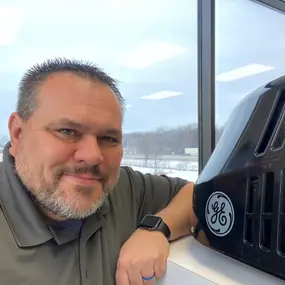
Director, Product Management - Rec Living
I've spent 30+ years in the industry, with a background rooted in both engineering and sales. I'm a homegrown professional who loves bridging the technical and the practical. Outside of work, I'm a serial hobbyist and, most importantly, a husband and father of two.