
 Apple Podcasts
 Spotify
 PocketCasts
 Eleven Hands at a Campfire - and What They Tell Us About the RV Market
The RV industry is chasing the wrong generation. While manufacturers court 30-somethings with outdoor TVs and influencer campaigns, the buyers who are actually writing checks right now look nothing like the people in the ads.
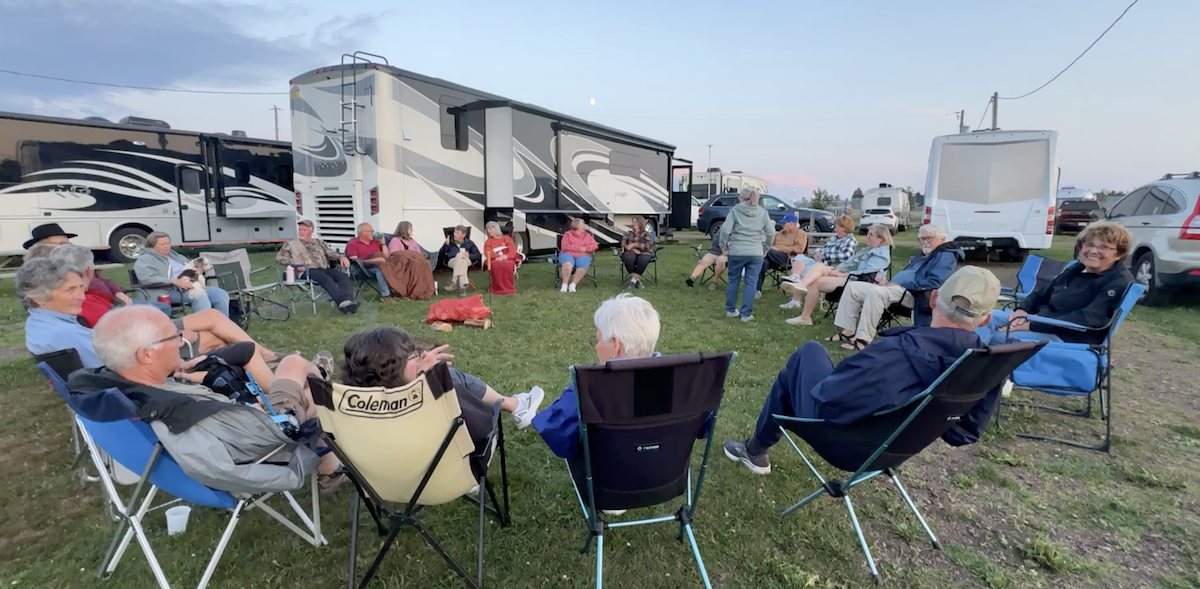
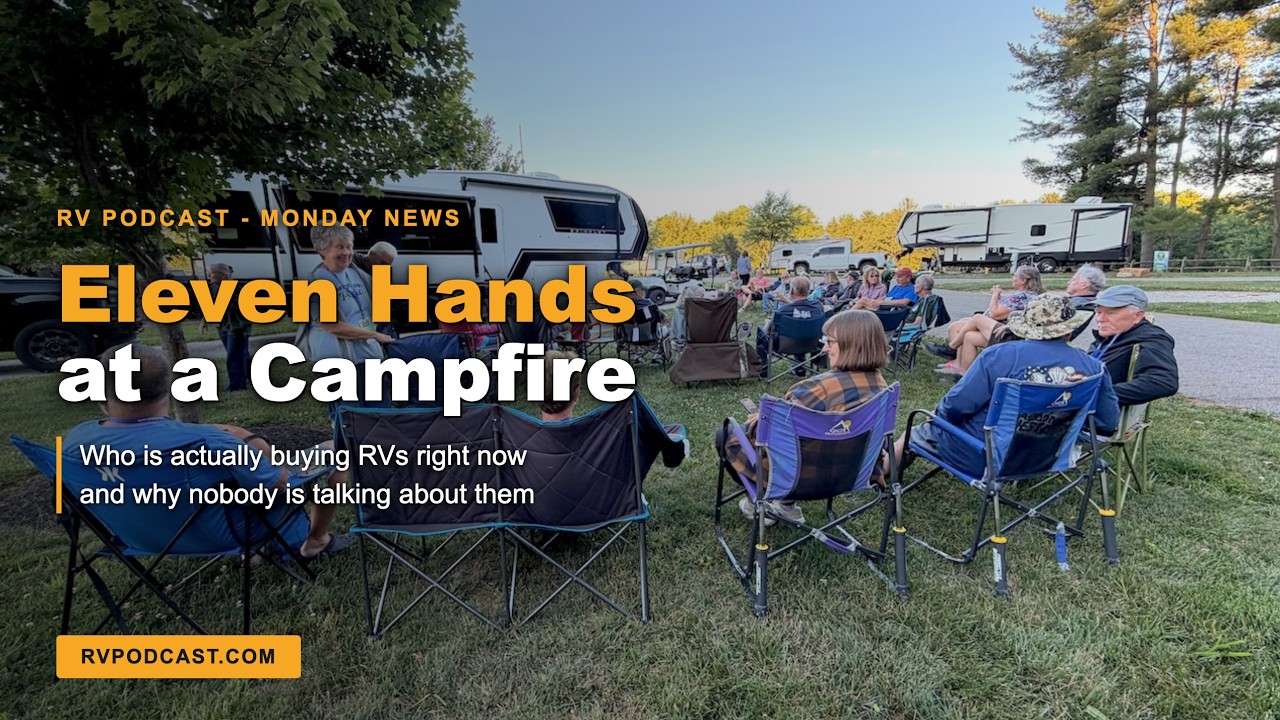
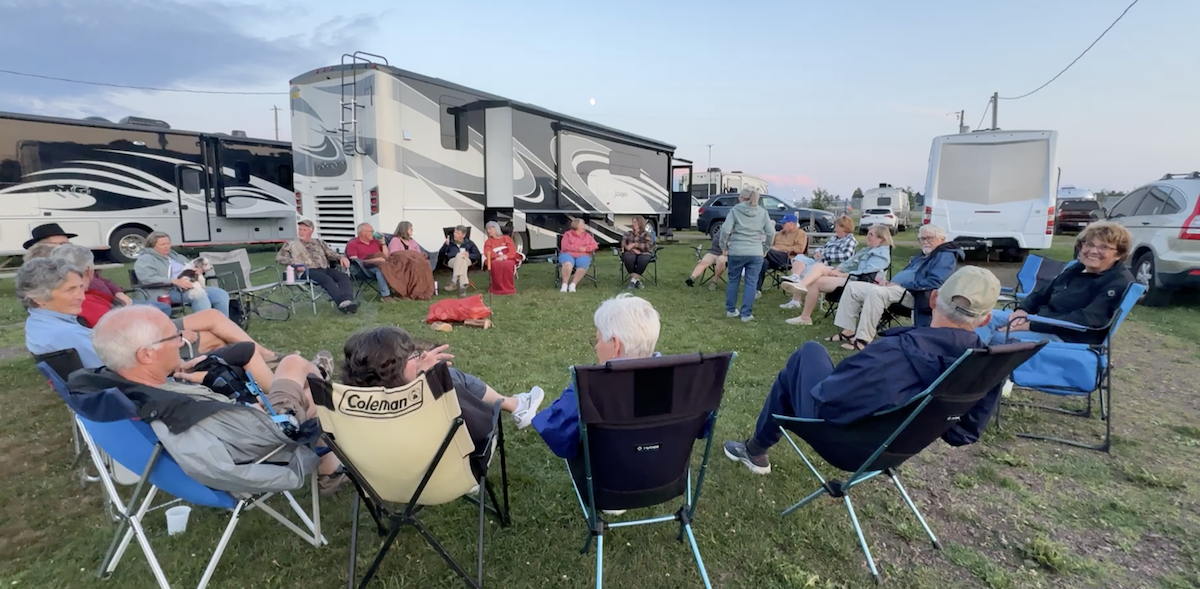
Last week I sat around a campfire in Hocking Hills, Ohio with 88 members of our RVCommunity. I asked how many had bought a new RV in the past year. Eleven hands went up. A 12th would have, but he was out on a six-mile hike. He was turning 70.
That tells you everything the sales charts do not.
In this episode we dig into who is really driving the RV market right now, what experienced RVers actually want that manufacturers keep missing, the quiet but alarming shift happening in our national parks, and a dramatic rescue on the Appalachian Trail that is a reminder of exactly why preparation matters out there.
Read the companion blog post on RVing in the second half of life at RVLifestyle.com - link below.
Here is the complete episode, start to finish.
THE RV PODCAST - MONDAY NEWS EDITION Episode Air Date: Monday, June 23, 2026 - 6:00 AM Approx. Running Time: 25 Minutes Host: Mike Wendland
THE LAST GENERATION THAT KNOWS HOW TO TRAVEL ...and why the RV industry keeps ignoring them
OPEN
Last week I was sitting around a campfire in Hocking Hills, Ohio, with about 50 members of our RVCommunity.com.
I asked a simple question: how many of you have bought a brand new RV in the last year?
Eleven hands went up. A 12th would have, but he was out on a six-mile sunset hike - and he was turning 70 that summer.
This was happening while the RV industry is posting some of the worst wholesale shipment numbers in over a decade.
Which raises a question the people running this industry ought to be asking themselves: who exactly are they building RVs for?
Because I can tell you who is actually buying them. And they look nothing like the people in the ads.
OPENING
Good morning and welcome to the RV Podcast Monday News Edition. I'm Mike Wendland.
Eighteen Emmy Awards. Thirty-plus years covering everything from wars to the White House to consumer affairs. And for the past 15 years, living the RV lifestyle myself with my wife Jennifer in every type of rig you can imagine, coast to coast, all 48 contiguous states.
Today's show is a little different. Instead of leading with a breaking story, I want to start with something I witnessed firsthand that I believe tells you more about the real state of the RV market than any press release you will read this year.
And if you want to go deeper after you listen, I have been writing about this topic at RVLifestyle.com for the past several weeks. We have been exploring what it means to RV in the second half of life - the freedom, the community, the mindset, and yes, the ways the industry keeps getting it wrong. There is a link in the show notes. I think you will recognize yourself in it.
Here is what is happening on the road. And here is what the industry is getting wrong. Let's get into it.
LEAD STORY: THE LAST GENERATION THAT KNOWS HOW TO TRAVEL
The RV industry is having a rough year. A really rough year. And the numbers tell the story fast, so let me give them to you and move on, because the real story is not the numbers. The real story is who is still out there buying and camping while those numbers grind downward.
Wholesale shipments are down more than 13 percent through the first four months of 2026. Retail sales off 14 to 15 percent from last year. The industry's own forecast, just revised downward again this month, now projects this as one of the worst years for new RV sales in over a decade.
So who is still buying?
Here is what I can tell you from 15 years in this world and from what I saw last week in Hocking Hills. The people who are still writing checks for new RVs, right now, in the worst market in a decade, are the people the industry seems most determined to pretend do not exist.
Baby Boomers. Older Gen Xers. People who grew up reading paper maps. Making reservations by phone. Talking to strangers when they got lost. Fixing things with their hands. Navigating real uncertainty with nothing but experience and nerve.
According to industry research, Americans 50 and older remain the primary customer segment for RVs. Many are retirees fulfilling long-held travel dreams, and that population is still growing as the tail end of the baby boom ages into retirement. These are people with home equity, disposable income, and something even more valuable: the time and the confidence to actually use what they buy.
And yet when you look at the ads. When you watch the Go RVing campaigns. When you walk the floor of any major RV show and look at the marketing materials stacked at the booths. You see toned and trendy 30-year-olds doing yoga on the roof of a Class B. You see influencers with ring lights and perfect hair. What you do not see is the 68-year-old retired engineer who just dropped $95,000 on a new fifth wheel and is headed to Alaska.
That is a real blind spot. And I think it is costing the industry real money.
Here is what I saw at our Hocking Hills rally. Eighty-eight people, ranging from their 50s into their 80s. Riding bikes and e-bikes and scooters. Hiking up and down some of the most spectacular terrain in the Midwest. One of our members, a retired RV technician, got under a fellow member's trailer and repacked the wheel bearings on the spot. Another couple spent an afternoon giving scooter lessons to anyone who wanted to learn.
Nobody was stuck. Nobody was panicking. When something broke, someone fixed it. When someone needed help, someone helped them. These are people who grew up problem-solving before there was an app for it. And they brought every one of those skills out here.
I asked how many had bought a new RV in the past year. Eleven hands went up. Twelve if you count the man who was out on a six-mile hike at 70 years old.
This is happening while the industry chases 33-year-olds with solar panels and TikTok aesthetics.
I am not saying younger buyers are not important. They are the future and we need them. But the marketing case being made inside RV boardrooms right now, that the 50-plus buyer is yesterday's news, is demonstrably wrong. And in a market this soft, you cannot afford to ignore your most reliable customer.
I wrote about this at length over at RVLifestyle.com. It is part of an ongoing series we have been running on RVing in the second half of life. The link is in the show notes. If today's lead story speaks to you, that post will too.
STORY 2: WHO IS ACTUALLY DRIVING THE MARKET
The demographic picture of who owns and buys RVs is more complicated than the ads suggest, and it is worth understanding.
The median age of RV owners has come down in recent years. Younger buyers were absolutely part of the pandemic surge. Millennials and Gen Z now represent roughly 22 percent of RV owners - the same share as Baby Boomers - which tells you something about how quickly the demographics shifted during COVID.
But here is what the industry sometimes misses in that data. Younger buyers came in during a period of historically low interest rates, flush pandemic savings, and work-from-home flexibility. Those conditions no longer exist. The buyers who are proving most resilient in this market are the ones who are not dependent on 7 percent financing to make the purchase work.
Industry analyst Earl Hunter Jr., founder of The Unity Folks, put it bluntly in a recent trade publication outlook piece. He said the biggest trend in the RV industry right now is, simply, lack of growth. And that the industry has not figured out why emerging demographics and nontraditional consumers have little to no interest in the RV lifestyle.
That is a real problem worth solving. But while the industry works on reaching new audiences, there is a generation of experienced, well-capitalized, deeply motivated buyers out on the road right now who built this market and are still carrying it. They deserve a little more respect than a supporting role in someone else's marketing story.
STORY 3: WHAT EXPERIENCED RVers ACTUALLY WANT - AND WHAT MANUFACTURERS KEEP MISSING
I want to tell you one more thing from Hocking Hills, because I think it reveals something important about the disconnect between what the industry is building and what experienced RVers actually need.
During our campfire conversation, I asked people what features they most use in their current rigs. What do they love. What they would change.
Nobody mentioned outdoor TVs. Not one person. This is notable because outdoor entertainment has been one of the most aggressively marketed RV features of the last several years. Manufacturers have been loading up rigs with outdoor TVs, outdoor kitchens, outdoor speakers. The assumption is that RVers want to recreate the suburban living room experience outside.
Our members were out hiking six miles. They were packed into a campfire circle talking to each other. They were fixing each other's trailers. The last thing they wanted was a television.
What did they talk about wanting? Better towing stability. Improved service networks. Simpler systems that do not require a software update to turn on the hot water. Quality that lasts. And dealers who actually know the products they are selling.
These are people with decades of RV miles behind them. They know exactly what they need and exactly what they do not. When you have that kind of experience, you stop being impressed by features and start being impressed by reliability.
The industry could learn a lot by listening more carefully to the people who have been doing this the longest....
Become a part of the Internet's Best RV Community
Private. Ad Free. No Facebook Nastiness.
RV Travel Tips, Rallies and Meet-Ups, interactive livestreams, exclusive workshops, perks, discounts and Real Help from Real Rvers.
Mike Wendland (0:01): Good morning. Good morning, everybody. Last week, I was sitting around a campfire in Hocking Hills, Ohio with about 50 members of our rvcommunity.com. We were having a rally down there. And at that campfire, I asked a simple question.
Mike Wendland (0:15): How many of you have bought a brand new RV in the last year? 11 hands went up. A twelfth would have, but he was out on a six mile sunset hike and he was turning 70 later this summer. Well, this was happening while the RV industry is posting some of the worst wholesale shipment numbers in over a decade, which raises a question that the people running this industry ought to be asking themselves. Who exactly are they building RVs for?
Mike Wendland (0:45): Because I can tell you who is actually buying them, and they look nothing like the people in the ads. So good morning, welcome to the RV podcast Monday news edition. I'm Mike Wendland, and I'm a journalist forty years in the business, as they say, covering everything from wars to the White House to consumer affairs. And for the past fifteen years, living the RV lifestyle with my wife, Jennifer, and our dog, Bo, and every type of rig that you can imagine coast to coast, all 48 contiguous states. Now today's show is a little different because instead of leading with a breaking story, I wanna start with something I witnessed firsthand that I believe tells you more about the real state of the RV market than any press release you'll get from some twenty five year old marketing whiz and and manufacturing company.
Mike Wendland (1:33): And if you wanna go deeper after you listen to this, I've been writing about this topic at rvlifestyle.com for the past several weeks. We've been exploring what it means to RV in the second half of life, the freedom, the community, the mindset, and, yes, the ways the industry keeps getting it wrong. Now there's a link to that in the show notes. I think you're gonna recognize yourself in it. Here's what's happening on the road, and here is what this industry is getting wrong.
Mike Wendland (2:01): So let's get into it. Our lead story, the last generation that knows how to travel. The RV industry is having a rough year. I mean, a really rough year, and the numbers tell the story fast. So let me give them to you and move on because the real story is not the numbers.
Mike Wendland (2:17): The real story is who is still out there buying and camping while those numbers grind downward. Wholesale shipments are down more than 13% through the first four months of 2026. Retail sales are off 14 to 15% from last year, which was a bad one. The industry's own forecast just resized downward again this month now projects this as one of the worst years for new RV sales in over a decade. But somebody's still buying, and here's what I can tell you from fifteen years in this world and what I saw last week at our Hocking Hills rally.
Mike Wendland (2:52): The people who are still writing checks for new RVs right now in the worst market in a decade are the people the industry seems most determined to pretend do not exist. I'm talking about baby boomers, older Gen Xers, people who grew up reading paper maps, making reservations by phone, talking to strangers when they got lost, fixing things with their hands, navigating real uncertainty with nothing but experience and nerve. According to industry research, America's 50 and older remain the primary customer segment for RVs. Many are retirees fulfilling long held travel dreams, and that population is still growing as the tail end of the baby boom ages into retirement. These are people with home equity, disposable income, something even more valuable, the time and the confidence to actually use what they buy.
Mike Wendland (3:46): And yet when you look at the ads, when you watch those go RVing campaigns that the industry puts out, when you walk the floor of any major RV show and look at the marketing materials stacked at the booths, You see toned and trendy 30 year olds doing yoga on the roof of a class b. You see influencers with ring lights and perfect hair, and what you don't see is the 68 year old retired engineer who just dropped $95,000 on a new fifth wheel and is headed to Alaska. This is a real blind spot, and I think it's costing the industry real money. Here's what I saw at our Hocking Hills rally. We had in all 88 people attend that rally from 17 states ranging from their fifties into their eighties, and they were riding ebikes and regular bicycles and e scooters, and they were hiking up and down some of the most spectacular terrain in the Midwest.
Mike Wendland (4:44): One of our members who retired a couple of years ago went back to work as a RV technician, and he got under a fellow member's trailer and repacked the wheel bearings right on the spot, lying down the gravel, fixing that. Now another couple spent an afternoon giving e scooter lessons to anybody who wanted to learn on their new toy. Nobody was stuck. Nobody was panicking. When something broke, somebody fixed it.
Mike Wendland (5:10): When somebody needed help, somebody helped them. These are people who grew up problem solving before there was an app for it, and they bought every one of those skills out here. I asked how many had bought a new RV in the last year, and like I say, 11 hands went up. 12 if you count the man who was out on his hike at 70 years old. This is happening while the industry chases 33 year olds with solar panels and TikTok aesthetics.
Mike Wendland (5:36): I'm not saying younger buyers are not important. They are. They're the future, and we need them. But the marketing case being made inside RV boardrooms right now that the 50 buyer is yesterday's news is demonstrably wrong. And in a market this soft, you cannot afford to ignore your most reliable customer.
Mike Wendland (5:57): I wrote about this at length over at RV Lifestyle dot com, and it's part of that ongoing series that we've been running on RV ing in the second half of life. The link is in the show notes, rvlifestyle.com. If today's lead story speaks to you, that post will too and several others that we've been doing lately. Story number two, who is actually driving the market? Well, the demographic picture of who owns and buys RVs is more complicated than the ad suggests, and it's worth understanding.
Mike Wendland (6:26): True. The median age of RV owners has come down in recent years. Younger buyers were absolutely part of that pandemic surge. Millennials and Gen roughly make up about 22% of RV owners, the same share as baby boomers, which tells you something about how quickly the demographics shifted during COVID. But here's what the industry sometimes misses in that data.
Mike Wendland (6:53): Younger buyers came in during a period of historically low interest rates, flush pandemic savings, and work from home flexibility. Those conditions no longer exist. The buyers who are proving most resilient in this market are the ones who are not dependent on 7% financing to make the purchase work. Industry analyst Earl Hunter junior, he's founder of the Unity folks, put it bluntly in a recent trade publication outlook piece. He said, the biggest trend in the RV industry right now is simply lack of growth and that the industry has not figured out why emerging demographics and nontraditional consumers have little to no interest in the RV lifestyle.
Mike Wendland (7:38): That is a real problem worth solving. But while the industry works on reaching new audiences, there's a generation of experienced, well capitalized, deeply motivated buyers out on the road right now who built this market and are still carrying it. They deserve a little more respect than a supporting role in someone else's marketing story. Story three, what experienced RVers actually want and what manufacturers keep missing. I'm gonna tell you one more thing from Hocking Hills because I think it reveals something important about the disconnect between what the industry is building and what experienced RVers actually need.
Mike Wendland (8:17): During our campfire conversations, I ask people a lot of questions, but I ask them what features they most use in their current rigs. What do they love? What would they change? Nobody mentioned outdoor TVs. Not one person.
Mike Wendland (8:30): Now this is notable because outdoor entertainment has been one of the most aggressively marketed RV features of the last several years. Manufacturers have been loading up rigs with outdoor TVs, with their own sound bars, outdoor kitchens, outdoor speakers. The assumption is that RVers wanna recreate the suburban living room experience outside. Our members were too busy outside hiking six miles for that. They were packed around a campfire circle talking to each other, fixing each other's trailers, and the last thing they wanted was a television while you're camping.
Mike Wendland (9:06): What did they talk about wanting? Better towing stability, improved service networks, better quality in the rigs, faster Internet. Yes. Old folks use the Internet just about as much as everybody else. Simpler systems that don't require a software update to turn on the hot water.
Mike Wendland (9:26): Quality that lasts. That was the overwhelming thing we heard. And dealers who actually know the products they're selling. These are people with decades of RV miles behind them. They know exactly what they need and exactly what they do not.
Mike Wendland (9:42): And when you have that kind of experience, you stop being impressed by features and start being impressed by reliability and quality. The industry could learn a lot by listening around campfires like that. Listen more carefully to the people who've been doing this the longest. Alright. Other topics in the news this week.
Mike Wendland (10:03): Your park ranger is starting to look a lot more like a cop. There's something changing in our national parks that I don't think gets enough attention, and it goes beyond the budget cuts and the staffing numbers that we've been reporting about for the past year. The ranger, you remember, the one who led the campfire talk, who knew every bird call and every wildflower on the trail, who could tell you the geologic history of a canyon while you watched the sunset over it, that ranger is becoming a rarer and rare breed. What is replacing them increasingly is something that looks a lot more like law enforcement, tactical gear, sidearms, body armor. Instead of a park ranger car, it says police.
Mike Wendland (10:47): Visitors who approach a ranger expecting a conversation about wildlife and instead find themselves face to face with amounts to a federal cop. This is not entirely new. National Park Service law enforcement rangers have always carried firearms and had full arrest authority, but there has historically been a balance between the interpreter, the naturalist, the educator on one hand, and the law enforcement presence on the other, and it seems that that balance has shifted. The administration has made clear it wants to prioritize certain things, and in their words, they want visitor facing roles prioritized, law enforcement and gate staffing. Those are the ones they're prioritizing.
Mike Wendland (11:29): The educators, the resource managers, the scientists, the people who run interpretive programs and guided hikes, these positions are being hollowed out, and what's left increasingly skews towards law enforcement. Here's the thing. The visitors who are getting that experience are not the ones who went looking for it. They went looking for the ranger who would tell their grandkids why the elk bugle in the fall or walk them through a meadow and explain what they were looking at. That ranger's being pushed out, reassigned, or simply not replaced when they leave.
Mike Wendland (12:02): We've been going to national parks for well under three decades now. Jennifer and I have camped in dozens of them. The rangers who shaped those experiences for us were the interpreters, the naturalists, the storytellers. They're exactly the kind of people this administration is treating as optional. They are not optional.
Mike Wendland (12:23): They're the whole point. Final story five. What happens when somebody goes down out there? This story comes out of Virginia and came up in last week, and I wanna share it because it connects directly to what I just told you about ranger staffing and because it's a reminder that the trails we love can turn serious in a hurry. A hiker on the Appalachian Trail near the Blue Ridge Parkway in Amherst County sent an SOS from one of those satellite communication devices last Thursday morning.
Mike Wendland (12:53): Emergency dispatchers received the signal about 11:15AM, and the hiker was reporting weakness in a remote area near the Punch Bowl Mountain overlook. Dispatchers could not reach the person directly after getting the alert, and what followed was a serious coordinated effort. Amherst Fire and EMS, Pedlar Fire, Monelson Fire, Glasgow Fire, and the Amherst County Sheriff's Office all responded. Crews hiked roughly three and a half miles into rugged wooded terrain before they finally located the hiker just after 01:00. They called for a Virginia state police helicopter to airlift that patient out.
Mike Wendland (13:36): Storms shut that option down, so the crews put the hiker in a Stokes basket and carried them out by hand through some of the most challenging terrain on the Eastern Seaboard. By 3PM, they had everybody out safely. So think about that. Multiple agencies, hours of hard physical work, miles of backcountry hiking to reach one person, and they got it done. So two things I wanna take from this.
Mike Wendland (14:02): First, that satellite communicator saved that person's life. When you are in remote country, that device is not optional equipment. It's the difference between a rescue and a tragedy. We've talked about this before, and we'll keep talking about it. If you don't have one, just Google satellite communicators.
Mike Wendland (14:19): They're not that expensive. Garmin makes one. This is particularly good, and it's reasonably priced. Second, think about what those first responders did. Those responders hiked in through difficult terrain.
Mike Wendland (14:32): They assessed the situation. They adapted when the helicopter was grounded. They carried that person out by hand. They didn't do it with an app. They did it with training, teamwork, and the willingness to go into the woods and figure it out.
Mike Wendland (14:46): Sound familiar? Well, it should. It's the exact set of skills that we've been talking about at the top of the show. The generation that knows how to travel is also the generation that knows how to handle it when things go sideways. Out here, that's not a small thing.
Mike Wendland (15:03): That is everything. Alright. The link to that full story and links to everything else that we've talked about today, you can find in the show notes. I believe in sourcing my material, so check it out. And that is the Monday news edition of the RV podcast for 06/22/2026.
Mike Wendland (15:19): One more thing before you go. Everything we talked about today, the community, the experience, the second half of the RV mindset, that's exactly what we have been writing about over at rvlifestyle.com. So head over there and look for the blog posts that go with today's episode. I think you'll find it very familiar. The link, again, is in the show notes.
Mike Wendland (15:39): And if today's conversation made you wanna find your people, that's what rvcommunity.com is for. It's private. It's ad free. There's no algorithms. There's no noise.
Mike Wendland (15:51): Just experienced RVers helping each other out there. Link in the show notes or just go to rvcommunity.com and check it out yourself. We'll be back Wednesday with Jennifer for Stories from the Road. And until then, drive safe, watch out for each other, and keep exploring this beautiful country. Happy trails.