
 Apple Podcasts
 Spotify
 PocketCasts
 The RV Doctor Is In! Real Medical Advice for RVers + Are You Too Old to Start RVing?
What should every RVer carry in their first aid kit? What medical emergencies are most common on the road? And when is a health issue serious enough to seek immediate help?
This week on Episode 616 of the RV Podcast, we're joined by Dr. Richard Raborn, a retired physician, lifelong RVer, and member of our RV Lifestyle Community. Dr. Raborn shares practical, real-world medical advice for RV travelers, including how to prepare for health emergencies, what medications and supplies belong in your RV, and how to stay safe when you're far from home. It's one of the most useful conversations we've had for anyone who travels by RV.
We also tackle two listener questions that many RVers will relate to:
• Linda and Don, both recently retired, want to buy an RV and travel the country, but their adult children think they're crazy. Jennifer explains why your late 60s may actually be the perfect time to embrace the RV lifestyle and why waiting for "someday" can be the bigger risk.
• Gary from Tennessee wonders whether the 200-watt solar package on his new travel trailer really makes him "energy independent." Mike breaks down the truth about RV solar systems, batteries, inverters, and why many RV buyers are getting an unrealistic picture of what factory-installed solar can actually do.
Plus, we share an update as we pack for our RVCommunity.com Summer Rally in Hocking Hills, Ohio, and talk about why the friendships formed through RVing may be the greatest benefit of the lifestyle.
In this episode:
✓ Dr. Richard Raborn's RV medical preparedness tips
✓ What belongs in an RV first aid kit
✓ How to handle medical issues on the road
✓ Is 68 too old to start RVing?
✓ Why RV travel may be ideal for retirees
✓ The truth about RV solar marketing claims
✓ Battery banks, inverters, and boondocking explained
✓ RV Community updates and rally news
For complete show notes, visit RVPodcast.com.
Subscribe to our free daily newsletter and get RV tips, travel ideas, news, and inspiration delivered to your inbox every morning by 7:30 AM at RVLifestyle.com/newsletter.
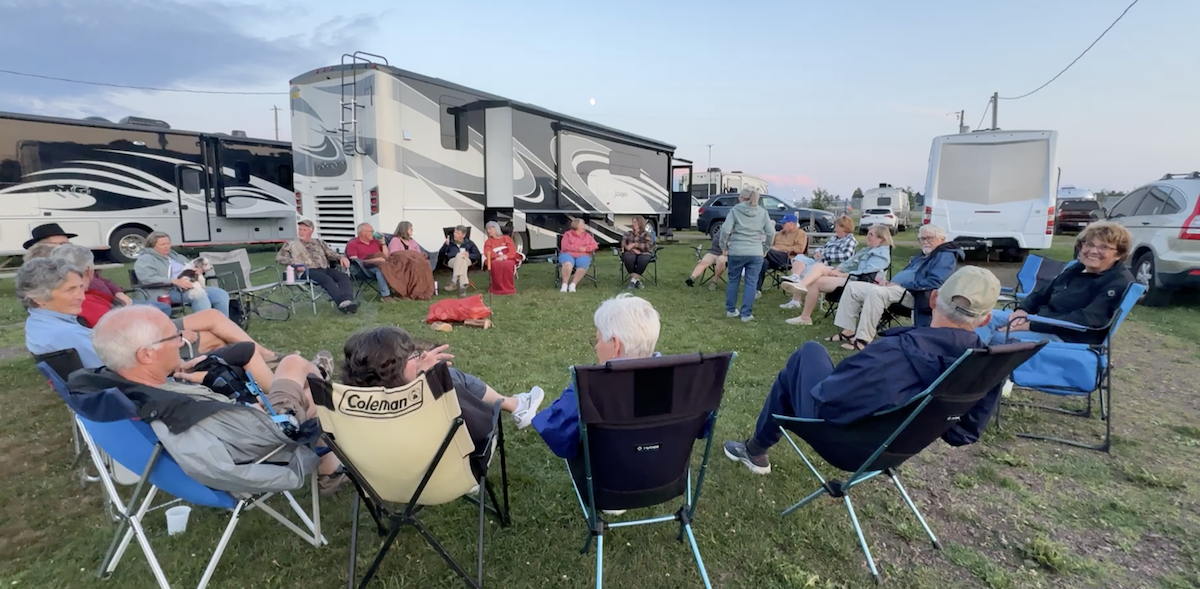
Become a part of the Internet's Best RV Community
Private. Ad Free. No Facebook Nastiness.
RV Travel Tips, Rallies and Meet-Ups, interactive livestreams, exclusive workshops, perks, discounts and Real Help from Real Rvers.
Unknown Speaker (0:01): This is episode 616 of the RV podcast.
Unknown Speaker (0:05): And this week on the podcast.
Doctor Rishi Rayborn (0:08): One of one of the major things is more problems with your vision, and it's not improving. And more problems with any kind of unsteadiness. That would be two big things.
Mike Gwendolyn (0:21): In this episode's conversation of the week, we're going to hear from Doctor. Rishi Rayborn, a retired MD, a fourth generation physician, and an avid RVer who shares his medical expertise and everything from what to pack in your RV's first aid kit to handling health emergencies on the road.
Jennifer (0:39): Plus, we'll share travel tips, answer your RV questions, and much more. This episode is being released on 06/10/2026. Hello, everybody, and welcome to the RV podcast.
Mike Gwendolyn (0:50): I'm Mike Gwendolyn. This is my cohost and my lifelong traveling companion and my bride, Jennifer. Hello, my dear.
Jennifer (0:57): Hello, my Michael. And this is the RV podcast stories from the road edition. You can find complete show notes for this episode at rvpodcast.com. And remember, we release two episodes every week. This edition, Stories from the Road focuses on the RV lifestyle, the people, the places, and experience that make life on wheels so special.
Jennifer (1:18): Then every Monday, we bring you our RV news edition covering the biggest stories of the weeks that impact your travels.
Mike Gwendolyn (1:26): Well, this week, we are packing once again for another RV trip. It's been a busy week. I've been working in the garden on our little 10 acre homestead in Southwestern Michigan, and, I've really enjoyed getting my hands dirty and then messing around in that dirt.
Unknown Speaker (1:42): I've even enjoyed it. I've been out there a little bit helping you. Pulling those weeds and getting that soil ready.
Mike Gwendolyn (1:48): We can grow weeds really, really good. But we are heading off. We're heading to a rally. This is our second rally of the year of three big national rallies that we do for rvcommunity.com members. And this time, we're heading to a place that's been on a lot of people's bucket list for a long time and a place that I'm surprised how many people don't know about how awesome Hocking Hills, Ohio is.
Mike Gwendolyn (2:16): What a great region that is. We'll share some pictures in the, on the YouTube channel and stuff as we get going, but, I'm really looking forward to this rally.
Unknown Speaker (2:25): I've always wanted to go there. I've heard about it. And for some reason, we haven't gotten there, but we're getting there now.
Mike Gwendolyn (2:31): This is a big rally for us. Almost a 100 people showing up, and, we've got lots of activity on the water and hiking and exploring and doing a lot of socializing around the campfire. So it should be a lot of fun. And, you know, as we get ready to head for this, summer rally, we're reminded once again that the very best part of the RV lifestyle isn't the RVs. It's not the campgrounds or even the destinations.
Mike Gwendolyn (2:59): It's the people.
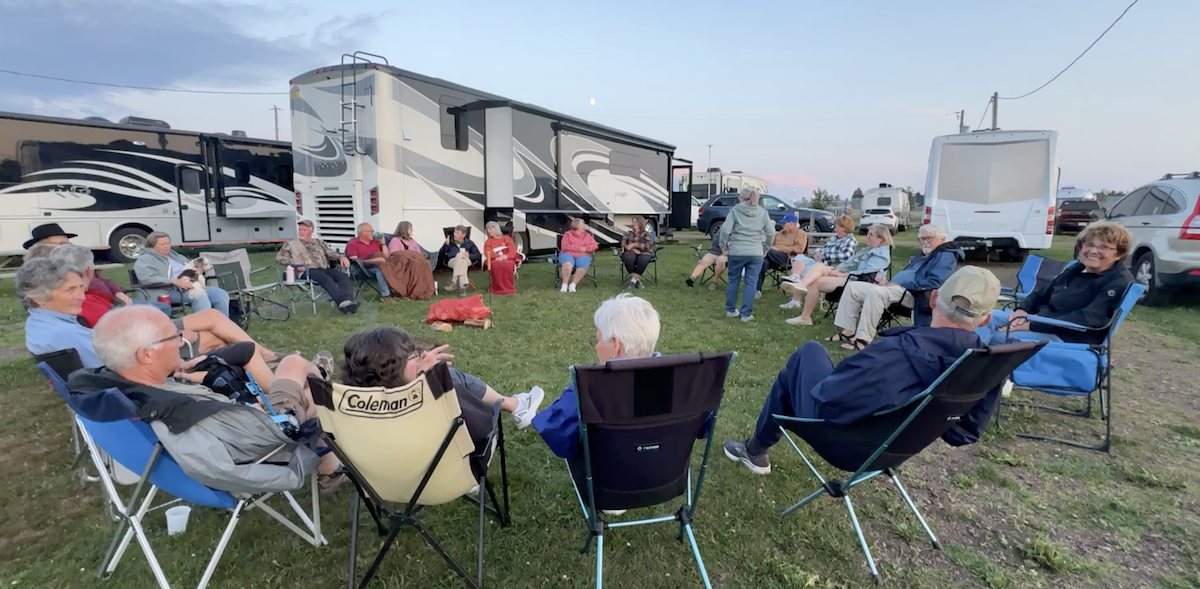
Jennifer (3:01): That's what makes our rally so special. Friendships are formed. Stories are shared. And before long, complete strangers feel like old friends gathered around a campfire.
Mike Gwendolyn (3:11): The truth is that's exactly why we created rvcommunity.com. Now you may have heard us talk about it before in the podcast. If not, we wanna tell you it's a place where those same friendships and conversations continue all along in person at numerous rallies and meetups across the country and then every day online. So if you're looking for a friendly welcoming group of RVers who share your passion for travel, adventure, and making the most of this stage of life, we'd like to have you join us.
Jennifer (3:44): Rvcommunity.com is a private ad free community built for RVers who are in the best chapter of their lives and wanna make the most of it. People who are done settling and ready to explore. Members share trip reports, ask real questions, get real answers, and connect with hundreds of fellow travelers who are out there doing exactly what you're doing.
Mike Gwendolyn (4:06): There's no heads, no algorithms, no drama, just good people who love the RV lifestyle as much as you do. So come on. Find your people at rvcommunity.com. Time now for our conversation of the week.
Jennifer (4:21): Okay. We have to admit. We, had a little fun with the title of today's episode. RV doctor is in, and, yes, he is a real doctor. Doctor Richard Rayborn is a retired fourth generation Florida physician who also happens to be an RVer currently traveling the country in his twenty twenty six Coachmen.
Jennifer (4:42): We got to know doctor Ray Bourne through our RV lifestyle community. And from the very first conversation, it was clear this man knows his stuff.
Mike Gwendolyn (4:50): So we thought why keep that to ourselves? And, today, we're bringing him out of the podcast to help us all get a little better prepared for the medical situations we might actually face out on the road. And because, well, let's be honest, when you're hours in the nearest hospital and something goes wrong, knowing what to do and what not to do can make all the difference in the world. So with no further ado, let's bring on doctor Richard Rayborn, member of our RV lifestyle community, to talk about it. The doctor, he's in, and he's a real medical doctor.
Unknown Speaker (5:26): Well, there you are, and it's, always good to see you, doctor Ray Orrin. How are you doing?
Unknown Speaker (5:30): I'm doing very good today, Mike.
Mike Gwendolyn (5:33): Now, before we get started, let's point out to everybody that you indeed are a very active RVer, and you in fact, you picked up a new unit just not long ago. Why don't you talk about your RV and where you've been and how often you are on the road?
Doctor Rishi Rayborn (5:50): So my plan was to try to visit all three of my sons who are you know, some in South Dakota, some in Virginia, some in Florida. And one of the ideas was, I I don't have to disturb their households. I can stay in the van if necessary. And I wanted to get something I could use as a daily driver if I had to go down from my mountain house in Georgia.
Unknown Speaker (6:18): And so what is your RV?
Doctor Rishi Rayborn (6:20): My RV is a '20 26 Beyond 22 d. It stands for dinette. It just has the two benches in the back, and it has six seat belts, which helps my youngest son's family because he has four children.
Unknown Speaker (6:37): That's great. And it's a class b from Coachmen. They make the beyond. Yes. And you've been doing a lot more than visiting relatives, though.
Mike Gwendolyn (6:44): We've seen you around the country, and you are traveling everywhere, it seems like.
Doctor Rishi Rayborn (6:48): Yeah. I actually wanna get up and visit Coachmen and do some other travel. It's been fun to visit some friends in Beaufort, South Carolina and to stay in Boca Raton, Florida with a friend. And HOA had no problem with my van,
Mike Gwendolyn (7:08): which is good. It's like a you're not that much bigger than a than an SUV. Yeah. Well, let's let's start off with, kind of a basic, prep thing that every RVer should be aware that they need, and that is a first aid kit in their RV. Without obviously packing a huge suitcase, what are some of the things that they should have and perhaps how they should customize it based on age and and who they're traveling with?
Doctor Rishi Rayborn (7:37): Well, with most first aid kits, you have to plan on doing some replacement of some of the items almost yearly, maybe at least every two years. If you think about the things you should take, I'll I'll start, let's say, from the top of my head to the tip of my toes. It would be good to have some normal saline and the type that you would get, say, to deal with contact lenses. The normal saline could wash your eyes out. It can wash out a wound, and it can, you know, basically give some comfort to a burn area.
Doctor Rishi Rayborn (8:15): Then I think for dental stuff, if you went and looked around, you can find some little dental kits. The most important thing in a dental kit is a temporary tooth. Kind of like a putty. And that stops pain, and it helps helps, you know, bind it until you get to a dentist.
Mike Gwendolyn (8:42): What are what about the standard things like bandages and maybe something to cut tape with, that type of stuff?
Doctor Rishi Rayborn (8:50): Sure. Most of that stuff will be in a first aid kit. You should have tape. You should have gauze. You should have Band Aids you're not allergic to.
Doctor Rishi Rayborn (8:58): I'm allergic to latex as is fifteen percent of all health care workers. And you should have, hopefully, like Neosporin Plus that kind of calms down the pain of a wound. There are other things that make good sense to have for monitoring. And I I carry in my I have I have a little finger type EKG machine.
Unknown Speaker (9:31): Mhmm.
Unknown Speaker (9:31): Okay. Where I get my heart rhythm.
Unknown Speaker (9:34): What about the ones that are, like, on your Apple Watch?
Doctor Rishi Rayborn (9:36): Like on the watch, but this one has a little, like, a little plaque, and then it has a thing on each end. And you can lay it down on your on your leg, your bare leg, and it'll give you six leads, which is probably more than most people can handle, but it will be helpful. And the oximeter is very helpful. If you need to call a doctor for telehealth, imagine you can give him your blood pressure, your pulse, your oxygen, your temperature. All those things help him immensely to help you.
Mike Gwendolyn (10:12): You know, so many of our, medical offices and our hospitals that we go to now are using electronic records, and we have patient portals. Those have to be incredibly helpful in terms of all the meds you're on, your latest labs, all that, if you would need them, when you're out of on the road someplace to share with a physician if you were in an emergency situation. So I I would imagine you would encourage people to keep those up to date and have access to them.
Doctor Rishi Rayborn (10:41): Yes. And, access on your phone is helpful. Several, different ways of doing it, but depending on your Android or iPhone, it's good for each individual to investigate that. In the days before the Internet and most computers, we made up a little plastic card for our patients that had their EKG on one side, and it had all their medicines and allergies on the other. And because it was a hard copy like that, you could hand it out in an emergency room, and the information would be placed in it quickly.
Unknown Speaker (11:19): You know?
Unknown Speaker (11:20): Yep. As well as your blood type. I would imagine everybody should know their blood type.
Doctor Rishi Rayborn (11:24): Yeah. I'm I'm o negative. Underneath here, have my my blood donor card shirt on. That is that is helpful, but most emergencies, you'll be okay.
Mike Gwendolyn (11:38): But let's let's talk about emergencies. What are the typical things that an RVer should that you should be kind of prepared for on the road, or maybe understanding, symptoms that they should be aware of that are more than just, not feeling particularly good because it's too hot outside.
Doctor Rishi Rayborn (11:57): Well, yeah, if we go beyond the usual flus or exactly, you know, high temperatures, heat exhaustion, if we go beyond that and take a look at, you know, preventing injuries and what kind of injuries are really can ruin a trip, I would say eye injuries are pretty bad. Really painful tooth is very bad. You should be able to address that. And hand injuries. I know we use our gloves, you know, for
Unknown Speaker (12:31): You say that. I don't know if you can see that.
Unknown Speaker (12:33): Yes.
Unknown Speaker (12:34): I slammed my thumb in the RV in the truck hooking up the RV the other day. So that that is painful.
Doctor Rishi Rayborn (12:41): It's almost like we we should have some kind of better gloves when we're hooking up our IVs, etcetera. And I worry about the next thing would be falls. So your first aid kit, you'd like to be able to take care of a large scrape. You know? You'd have enough materials to to cover something that might be three by six inches, the gauze and tape.
Doctor Rishi Rayborn (13:05): And and you'd like to also be thinking about preventing falls when you're in your RV. I I keep finding there are certain corners and things in the RV trying to get used to it. You you're gonna bump into several times until you figure it out. I've hit the top of my head. I've hit I've hit the corners of things.
Doctor Rishi Rayborn (13:29): And so in a first aid kit, you know, for pain relief, I would definitely have have both. I like Aleve. I think it's the or the generic, you know, Naprosyn, naproxen. I like that. It and I also like to have Tylenol on hand, those two.
Mike Gwendolyn (13:49): K. What beyond this this the first aid kit, what are, you know, our audience skews a little bit older than than, many of the other, RV content creators out there. What are some symptoms that, are maybe something that we shouldn't attribute to just getting older?
Doctor Rishi Rayborn (14:12): Well, I think whenever we get unusual swelling, as before, I know you've discussed blood clots and the need to get out of your your van or RV and walk around a little bit every two to three hours. It's a good thing. It's it's interesting that the most common thing that causes people to go to the ER is actually abdominal pain, stomach pain. And it would be nice to quickly differentiate that from something else. It used to be we carry Maalox or Mylanta.
Doctor Rishi Rayborn (14:50): Now I guess we carry Pepcid and all the h two blockers that you can buy over the counter. But really persistent abdominal pain should be checked out by a doctor. Other things that people notice notice, if they get really short of breath during what seems to be a flu illness, that's where that oximeter comes comes in handy. And, you know, they're like $20, and you probably have to change the batteries every couple years.
Unknown Speaker (15:22): And this an oximeter measures the amount of oxygen in your blood. Right?
Unknown Speaker (15:26): Yes. It measures the oxygen in your blood. You just put it right on your finger.
Unknown Speaker (15:31): I think my iPhone does that too.
Doctor Rishi Rayborn (15:33): Yes. They have allowed some of the phones the watches to go ahead and measure that. There were some patent debates on that, but it makes good sense that they can do it.
Mike Gwendolyn (15:48): What's a good rating that people should say, well, I'm okay? Is there when when should they get flagged?
Doctor Rishi Rayborn (15:55): Well, once once you're below 90% on oxygen, you're you're definitely you should be heading to the There's a debate on how sick you are, and you're somewhere between 90 and 94. But even when we're ill, we saturate our blood pretty well. So the best thing I can remember, during COVID, I asked a neighbor of mine if you want me to come down and check his oximeter. He says, oh, no. No.
Doctor Rishi Rayborn (16:21): I've got I've got an oximeter coming in from Amazon tomorrow. Well, his he called with his o two level the next day, and it was in the seventies. So he spent about two weeks in the hospital two weeks in the hospital. And even though they gave him blood clot medicine for six weeks at least, which you have to do after that, he still developed a blood clot in his legs. So it's a it's a I think swelling in the legs, you know, that's a a definite thing to check out to check out.
Mike Gwendolyn (16:52): Okay. Swelling in the legs, and that's one that often the thing what are some of the other I think of the most common things people worry about are strokes and heart attacks. What are some of the first warning signs that you should not dismiss? Because, you know, there's a lot of RVers out there say, oh, I'll I'll be better when I lay down when we get into the campsite. They just keep going.
Unknown Speaker (17:16): What what Well, I some of the warning signs.
Doctor Rishi Rayborn (17:19): So warning signs that also can be dealt with if you recognize them. One would be sudden loss of vision in one eye. And if that is a blood clot trying to form, you can actually pump the eye with your thumb and try to knock that out of the main vessel. So there's some things you can do that are more emergency oriented.
Unknown Speaker (17:44): How about how about stroke? What are the
Doctor Rishi Rayborn (17:46): Well, okay. Other signs of stroke are are weakness or tingling or loss of speech. I had a stroke one year after I retired. I was out walking, and I I had, like, a virus. I didn't recognize what it was.
Doctor Rishi Rayborn (18:02): And I was kinda weak trying to rehydrate myself. I had a lot of GI symptoms. And my right leg started hurting, and it was it was weak. And I didn't put it all together till the next morning when I noticed my right hand also was a little bit weak. So I quickly took some chewable aspirin and called my son to get me over to the hospital.
Doctor Rishi Rayborn (18:26): And I I recovered very well except for, you know, minimal steadiness at times, mostly when I just dropped my blood pressure too low.
Mike Gwendolyn (18:35): What what about, things like, you say shortness of breath when you're not feeling well, but sudden shortness of breath, fatigue, other things that people might just think that's just they're tired or they haven't, maybe had enough water, they're dehydrated. What kind of advice would you give with those
Doctor Rishi Rayborn (18:59): I would think they have to look at their environment. If if they they are ill and they haven't been hydrating, being dehydrated is a pretty good guess. And if they are generally ill and start to have palpitations or a rapid heartbeat, they should be concerned.
Mike Gwendolyn (19:18): Well, I guess as we kinda wrap this up here, if you had to give maybe one piece of advice to RVers before they leave on their next trip that has to do with their health and, what they can what they need to do to prepare or be aware of, what what would that be?
Doctor Rishi Rayborn (19:37): Well, I I, of course, I organize just enough pills to get me through the trip, and I use the weekly medicine strips. The other thing is I I look at the medicines I might take occasionally, like for heartburn or headache, and I make sure I have some of those. I actually carry some Imodium, which is, you know, like, for diarrhea and some of those sort of as needed over the counter things. And it could be helpful. There are full kits that you can order that have prescription medicines in them.
Doctor Rishi Rayborn (20:14): And with the telemedicine, this has been a a big help.
Mike Gwendolyn (20:18): Yeah. We we had somebody on the podcast a year or so ago. I think it was called the Jace case. And I've since seen other people now, they're advertising it on cable news where you can buy a lot of the prescription drugs that that you would get for antibiotics, things like that. And there's even a little book in there.
Unknown Speaker (20:39): If you got these symptoms, take this. Are those on the up and up level?
Doctor Rishi Rayborn (20:44): I I think in general, especially if they they're offering contact with a physician, if you can do that.
Unknown Speaker (20:50): Yeah. I think you have to get a Well, this is
Unknown Speaker (20:52): called the wellness company.
Unknown Speaker (20:53): That's one of them. Yeah.
Doctor Rishi Rayborn (20:54): That's one of them. And then there's I have friends. He's a OBGYN. She was a nurse, an OB nurse, and they put together a lot of kits. I I brought them in when COVID hit, and we did a presentation on stage for people so that they could get some of those emergency type medicines.
Mike Gwendolyn (21:20): So the wellness company is one. Jace Case, j a s e, we can put a link to that. Those are I guess, again, both you do need to speak with a physician. You can do it through telemedicine, but that's all that's all good, I guess, to have that stuff.
Doctor Rishi Rayborn (21:39): It's nice if telemedicine is now generally around. I was a concierge physician, and I I charged $50,100 dollars a year. I didn't care if you had insurance or not. We give you $25 for a visit at that. And I talked to this company in Connecticut, and all they had was a little black box and a blood pressure cuff connected to it and all that in Connecticut.
Doctor Rishi Rayborn (22:01): And they were charging $20,000 a year to be able to contact your doctor real quick. You know? And they they were they said they had a lot of class a RVs that were using it.
Mike Gwendolyn (22:14): Yeah. That's a bit much. Yeah. Yeah. That is that is a a bit much.
Mike Gwendolyn (22:18): Well, thank you very much. I remember a friend of mine was, he used to do technical, help, and he's he's passed away. His name was, Gary, and he was known as the RV doctor. But now we're gonna call you the RV real doc.
Unknown Speaker (22:34): Real doc. Okay.
Mike Gwendolyn (22:36): And, I really appreciate it. As we said in the opening, we know doctor Rayborn well. He's part of our community. He's a friend, and we just thought it would be really great to share some of these general, ideas for people. And one other question just comes to my mind, and I hear this maybe late at night over a campfire with some of the other campers that we're with.
Mike Gwendolyn (23:01): It always seems to come up with, when do you know that it's time to stop? You're maybe getting a little too old. When do you know that it's time to get off the road as an RVer? And as a as a medical doctor and an RVer, I wanna ask you that question. How how do we know that?
Doctor Rishi Rayborn (23:21): I think we have to listen a bit to our family and friends. But if we're having more problems, one of one of the major things is more problems with your vision and it's not improving and more problems with any kind of unsteadiness, that would be two big things. We all know that our reaction times are much lower, so we really need to you know, I had really good training in high school with, you know, education driver's education. And I really follow that, you know, one car length for every 10 miles per hour, but almost nobody seems to. Everybody seems to tailgate.
Doctor Rishi Rayborn (24:03): But you can still be a a better driver. And you can take courses. If you're feeling about it, you can take courses. The state of Florida also offers you if you want, they'll actually take you in your car. And I guess maybe it would be a van, but they will take you in a van, they will check out to see if you're not paying attention to the left side or the right side or if something is going on.
Doctor Rishi Rayborn (24:27): I've had patients where I told them they needed to take that that examination with the state so that they could keep driving or maybe learn that they shouldn't be.
Mike Gwendolyn (24:37): So unsteadiness, vision issues, and listening to your family. Because there does come a time when, and hopefully later because we all got a lot of miles to go. But, all right. Doctor Rayburn, thank you so much, and, we'll see you at the next rally. Right?
Unknown Speaker (24:57): Yes, sir. Thank you. Take care.
Unknown Speaker (25:00): Doctor Richard Rayburn, the real RV doc. Thank you, sir. I
Jennifer (25:05): gotta tell you, doctor Rayburn is such a nice person, and we're so glad that he's willing to share his life experiences and what he's learned over the years, and and he loves helping people.
Mike Gwendolyn (25:15): He really does. That's awesome. Hey. If you are like us, you're getting a little worn out paying top dollar for crowded RV parks, and we've talked about this one before. But Jennifer and I keep coming back to it because it just works.
Mike Gwendolyn (25:28): I wanna thank them for sponsoring this part of the podcast, rvovernights.com. Last year, we came across something that honestly changed the way we travel, and one of our favorite stays was at a bison ranch in Indiana. I mean, real bison right outside the RV window. Huge animals. Absolutely incredible.
Mike Gwendolyn (25:48): And that's just one example.
Jennifer (25:49): Yeah. And that's just one example. They've got wineries, farms, museums, even a lavender field all over the country, Canada too. Places you'd never find in any campground directory. And it's really easy to use.
Jennifer (26:02): Pull up the interactive map, see what's available along your route, book your overnight, done. No digging around, no guessing. These aren't random parking lots either. They are unique, memorable stays hosted by real people all across The US and Canada. And the whole thing is just $49 for an entire year.
Jennifer (26:22): And right now, they're offering our listeners 40% off with the promo code RVL deal. After more than fifteen years on the road, we don't recommend something unless we actually use it ourselves. This one we keep coming back to. Head to rvlifestyle.com/rvovernights and use promo code RVL deal to save 40%.
Mike Gwendolyn (26:44): Alright. Let's get to the, questions of the week, and, we get lots of email. We love hearing from you, and you can reach us through rvpodcast.com. There's a little, link up on the top there called contact, and you can just use that link to send us an email. We read everyone we get, and we use a lot of them right here on the podcast.
Mike Gwendolyn (27:03): Now some come to me, some come to Jen, and we always wanna start with somebody who's looking for Jennifer's know how. And that leads us to this, first one for this week. This comes from Linda and Don in Ohio. They write, Jennifer, we are both 68 years old and just retired. We wanna buy an RV, and we wanna start traveling while we're still healthy and able.
Mike Gwendolyn (27:25): The problem is our adult kids think we've lost our minds. They keep pushing us towards buying a condo in Florida and settling down, but that's not what we want. We wanna see the country. So is the RV lifestyle realistic for a couple our age, And are we really as crazy as our kids say we are?
Jennifer (27:46): Linda and Don, first of all, you are not crazy. You are my people. Mike and I get this question more than, you know, we'd hate to admit, and I wanna answer it honestly because I think it matters a lot. Let me start with the condo idea because there is something you and your kids may not know. The Florida condo market right now is honestly one of the riskiest places to park your retirement savings.
Jennifer (28:13): After the Surfside Building collapsed in 2021, Florida passed new laws requiring structural inspections and fully funded reserves for older condo buildings. The result is that HOACs have gone through the roof and special assessments, those one time surprise bills associations can send you are hitting owners from anywhere from 50,000 to 200,000 per unit in some older buildings. Median condo prices in Florida are down more than 10% compared to just two years ago, and analysts are warning about what they're calling a condo cliff. Buildings where the repair costs are approaching or exceeding the value of the units themselves. So the safe, sensible choice your kids are steering you towards may not be as safe as it looks on paper.
Jennifer (29:04): Now let's talk about what you actually want to do. Is the RV lifestyle realistic for a couple just under 70? Absolutely. Yes. In fact, I would argue it is ideal.
Jennifer (29:15): You're healthy. You're retired. You have time, and presumably, the freedom to go where you want when you want. That combination is genuinely rare, and it is exactly what the RV lifestyle is designed for. Here's what I always tell people who ask me this.
Jennifer (29:33): The RV is not a compromise on travel. It's a way of traveling that lets you slow down enough to actually experience the places you visit. You wake up in Acadia National Park and walk out your door into the morning. You park at a vineyard in Virginia wine country or find a campsite along the Blue Ridge Parkway. You're not rushing to catch a flight or paying resort prices for a hotel room.
Jennifer (29:58): Your home travels with you. And at our age, I say our age because Mike and I are not exactly spring chickens either. There is something deeply reassuring about that. Your medications are in your cabinet. Your bed is your bed.
Jennifer (30:13): Your routines travel with you. That continuity actually makes extended travel less physically taxing, not more. The learning curve is real, and I won't pretend otherwise. Your first few trips, you'll make mistakes. Everyone does.
Jennifer (30:29): We did. But you learn fast. And the community of RV travelers, especially people in your age group, is one of the most generous and helpful communities I've ever been a part of. Someone at the next campsite has always been where you are, and they will help you figure it out. As for your kids, I understand their concern comes from love, but I want to gently push back on the idea that settling down is a responsible choice and traveling is reckless.
Jennifer (30:57): You worked your whole lives for exactly this window of time. The data on healthy aging is pretty clear that staying active, curious, and engaging with new experiences is one of the best things you can do for your physical and mental health. The RV lifestyle delivers all of that. Start with a rental. Spend a long weekend in a class a or a travel trailer before you buy anything.
Jennifer (31:21): Get a feel for it, then come join us in the RV lifestyle community because I promise you will find hundreds of people just like you who made exactly this choice and have never looked back. Linda and Don, your kids will come around, especially when you invite them to meet you at the Grand Canyon.
Unknown Speaker (31:38): Yeah. You you talked about not being spring chickens, and I'm reminded of, my friend Doug down in Florida who is telling me he's a musician, and he's telling me that he's playing, next to a band, at this one place in the band was looking for a name, and they said, wow. You know, none of us are really spring chickens. And I say, hey. Let me think with that.
Unknown Speaker (32:00): And he came up with the name of the band is called are you ready for this? Autumn fowl. Autumn fowl instead of spring
Unknown Speaker (32:10): chicken, fowl chicken. Okay.
Unknown Speaker (32:13): I thought that was pretty funny. I wanted one of their t shirts.
Unknown Speaker (32:16): Alright.
Unknown Speaker (32:17): Sounds like
Unknown Speaker (32:18): you. Yeah. Autumn fowl. Doesn't that sound good? Alright.
Unknown Speaker (32:22): Okay. I thought it was pretty funny. Alright. What's the next one?
Jennifer (32:28): Alright. Question. Mike, we have a question from Gary in Tennessee. He writes, we just bought a new travel trailer, and the dealer told us the 200 watt solar panel on the roof means we'll be completely energy independent. They said we can camp anywhere without hookups and never worry about power.
Jennifer (32:47): That sounds great. So we didn't ask too many questions. Now we're home, and I'm starting to wonder if that was really true. Did we get oversold on solar?
Mike Gwendolyn (32:58): Oh, boy. Gary, you asked exactly the right question, and you asked it at exactly the right time before you pull out on, your first boondocking spot and discover the hard way that something's wrong. The short answer is yes. You probably got oversold, and you are far from alone. This is one of the most common misleading things we hear, that dealers say to people all over the place, and I wanna give you the real breakdown.
Mike Gwendolyn (33:25): So let's start with what a 200 watt solar panel actually does. That 200 watts is a peak rating, meaning that's what the panel produces under ideal laboratory conditions, which would be full direct sun, perfect angle, perfect temperature. Well, in the real world, your 200 watt panel will typically produce somewhere between a 120 and a 180 watts at any given moment. And over the course of a full day, you're really looking at probably about 600 to 1,200 watt hours of total energy depending on your location, the season, how you've angled that panel up there, and whether you're dealing with clouds or shade. But let me put that number in context for you because most travel trailers and motorhomes use between ten and fifteen kilowatt hours of electricity per day.
Mike Gwendolyn (34:20): So a 200 watt panel produces roughly one to one and a half kilowatt hours on a good day. So you can do the math, and you can see the gap here. Your panel's covering maybe 10% of what your rig actually uses. And here's the thing I really want you to understand, Gary, because this is what dealers almost never explain properly. Solar panels do not power your RV.
Mike Gwendolyn (34:47): What they do is recharge batteries. Batteries are what actually power your RV. The solar panel is the input. The battery bank is the fuel tank. Think of it that way.
Mike Gwendolyn (35:00): And if the fuel tank is too small, it doesn't matter how good your input is. And one of the most common mistakes RV owners make is failing to account for the difference between rated battery capacity and usable battery capacity. If your trailer came with a standard AGM batteries, which most do from the factory, you're only safely using about 50% of that rated capacity before you start damaging them. So a battery rated at a 100 amp hours really gives you about 50 amp hours of actual usable power. Now lithium batteries, by contrast, they're much more expensive, but they can be discharged to 80 or even a 100% of their capacity without any damage.
Mike Gwendolyn (35:46): And that effectively gives you almost double the usable power in the same size package. There's a third piece of this puzzle that almost nobody talks about in the dealership either, and that's the inverter. Now the inverter is what converts your battery's 12 volt DC power into the 120 volt AC power that your microwave, coffee maker, TV, and most other appliances actually run on. A 2,000 watt inverter gives you reasonable headroom for most moderate loads. I don't know how big your rig is, but you may need a 3,000 watt inverter.
Mike Gwendolyn (36:22): That's a practical choice for anybody with a larger rig running multiple appliances at once. So if your battery bank is undersized and your inverter is inadequate, you're gonna drain those batteries in a very short time. That solar panel on your roof can't keep up with that in real time. It's recharging the tank slowly while the inverter is draining it fast. So, what does a real boondocking solar system look like?
Mike Gwendolyn (36:53): Well, for frequent off grid camping, you want at least 200 to 400 amp hours of lithium battery capacity. Even more is better for longer stays where you're running, you know, Internet gear and a furnace fan or regular inverter loads. And on your inverter, well, I would say, like I say, a 2,000 minimum, 2,000 watt, maybe 3,000, if you have a a big unit. Now I'm not saying that that 200 watt panel on your roof is useless because it's not. It can handle phones and laptops and running a few small appliances.
Mike Gwendolyn (37:33): If you're pulling into campgrounds with hookups most of the time and you just want a little supplemental power on a day trip, it it does a fine job. But energy independent, camp anywhere without worrying about power, that's not what 200 watts buys you. So here is my advice. Before your first off grid trip, find out exactly what kind of batteries came with your trailer, the brand, the chemistry, the amp hour rating, and then think honestly about what you plan to run. Air conditioning, by the way, is a whole different conversation, but don't think you're gonna be able to run your air conditioning forever.
Mike Gwendolyn (38:07): Some people say that, oh, our units will run your air conditioning all night long. Well, that's a lot of lithium and a pretty good inverter and a lot of solar up on the roof that's needed to do that. So the good news, you can upgrade if you got money. Battery upgrades, panels, quality inverter, they're all doable, but they cost money. What you can't do is assume that one panel and factory batteries are gonna make you energy independent because that promise was made by somebody who is more interested in getting you to buy than in setting you up for success.
Mike Gwendolyn (38:41): Now the RV industry has gotten better in a whole lot of ways, but solar is an area where marketing still runs way ahead of reality, and dealers often don't have the technical background to give buyers an honest picture. So you asked the right question, Gary. Now go dig up those battery specs. Okay. If you have a question or you have a comment, anything we talked about today, just use that contact link at rvpodcast.com, and it'll come right to our inbox.
Mike Gwendolyn (39:10): So thank you guys for listening.
Jennifer (39:12): Oh, thank you so much for listening. And if you enjoyed today's episode, we'd love it. If you could take a moment to leave us a kind review on Apple Podcasts, Spotify, or wherever you're tuning in. Your feedback helps us grow and reach more listeners just like you, and we invite you to subscribe to our daily newsletter. It's free and filled with tips, travel ideas, and practical advice.
Unknown Speaker (39:36): No fluff. In your email every morning by 07:30 in the AM, sign up at rvlifestyle.com/newsletter.
Mike Gwendolyn (39:45): Okay. Rvlifestyle.com/newsletter. Sign up today. You'll get it in your e box tomorrow. Alright.
Mike Gwendolyn (39:51): That's the podcast for this episode. We'll be back Monday with a, news edition, and then, of course, next Wednesday with stories from the road.
Unknown Speaker (39:58): Happy trails.