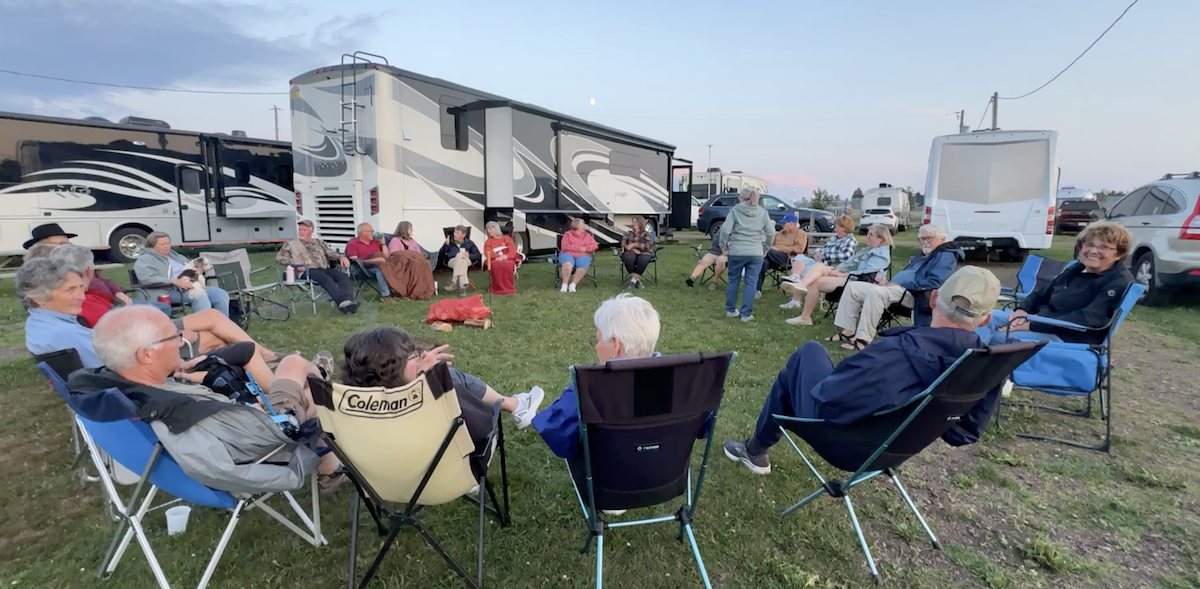




Sneaky Campground Fee Tricks, RV Consignment Scam, Diesel Nears $6, RV Luxury Tax, China RV Boom



Campgrounds are pulling tricks you need to know about. A California RV fraud case just got a lot bigger - and a lot worse.
Diesel prices are doing something that historically makes RVers cancel trips.
A state just tried to quietly hit motorhome buyers with a tax that has nothing to do with luxury. And there's a new campervan from the other side of the world that might just change how you think about where this industry is heading.
Cuttrnt RV stories that matter because they affect your life on the road.
Emmy Award-winning journalist Mike Wendland breaks it all down on this week's RV Lifestyle Podcast Monday News Edition - the longest-running weekly RV lifestyle podcast in the U.S.
New episodes every Monday and Wednesday at RVPodcast.com.
Got a tip, comment, or question? Reach us through the contact link at RVPodcast.com.
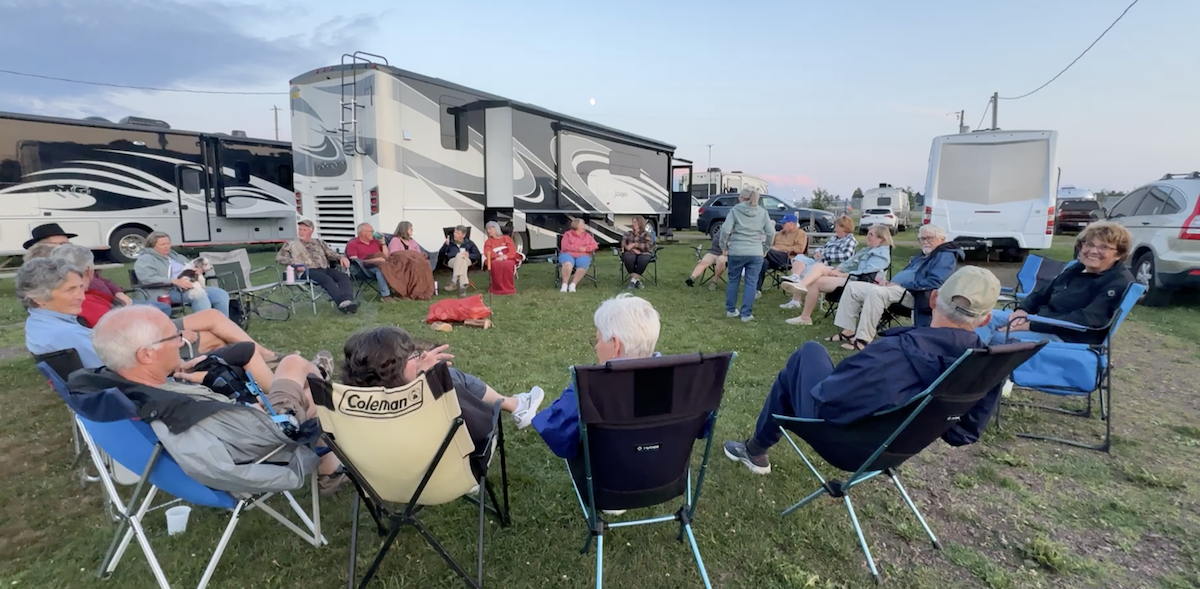
Become a part of the Internet's Best RV Community
Private. Ad Free. No Facebook Nastiness.
RV Travel Tips, Rallies and Meet-Ups, interactive livestreams, exclusive workshops, perks, discounts and Real Help from Real Rvers.
RV LIFESTYLE PODCAST - MONDAY NEWS EDITION
April 6, 2026
Good morning, good morning - welcome to the RV Lifestyle Podcast Monday News Edition. I'm Mike Wendland, and if you're new here, this is where we cover the stories that matter to RVers - the news, the trends, the things nobody's talking about but should be.
Thirty-plus years in journalism. Fifteen years on the road. I come at this from both angles - as a reporter who digs into what's real, and as an RVer who's been burned by the same stuff I'm about to warn you about.
You can find us, subscribe, and see our full show notes at RVPodcast.com. And if this is your first time, welcome to the community. This is what we do on Mondays.
Let's get into it.
STORY 1: THE CAMPGROUND FEE GAME - HOW PARKS ARE SQUEEZING MORE MONEY OUT OF YOU
All right, let's start with something that is going to hit close to home for every single one of you who has tried to book a campsite recently.
You pull up a campground website. The rate looks reasonable. Maybe $55 a night. Full hookups. Decent location. You think - okay, I can work with that.
Then you start clicking through the reservation.
And suddenly there's a reservation fee. A site lock fee. A resort amenity fee. Maybe a peak-weekend surcharge. And by the time you get to the payment screen, that $55 a night is $85 - and you're not sure what half those charges even mean.
Welcome to campground fee creep. And it is getting worse.
Here's the big picture first.
In 2026, campground pricing is still highly seasonal and location-dependent - and many RVers are reporting noticeable price increases, especially in destination markets and peak travel windows. The biggest driver of sticker shock right now is that many parks now price like hotels: peak-weekend premiums, destination markups, and added booking fees.
So let's break down exactly what they're doing. Because once you know the playbook, you can fight back.
Trick Number One: The Site Lock Fee.
This one is relatively new and it has been generating real anger in the RV community.
Booking a campsite used to be simple. Now, every checkbox might come at a price - and online reservations come with something increasingly absurd: the "lock-in-your-site" fee. You pick a site, confirm it, and think it's yours. Wrong. Unless you pay this extra fee, someone else could snag it. Thirty-five dollars seems to be the standard cost for the privilege.
Read that again. You pick your site. You confirm it. And then they tell you it's not actually yours unless you pay another $35.
Campgrounds like KOA, Sun Outdoors, Triple R, and Pathfinder Camp Resorts have introduced site lock fees into their booking process. Campgrounds are now using automated systems to calculate the base price and then add this fee to secure a particular space until you arrive.
Now, some campgrounds frame this as a service to you. The industry argument is that it protects your specific site from last-minute grabs. But let me ask you this - when you book a hotel room, do they charge you extra to make sure someone else doesn't steal your room number? Of course not. That's the point of a reservation.
This is a revenue move. Plain and simple.
Trick Number Two: Dynamic Pricing - Surge Pricing for Campgrounds.
You know how Uber charges you more when it's raining and everyone needs a ride? Campgrounds are doing the same thing now.
Industry consultants are now actively advising campgrounds to raise rates by 20 to 40 percent during major events and high-demand periods. Software tools allow parks to automatically adjust rates based on booking thresholds - raising prices by 10 percent once they're 70 percent booked, for example.
One forum member described arriving at a campground using dynamic pricing and being told the rate is determined by the fullness of the park and will fluctuate daily. Less campers, the price goes down. More campers, the price goes up. When he made his reservation, this was not mentioned to him at all.
That's the problem. Not that prices vary by season - we've always accepted that. The problem is when the rate you're quoted when you first call is not the rate you're paying by the time you arrive.
Trick Number Three: The Junk Fee Lawsuit - This One's in Court.
Here's a story with real legal teeth.
California campers are fighting back in federal court. A class action lawsuit filed in May 2025 - Chowning vs. Tyler Technologies - alleges that the company running California's state park reservation website is charging hidden, illegal "junk fees" that increase camping reservation costs by around 24 percent, while misleading consumers into believing those fees go to California State Parks. The lawsuit says the company actually keeps the funds for itself.
The non-refundable $8.25 charge doesn't appear on the campsite cost page - the one where campers select which site they want on which dates. Some Californians allege it falls under California's Honest Pricing Act, which prohibits hidden junk fees.
Twenty-four percent. That's not a rounding error. That's a significant hidden cost tacked on at the end of checkout - after you've already committed mentally to the reservation.
And here's the number that should make your jaw drop: these reservation fees are projected to generate over $37 million in the 2025-2026 fiscal year alone - and potentially $398 million over the 10-year contract.
That is a lot of money coming out of campers' pockets - and going to a tech company, not to the parks themselves.
Trick Number Four: Membership Discount Blackouts.
A lot of you carry Good Sam, Passport America, or Thousand Trails memberships specifically to save money on campground fees. Fair enough. That's the deal. But the deal is quietly changing.
Analysis of nearly 1,250 Passport America campgrounds reveals that blackout dates designed to exclude discounts during revenue-optimal periods have expanded - from 67 percent of network campgrounds in prior years to 71 percent now. Thousand Trails is implementing high-demand surcharges of $15 to $25 per night during peak periods, which effectively cancels out membership savings. And some Good Sam premium parks have begun excluding the discount entirely, or limiting it to 10 percent.
In other words, you're paying for a membership that promises discounts - and the parks are engineering their calendar so the discount rarely applies when you actually want to travel.
The cancellation rate for first-year Thousand Trails members is now 34 percent - up from 31 percent the prior year. The primary reasons: restriction frustration at 47 percent, and failure to reach the break-even point at 38 percent.
So What Do You Do About All of This?
A few things actually work.
First - always look for the total out-the-door price, not the nightly rate. Before you book, ask the campground directly: what are all the fees I will be charged? Get it in writing or at least get the number before you give them your credit card.
Second - check the cancellation policy before you book, not after. Non-refundable fees are everywhere now. Know what you're committing to.
Third - some RVers are deliberately routing to public campgrounds - national forest, BLM, state parks - to avoid commercial park pricing altogether. The expensive parks are sometimes sitting half full or less, which suggests the market may be starting to push back.
And fourth - share what you find. If a park hits you with fees that weren't disclosed upfront, write the review. That's how we all protect each other.
The campfire culture that makes this community great runs on trust. Parks that play games with pricing are eroding that. The good news is: you've got options, you've got each other, and now you've got the playbook.
SOURCES
Campground fee creep and 2026 pricing overview: info.hookhub.co/blog/campground-costs
Site lock fees: rvtravel.com/video-sneaky-resort-campground-fees-2685 and rvtravel.com/video-rv-site-lock-fees-2401
Site lock fee explainer (KOA, Sun Outdoors, etc.): rvlifeescapes.com/are-campground-site-lock-fees-worth-the-cost
Dynamic pricing for campgrounds - industry side: roverpass.com/blog/dynamic-pricing-strategies-rv-park-revenue
Dynamic pricing complaint (iRV2 forum): irv2.com/threads/dynamic-pricing.1752821
California junk fee lawsuit (Chowning v. Tyler Technologies): thetravel.com/illegal-california-state-park-camping-reservation-fee-lawsuit
Membership blackout and restriction creep: boondockorbust.com/resources/the-2026-rv-membership-economics-report
Campgrounds sitting empty / pricing pushback: rvtravel.com/essay-camping-dead-1109
WORKSHOP ANNOUNCEMENT
Now look - we just spent the last several minutes talking about all the ways campgrounds are squeezing more money out of you. Hidden fees, site lock charges, surge pricing, junk fee lawsuits. It's a lot.
But there's a second frustration that's just as real, and maybe even more maddening than the fees themselves. And that's just trying to GET a campsite in the first place.
You know what I'm talking about. You set your alarm for 6 a.m. You're logged in, fingers on the keyboard, reservation window opens - and the site you wanted is gone in 30 seconds. Popular state parks, national parks, waterfront spots - they disappear before most people have had their first cup of coffee.
It's not just bad luck. It's a system that rewards people who know how it works. And most of us were never taught how it works.
So on April 16, I'm hosting a live, interactive workshop specifically built to fix that problem. It's called "How To Book Campgrounds Without the Stress" - and you can sign up right now at RVPodcast.com/workshop.
I'm going to walk you through the real-world strategies, tools, and reservation tactics that experienced RVers actually use to get the campsites they want. How to beat the refresh lottery. When to look for cancellations and how to catch them. Which tools and apps actually work and which ones are just noise. How to build a backup plan so a failed reservation doesn't blow up your whole trip. And how to think about campground booking the same way a savvy traveler thinks about airline miles - strategically, not desperately.
This is a live workshop, which means you can ask questions in real time. It's not a recording, it's not a slide deck you download and forget about. It is me, walking you through this, step by step, on April 16.
RVCommunity.com members get in free. Non-members can grab a ticket for ten dollars.
All the details and the registration link are at RVPodcast.com/workshop.
We've talked about what campgrounds are doing to your wallet. Now let me show you how to fight back on the booking side too. April 16. RVPodcast.com/workshop.
All right - let's get to the rest of this week's news.
STORY 2: CARSON PASS RV FOLLOW-UP - THE CONSIGNMENT SCAM THAT KEEPS GROWING
Last Monday we told you about Carson Pass RV in Lockeford, California. It was early in the investigation - we knew something bad was happening, but the full picture wasn't clear yet.
This week, it's a lot clearer. And a lot worse.
Let me give you the update, and then I want to step back and talk about why this matters to every single RVer who has ever thought about consigning their rig to a dealer. Because this is not a one-time thing. This is a pattern.
The New Numbers Out of Lockeford.
The San Joaquin County Sheriff is now at the center of what investigators are calling a devastating case. Sheriff Patrick Withrow said deputies were first alerted on March 14 after RV owners realized their vehicles were no longer on the lot and they had not received payment.
Here's the updated bottom line: investigators are now tracking approximately 37 vehicles that were sold without the owners' knowledge. Sheriff Withrow said, "We don't know where the money has gone." Authorities believe buyers, sellers, and potentially banks may all be victims - with losses that could reach into the millions.
Think about that. Thirty-seven RVs. Gone. The money - gone. And nobody at the dealership is answering the phone.
A sign on the front gate of Carson Pass RV reads: "Permanently closed. No drop-offs. No pick-ups. Authorized personnel only."
That sign is every consignment seller's nightmare.
Among those coming forward is Ed Plasse, a Jackson, California resident who says he consigned his RV with the business months ago. He toured the lot and found his RV was gone. He was later told it had sold - and that he would receive roughly $20,000 from a listing price of $34,900.
He's still waiting for that money.
A couple named the Christiansens bought a travel trailer from Carson Pass RV back in August 2024. They decided the RV wasn't for them and returned it to the dealership in May 2025 to resell. They recently learned the business had closed - and noticed their trailer was no longer on the lot. They had agreed to a sale price over the phone weeks earlier and still hold the title.
Still hold the title. RV gone. Money gone.
One victim, Mark Krein, was luckier - he consigned a $60,000 trailer and was actually able to retrieve it after the dealership abruptly closed. But he said he ran into other customers at the lot doing the same thing, all trying to locate their missing vehicles. And Krein summed it up with a line that really sticks with me: "I thought I was taking it somewhere I could trust. It was going to be safe. People thought they could trust them because it wasn't a private party - it wasn't a sketchy dealership. But in the end, we found out that it was."
It wasn't a sketchy dealership. That's the point. These weren't people falling for an obvious scam. These were regular RVers making a reasonable, sensible choice to let a business handle their sale. And they got burned.
Two Layers of Victims - Sellers AND Buyers.
Here's something that doesn't get said enough in coverage of this story. The people who consigned their RVs aren't the only victims.
Investigators explained there are several layers of victims. The business took RVs on consignment - a process where a dealer sells on behalf of the owner - but then allegedly sold those vehicles without notifying owners or completing the required DMV documentation. That breakdown created multiple victim categories.
If you bought an RV from Carson Pass and drove it home? You may have a vehicle you cannot legally register. You may be driving a rig whose title is still in someone else's name - someone who has no idea their RV was sold.
Anyone who purchased an RV from Carson Pass RV is urged to contact lead investigator Detective Dodge at mdodge@sjgov.org or call the Sheriff's Office non-emergency line at 209-468-4400 as soon as possible.
We'll have all those contact details in the show notes at RVPodcast.com.
This Is Not a Fluke. This Is a Pattern.
Now let's zoom out. Because I want to be honest with you - this is not some isolated incident unique to one small town in California.
Dealer consignment fraud is a recurring problem across the vehicle industry. And while the RV world doesn't track it as neatly as the auto industry does, the same mechanics apply.
Here's one recent comparison that hits close to home. Just last month, a Pennsylvania used car dealer was charged with 144 criminal charges after state investigators accused him of fraudulent vehicle sales operations in Harrisburg. The charges include felony counts of forgery and deceptive business practices - and more than 130 violations of the Pennsylvania Vehicle Code tied specifically to improper handling, reassignment, and processing of vehicle titles.
One hundred and forty-four charges. Titles handled improperly. Sound familiar?
And here's a broader number that should concern everyone. The Federal Trade Commission received 21,400 auto fraud complaints in just the first quarter of 2025 alone - a 43 percent increase over the same period in 2024. At that pace, consumers will file nearly 90,000 formal fraud complaints this year across the vehicle industry.
Meanwhile, on January 27, 2025, the Fifth Circuit Court of Appeals vacated the FTC's Combating Auto Retail Scams Rule - which would have banned many deceptive dealer practices and saved buyers an estimated $3.4 billion in junk fees annually. The court ruled on procedural grounds, not merit. But the consumer protection is gone regardless.
So fraud is rising. And one of the main federal rules designed to fight it just got thrown out. That's the environment we're operating in right now.
There is also a broader issue that some industry observers point to honestly: when RV sales are down - and they dropped nearly 7 percent in 2024 - some dealers resort to desperate tactics. A struggling dealership that needs cash flow has enormous temptation when it's sitting on dozens of consigned RVs worth tens of thousands of dollars each. That does not excuse it. But it does explain why these situations tend to surface at the end of a tough sales cycle.
What You Can Do to Protect Yourself.
Let's be practical. Consignment can still be a legitimate, useful option for selling an RV. But you need to go in with your eyes open. Here's what I'd tell a friend.
First - never hand over your title until the RV actually sells and you have confirmed payment in hand. The title is your legal ownership. In a legitimate consignment deal, dealerships typically have up to about 20 days to pay the owner after a sale - and payment should accompany the title transfer. If someone asks for your title before that, walk away.
Second - do not just drop the rig and disappear. Drive by the lot periodically. Sheriff Withrow specifically told potential victims: "If you have a vehicle there, you need to go and check on it." Stay visible. Stay in contact. Ask for written updates. A legit dealer won't mind.
Third - get your consignment agreement in writing and read it carefully. Know exactly what the dealer's commission is, what the listing price range is, and critically - how and when you will be notified of a sale. Verbal agreements don't protect you when a sign goes up on the gate.
Fourth - check the dealer's license. Every state requires vehicle dealers to hold a license. Pennsylvania investigators cited willful failure to display the required dealership license as one component of that 144-charge case. You can typically verify a dealer's license through your state's DMV website. If they can't show you their license number, that's a red flag.
Fifth - if something feels off, contact your state's DMV fraud division. As one industry expert put it: "Contact the Department of Motor Vehicle fraud investigation immediately. They have a complaint form you can file online."
And sixth - if you are in this situation right now, with a consigned RV at a dealer that has closed or gone silent, report it immediately. Don't wait. The longer you wait, the harder it is for investigators to track the money.
A Final Thought on Trust.
Mikie John, owner of Big Valley RVs, said the situation at Carson Pass has shaken confidence across the broader RV market. "The community is devastated - not only for the community but for dealers too. Our consignment offer is now off the table for a majority of dealers because of what took place at Carson Pass. People are going to think twice before they consign elsewhere."
That's the real cost here. Beyond the 37 vehicles and the millions of dollars. It damages trust in an honest option that helps a lot of RVers every year.
The good guys in this industry don't deserve that. But the bad actors made this mess - and until there's better oversight of how consignment titles and funds are handled, you need to be your own watchdog.
We'll keep following this story. If there are charges filed, we'll be back with an update.
SOURCES
Carson Pass RV investigation - sheriff's update, 37 vehicles, victims: abc10.com/article/news/local/this-is-brutal-sheriff (ABC10, April 1, 2026)
Victim accounts - Plasse and Krein: fox40.com/news/local-news/san-joaquin-county/locals-speak-out-as-fraud-investigation-unfolds (FOX40, April 1, 2026)
Christiansen victim account: cbsnews.com/sacramento/news/sj-sheriff-carson-pass-rv-investigation (CBS Sacramento)
Original investigation report: abc10.com/article/news/crime/san-joaquin-county-officials-investigate-alleged-fraud (ABC10, March 31, 2026)
Pennsylvania dealer - 144 criminal charges: yahoo.com/news/articles/pennsylvania-dealer-hit-144-criminal (March 2026)
FTC auto fraud complaints surge and CARS Rule vacated: theweeklydriver.com/2026/01/what-to-do-if-a-car-dealership-scammed-you
RV dealer consignment fraud context and industry pressures: rvshowoff.com/rv-dealer-scams-that-could-cost-you-thousands
Hey - quick break before we get into our next story.
We just spent a good chunk of time talking about California - and not the fun parts. Fraud investigations, junk fee lawsuits, campground pricing. So let me give you the California you actually want to think about.
We just published a brand new RV travel guide - and this one is a big one. It's our Epic Guide to California's Pacific Coast Highway. And I mean epic. This is one of the most spectacular drives in North America - maybe in the world - and we built this guide specifically for RVers who want to do it right.
Where to stay. Which campgrounds to book and how far in advance. The pullouts and overlooks worth stopping for. The towns you don't want to blow past. How to handle the tight spots on Highway 1 with a bigger rig. The best times of year to go. All of it, laid out for you in one place.
If the Pacific Coast Highway has been on your bucket list - and honestly, if it hasn't, it should be - this is the guide you want before you go.
Find it at RVLifestyle.com/PacificCoastHighway. One word. All spelled out. RVLifestyle.com/PacificCoastHighway. Link is in the show notes, too.
All right - let's talk about something that is affecting every single one of us right now, no matter where you're planning to travel. Fuel prices.
STORY 3: THE FUEL WALL - DIESEL HAS ALREADY CROSSED $5, AND THE CANCELLATIONS ARE COMING
Let me tell you something I've been watching for years. There's a number. A psychological threshold. And when diesel crosses it, RVers don't just complain - they cancel.
That number is five dollars a gallon.
We are there. Right now.
As of March 30, 2026, the U.S. Energy Information Administration's weekly report put the national average diesel price at $5.40 a gallon.
Let that sink in. That's not California. That's not New England. That's the national average.
And it's not slowing down.
How We Got Here - Fast.
This spike has one primary cause, and it's geopolitical. Gasoline prices have soared more than 30 percent since the U.S. and Israel attacked Iran in late February. Diesel crossed the $5 per gallon mark on March 17 and is now more than 40 percent higher than before the conflict began.
That's a 40 percent increase in about six weeks.
The surge is being driven by rising global oil prices tied to the conflict, which has threatened supply and raised fears of disruption along key transit routes, including the Strait of Hormuz. About 20 percent of global oil supplies passed through that waterway before the war. Gulf Arab oil producers have cut production because they are running out of space to store crude as the Strait remains effectively closed.
Now here's where it gets more personal for RVers. Patrick De Haan, GasBuddy's head of petroleum analysis, warned that diesel could reach $6 per gallon and could even set new records if conditions fail to improve. Strategists at Macquarie Group have warned that if the war extends into summer, oil prices could hit $200 per barrel, potentially pushing pump prices as high as $7 per gallon - and they put the probability of the war extending at 40 percent.
Forty percent chance of $7 diesel. By summer.
And if you're planning to travel through certain states, you're already above $6. Diesel costs in several states have increased by more than 60 percent year over year - including Arizona at up nearly 69 percent, South Carolina up 63 percent, Nevada up 63 percent, Texas up 61 percent, North Carolina up 61 percent, and Florida up 61 percent. The nationwide average cost of a gallon of diesel has risen 50 percent since this time last year.
Florida and Texas - two of the most popular RV travel destinations in the country - up more than 60 percent in a year. That hits our audience directly.
The Math on Your Rig.
Let me put this in concrete terms, because abstract percentages don't capture what this actually means at the pump.
If you're towing a fifth wheel with a Ford F-350 or similar diesel truck and you're averaging 10 miles per gallon - which is generous on a loaded tow - a 500-mile drive now costs you around $270 in fuel alone at $5.40 a gallon. That same trip cost you $163 when diesel was at $3.26 last year. That's over $100 more for one leg of a trip.
A Class A diesel pusher with a 100-gallon tank? One RV forum member put it bluntly: it costs $600 to fill up a motorhome with diesel, and that can be burned out in a single day. With campgrounds charging $80 a night on top of that, the economics of RV travel are turned upside down.
At $5.40 a gallon, that same 100-gallon fill-up is $540. If diesel hits $6? $600. And the EIA's own forecast suggests diesel prices could range from $4.30 to $4.90 per gallon just in Q2 under moderate conditions - and push toward $5.10 in Q4 as winter heating oil demand competes with diesel supply. That's the optimistic scenario.
I've Seen This Movie Before. The Cancellations Are Coming.
I want to share something from our own community's history here, because we have been through this before.
In the spring of 2022, diesel hit $5.56 a gallon as a national average. And I documented what happened. I was here, covering it, collecting your emails. And the pattern was unmistakable.
That spring, a reader named Peter wrote: "We have canceled 3 of our 5 trips this year because of the fuel prices." Another reader, Mindful Kayaker, wrote: "I retired and bought a small RV to make my dream road trip around North America - but I will have to postpone this dream to 2024 to see if things change in this country." And a campground owner told us directly: "I am seeing cancellations every day due to fuel prices. More of my customers are staying local."
Sound familiar?
Another RVer wrote: "Canceled our annual Upper Michigan camping trip because of gas prices. Normally under $400, estimated over $1,000 with $5 gallon fuel."
And from the research - a survey conducted during that 2022 price spike found that 22 percent of RVers who adjusted travel plans had canceled outright. Half of those who made changes were traveling fewer miles and staying closer to home. Another 18 percent shortened their trip duration, and 18 percent pushed their trips to a later date hoping prices would fall.
That data is from 2022. Today the numbers are starting to rhyme.
Here's What the Forums Are Saying Right Now.
We're not guessing about what RVers are thinking in 2026. They're posting it in real time.
On the iRV2 forum this week, one member planning a 12,000-mile trip wrote: "Happens every year we plan a long trip - up goes the price of fuel. Oh well, we only get to go around the block once. The trip is on, though we may cut some of the attractions and going out to eat." Another wrote: "Big jump the past few days in my locale from about $3.40 to $4.90. Fuel prices are not a trip-breaker for us, but we are going to camp closer to home until this Middle East mess settles down a bit." And a third said: "I am more concerned about availability than price at this point. I remember the lines from the early seventies."
That last comment should give everyone pause. We're not just talking about price anymore. Some folks are thinking about whether fuel will be available at all.
The pattern I'm seeing: the committed full-timers and serious RVers are pressing on, maybe cutting restaurants and attractions. It's the weekend warriors, the annual-trip families, the people who were already on the fence about the cost of RVing - those are the folks who are going to cancel. And there are a lot of them.
What You Can Do Right Now.
A few practical things that actually help.
Number one - use GasBuddy. Seriously. Plan your fuel stops before you leave the driveway. There can be significant price variation even between nearby stations, and doing a little legwork to find non-truck-stop diesel can save you real money on a large fill-up.
Number two - slow down. This isn't glamorous advice but it works. Dropping your highway speed from 65 to 60 can improve your fuel mileage meaningfully on a heavy rig. On a long trip that adds up to real money.
Number three - consider the stay-longer strategy. Instead of driving 300 miles to a new campground every three days, stay a week somewhere you love. Fewer drive days, less fuel, less stress. It's actually better camping anyway.
Number four - check out diesel discount programs. Open Roads, Mudflap, the TSD Logistics card - for full-timers especially, these can take real dollars off each fill-up. No one program wins every time, so check a couple against GasBuddy before you pull in.
And number five - keep watching the news. The EIA projects prices could moderate by Q3 if the Strait of Hormuz situation improves. The EIA's own March forecast projected that crude oil prices could fall below $80 a barrel in the third quarter and end the year around $70 per barrel - meaning some relief could come by late summer. If you have flexibility in your timing, that matters.
The road isn't going anywhere. Neither are we. But right now, the smart move is to plan accordingly and watch that number at the pump.
SOURCES
U.S. diesel national average $5.40/gallon as of March 30, 2026: fred.stlouisfed.org/series/GASDESW (Federal Reserve Bank of St. Louis / EIA data)
Gas prices above $4, diesel above $5, Iran war context: cnbc.com/2026/03/31/gas-oil-diesel-price-iran-war.html
$6 diesel forecast, Macquarie $7 scenario at 40% probability: time.com/article/2026/03/31/gas-prices-us-iran-war
State-by-state diesel increases, Florida and Texas up 60%+: smartasset.com/data-studies/gas-prices-spring-2026
Q2-Q4 2026 diesel price forecast range: hydroxsystems.com/diesel-fuel-prices-2026-forecast-trucking
EIA crude oil / price moderation outlook Q3: time.com/article/2026/03/31/gas-prices-us-iran-war
iRV2 forum - current 2026 RVer reactions: irv2.com/threads/are-rising-diesel-prices-changing-2026-rv-travel-plans.2189143
2022 cancellation survey data (22% canceled outright, 50% cut miles): rvtrader.com/blog/2022/03/31/high-gas-prices-are-affecting-how-rvers-plan-their-next-trip
2022 RV Lifestyle community cancellation emails and campground owner reports: rvlifestyle.com/camping-cancellations
Fuel discount programs and GasBuddy comparison: thervgeeks.com/diesel-fuel-discount-programs
STORY 4: WASHINGTON STATE BLINKED ON ITS MOTORHOME LUXURY TAX - BUT ONLY BARELY
If you're shopping for a motorhome right now - or you know someone who is - this story matters. And even if you don't live in Washington state, pay attention. Because what happens there could show up in your state next.
Here's the background.
Washington passed a law imposing an 8 percent luxury tax on motor vehicles priced over $100,000. The tax applies to the amount of the selling price above that $100,000 threshold. So on a motorhome sold for $150,000, the 8 percent applies to the $50,000 above the threshold - adding $4,000 to the purchase price.
Now on its face, $100,000 sounds like a reasonable place to draw a luxury line. We're talking BMWs and Porsches, right?
Except in the motorhome world, $100,000 is not luxury. That's mid-range. That's a solid Class C. That's the rig a retired teacher and her husband saved up for over ten years. That's not a yacht. That's somebody's dream retirement travel vehicle.
And the RV industry made exactly that argument to the Washington legislature.
This week, they got a partial win.
Washington Governor Ferguson signed HB 2711 into law on March 31. The legislation provides a six-month delay of the 8 percent luxury tax on motorhomes. The law takes effect July 1, 2026. The RV Industry Association called it a pragmatic, data-driven response to the unintended consequences the tax would have imposed on Washington families, RV dealers, campgrounds, small businesses, and the broader outdoor recreation economy.
Six months. That is not a repeal. The clock is running.
The delay gives the legislature time to come back and redesign the threshold - raise it, carve out motorhomes entirely, or find some middle ground that actually targets true luxury purchases rather than sweeping up the family coach of every retiree trying to see the country before their knees give out.
But here's what I want you to take away from this story beyond the Washington angle.
This is a test case. State legislatures around the country have been watching RV ownership grow and looking for new revenue. Some see a lot full of $80,000 and $100,000 rigs and think: money. They don't think about the fact that a lot of those rigs are owned by people on fixed incomes who scrimped to buy them. They don't think about the fact that RVers spend money at local campgrounds, restaurants, hardware stores, and fuel stations in every community they pass through.
The RV industry fought this one and bought some time. But the fight isn't over in Washington - and it is coming to other states if we're not paying attention.
If you're in Washington and you've been sitting on a motorhome purchase, that six-month window just opened. Get your VIN search done, do your homework, and make your move before July 1.
And if you're anywhere else - know your state legislature. These things don't usually make headlines until they're already signed.
SOURCES
Washington HB 2711 signed March 31, six-month luxury tax delay: rvbusiness.com/rvia-applauds-delay-of-a-luxury-tax-in-washington
Washington luxury tax mechanics - 8% on motorhomes over $100,000: valleyrvsupercenter.com/luxury-tax
STORY 5: A CAMPERVAN FROM BANGKOK AND THE GLOBAL RV BOOM YOU DIDN'T KNOW WAS HAPPENING
Let's close this week with something a little different. A bit of a world tour. Because while we've been watching our own industry deal with tariffs and fuel prices and recalls, something interesting is happening on the other side of the planet - and it showed up at a Bangkok motor show this week in the form of one of the more eye-catching campervans I've seen in a while.
The Carryboy x Farizon: Worth a Look.
The company is called Carryboy. They're based in Bangkok, Thailand, and they've been building truck accessories and camping conversions since 1969. This week at the 2026 Bangkok International Motor Show they debuted an all-electric campervan built on a Chinese platform - the Farizon Super Van, which is the commercial vehicles arm of Geely, the same group that owns Volvo and Polestar.
What makes it stand out is a B-pillarless side entry - meaning no structural post splitting the front and rear doors - which creates an unusually wide, open entryway into the van. It's a full 6-meter body, giving it enough room for a proper interior bathroom, a slide-out kitchen, and a lounge that converts to sleep two or three. Carryboy plans to sell it for around $85,550 U.S.
The electric platform carries a 106 kWh battery with a realistic loaded range of around 170 to 180 miles, and fast charging up to 140 kilowatts - competitive with Ford and Mercedes, but at a lower price point.
Not coming to the U.S. anytime soon. But the design thinking is genuinely fresh, and New Atlas has a full photo gallery worth pulling up. Link in the show notes.
Wait - China Has an RV Industry?
This is the part that surprises most American RVers. Yes. China has an RV industry. A real one. And it's growing fast.
China has emerged as the world's fourth-largest RV market, behind Australia, the EU, and North America. About 14,365 RVs were sold in China in the most recent reporting year. Class C motorhomes are the best-sellers, priced around $42,000 U.S. Class B vans run about $28,000.
A Chinese RV startup called Starlight opened its flagship experience center in Beijing last year. Its president summed up the opportunity directly: "China has the world's largest automotive market and rich geographic and cultural resources, but RV penetration remains just 0.02 percent, compared to over 10 percent in the U.S."
That 0.02 percent figure is the whole story. China has 1.4 billion people. Even a fraction of a percent of market penetration represents millions of potential RV owners. The Chinese RV industry is building the infrastructure for a domestic boom that hasn't fully arrived yet - but that everyone inside it believes is coming.
The main thing holding it back? A lack of suitable campsites. Even Guangdong - the province with the most RV sales - only has around 20 decent campsites. Strict land-use policies and high infrastructure costs for water, power, and sewage make campground development slow and expensive.
Sound familiar? The campground shortage is apparently a universal problem.
Can You RV in China as an American Traveler?
Honest answer: not easily. Not yet.
Driving a caravan in China requires a Chinese C6-level driving license. Travelers who have pursued it report significant bureaucratic obstacles, and even the English-language version of the required theory test is difficult to pin down.
You can't just show up, rent a rig, and hit the road the way you can here. There are some operators building curated self-drive itineraries for foreign visitors, particularly in scenic regions like Yunnan. But the infrastructure for independent foreign RV travel is thin. Wild camping is technically legal on the mainland as long as you don't light fires - but that's a long way from the seamless RV travel experience we know.
The Chinese government has been actively promoting domestic RV tourism for its own citizens. Whether that welcome mat ever extends meaningfully to foreign self-drive tourists is still an open question.
The Bigger Point.
We are not the only country that has figured out that getting in a self-contained vehicle and driving somewhere beautiful is one of the best things a human being can do. That idea is spreading. It's showing up in Bangkok motor shows, Beijing experience centers, and Shanghai rental apps. The Chinese are building it for themselves right now. And someday - maybe not soon, but someday - the answer to "can I RV in China" might be very different.
SOURCES
Carryboy x Farizon campervan - Bangkok Motor Show 2026: newatlas.com/campervans/carryboy-farizon-electric-camper-van
Farizon battery and range specs: outandaboutlive.co.uk/shows/news/electric-campervans-future-ready-or-still-dream-exclusive-look-farizon-ev-van
China fourth-largest RV market, sales and pricing: rvbusiness.com/china-now-said-to-be-the-worlds-fourth-biggest-rv-market
Starlight Beijing, 0.02% penetration stat: chinadaily.com.cn/a/202508/04/WS68904db1a310c0209d01ada5.html
China campsite shortage: yicaiglobal.com/news/china-rises-to-worlds-fourth-biggest-rv-market
Foreign RV travel in China - licensing hurdles: crisscrosschina.com/self-drive-in-china-with-your-foreign-registered-rv
That is your RV Lifestyle Monday News Edition for April 6, 2026. Five stories, all sourced, all verified - that's what thirty-plus years of journalism looks like when it shows up for you every Monday morning.
All the sources, links and resources mentioned from today's show is all in the show notes at RVPodcast.com. We put it there every week so you don't have to pull over and write things down.
And one more time - 7 PM April 16. The live campground booking workshop. "How To Book Campgrounds Without the Stress." If today's campground fee story made your blood pressure tick up a little, this workshop is the next step. I'm going to walk you through how to beat the reservation system, catch cancellations, use the right tools, and stop losing the sites you actually want. RVCommunity.com members get in free. Ten dollars for everyone else. Register now at RVPodcast.com/workshop before it fills up.
Now - we publish two episodes every week right here on the RV Lifestyle Podcast. This is the Monday News Edition - the week's most important RV industry stories, consumer news, and things you need to know. Then Wednesday, Jennifer joins me for Stories from the Road - interviews, trip of the week, your questions, and a whole lot more. Two episodes, every week, at RVPodcast.com.
If you've got a tip, a comment, or a question - for today's stories or for Wednesday's show - reach out through the contact link right at RVPodcast.com. We read everything.
I'm Mike Wendland. Thanks for spending part of your day with us.
We'll see you down the road.