

RV Price Gouging, RV Recall Blitz, Aging National Park Infrastructure & How AI Can Plan RV Trips


This week’s podcast delivers a hard-hitting reality check for RVers.:
- We break down a viral insider video from a top RV dealer CEO who openly calls out price gouging, overproduction, copycat designs, and why so many buyers end up upside down faster than they expect. If you are shopping, or even thinking about it, this one matters.
- We also cover an RV recall blitz affecting more than 18,000 RVs across multiple brands, including fire risks, fuel leaks, and labeling errors that should have never made it past quality control.
- Plus, a growing warning for RV travelers as aging water systems cripple access at Big Bend National Park and other popular National Park destinations.
- Our take on Love’s expanding RV hookups, convenient but noisy and pricey
- How AI is being used for RV Travel Planning
No spin, no fluff, just straight talk about the RV lifestyle. Listen to the Monday News Edition wherever you get your podcasts or at RVPodcast.com.
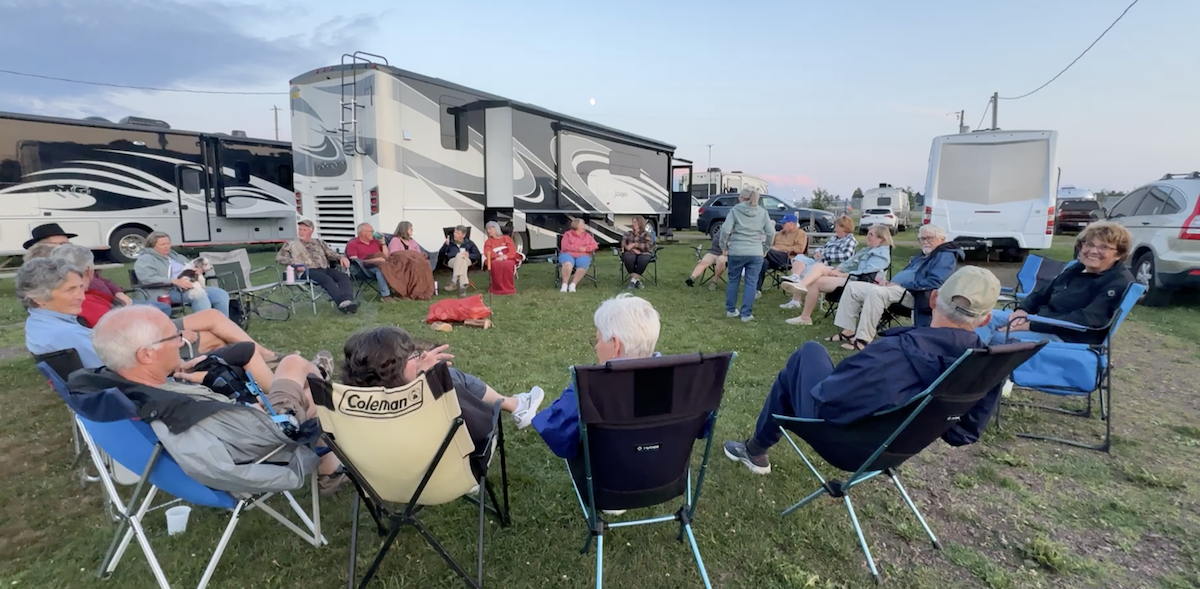
Become a part of the Internet's Best RV Community
Private. Ad Free. No Facebook Nastiness.
RV Travel Tips, Rallies and Meet-Ups, interactive livestreams, exclusive workshops, perks, discounts and Real Help from Real Rvers.
News Feb.9 Podcast
Welcome to the Monday News Edition of the RV Podcast! I'm Mike Wendland, and it's 6 AM on Monday, February 9th, 2026.
If you're new here, welcome aboard! Every Monday morning at 6 AM, we bring you the top news stories affecting RV owners, campers, and the RV industry. Then on Wednesdays, we shift gears for our Stories from the Road edition, where we share interviews with interesting people, tips and tricks to make your RV life better, answer your questions, and dive into destinations worth exploring.
You can catch us however you consume podcasts - on Apple Podcasts, Spotify, or your favorite podcast app. We're also on YouTube if you prefer to watch, and everything lives at RVPodcast.com, our central hub where you'll find more than a decade of episodes, blog reports, videos, and resources for the RV lifestyle.
Alright, let's dive into this week's news. I've got five stories you need to know about...
1) RV Podcast News, Industry Reality Check
There’s a video circulating right now that has some top execs in the RV industry squirming, and for good reason.
National Indoor RV Centers President and CEO Brett Davis has dropped an hour-long, no-holds-barred breakdown of what’s really going on behind the curtain in the RV business. We’ll link to the full video in the show notes for this episode, and fair warning, it’s not light viewing.
So far, that video has pulled in more than 200,000 views, and counting, which tells you something. This struck a nerve.
Davis doesn’t sugarcoat much of anything. He flat-out calls out price gouging, overproduction, and an industry that, in his words, has gotten lazy by copying itself instead of innovating. And this isn’t some outsider throwing rocks. This is a guy who runs one of the largest luxury RV dealer groups in the country. He knows the numbers, the margins, the incentives, and the games.
One of the biggest takeaways is pricing. Davis explains how motorized RVs have been pushed to price points that simply don’t match real-world value or long-term ownership costs. He talks about inflated MSRPs, dealer markups layered on top of already bloated prices, and how consumers ultimately pay for that through brutal depreciation. Translation, you’re upside down faster than you think, and it’s baked into the system.
He also takes aim at overproduction, something we’ve been talking about for a while. Too many RVs built, too many units shoved onto dealer lots, even as demand softens. That oversupply crushes resale values, forces discounting later, and hurts buyers who thought they were buying into a stable market. Yet factories keep cranking them out, because stopping the line is expensive and admitting mistakes is harder.
And then there’s the copying. Davis points out what many buyers already suspect. Walk enough dealer lots and you start seeing the same floorplans, the same components, the same layouts, just with different logos slapped on the side. Innovation takes a back seat when imitation is easier and margins still look good on paper.
What makes this video hit so hard is the insider detail. He breaks down carrying costs, flooring interest, inventory pressure, and why dealers sometimes behave in ways that seem irrational from the outside. It’s not a rant. It’s a data-driven explanation of how the industry painted itself into a corner, and how consumers ended up holding the bill.
What makes this video particularly noteworthy is Davis's willingness to discuss uncomfortable industry truths. He examines why motorhomes, unlike towables, face such severe depreciation issues, and how inventory management practices affect both dealers and consumers. The video also explores why the North American market behaves so differently from Europe, where 90% of RVers choose motorhomes over towables.
This isn’t an anti-RV message. It’s a reality check. Davis isn’t saying don’t buy an RV. He’s saying buy smart, understand the forces at work, and don’t assume the sticker price reflects actual value. His analysis includes clear comparisons and real numbers rather than the typical marketing spin that dominates industry discussions.
The reason this video is going viral is simple. It’s rare to hear someone inside the industry say the quiet parts out loud.
We’ll have the full hour-long video linked in the show notes, and if you’re shopping, or thinking about shopping, it’s well worth your time.
Here’s the link - https://www.youtube.com/watch?v=sj6DEn2qf0k&t=1s
2) The 2026 Big Recall Blitz - Over 13,000 RVs Need Repairs
Well, folks, we're kicking off 2026 the same way we ended 2025: with a pile of RV recalls that should make you reach for your VIN number right now.
January 2026 saw over 13,000 RVs hit the NHTSA recall list, and just last week we got a fresh batch of February recalls to add to the pile. Let's break down what you need to know.
Leading the pack is Winnebago with a whopping 3,019 motorhomes - that's 2024-2026 Spirit, Minnie Winnie, Travato, View, Navion, and the brand-new 2026-2027 Sunflyer models. The problem? Water tank heating pads that can experience high resistance and fail. So if you're winter camping and counting on that heated tank, you might be in for a cold surprise.
Keystone recalled 1,081 toy haulers - we're talking 2025-2026 Fuzion, Raptor, Redwood, and 2024-2026 Voltage models. The ramp door may break away from the door frame while you're loading or unloading your ATVs or motorcycles. Nothing like watching your $5,000 toy hauler door become a road hazard, right?
Forest River's got 515 units on the list for the same ramp door issue across multiple brands: Work and Play, Takoda, Chaparral, Phoenix, Riverstone, Adrenaline, and Cedar Creek. Apparently, nobody in Elkhart knows how to properly secure a ramp door.
Then we've got Vanleigh with 91 Ambition trailers from 2022-2023 - same ramp door problem. Are you seeing a pattern here? The toy hauler industry has a serious structural integrity issue.
And just last week, fresh February recalls dropped: Brinkley's got 48 2026 Model Z fifth-wheels with improperly tightened shore power inlet lugs that could overheat and start a fire. Forest River's got Cascade, Cherokee, and Campsite Reserve trailers with incorrectly wired seven-way connectors that lack over-current protection - another fire hazard. And Grand Design's recalling Momentum and Solitude fifth-wheels going back to 2021 because U-bolts can become loose, causing the axle to move out of position.
Here's the kicker: 2025 saw over 80,000 RVs recalled for the entire year. We're barely five weeks into 2026 and we're already at 13,000-plus. If this pace keeps up, we're looking at another banner year for NHTSA paperwork.
So what does this mean for you?
Stop what you're doing and check your VIN at NHTSA.gov right now. Seriously. These aren't minor inconveniences - we're talking fire hazards, failing heating systems in freezing weather, and structural failures that could dump your expensive toys on the highway.
And here's what really burns me: many of these recalls are for brand-new 2026 models. You're paying $80,000, $100,000, $150,000 for an RV that rolls off the assembly line with known defects. The quality control in Elkhart is apparently just a suggestion, not a requirement.
Don't wait for that recall letter to show up in your mailbox three months from now. Check your VIN today, contact your dealer, and get the repairs scheduled. And if you're shopping for a new RV, maybe use these recall lists as a quality scorecard before you sign on that dotted line.
Sources:
● January 2026 RV Recalls: https://camperreport.com/nhtsa-rv-recalls-for-january-2026-is-your-rv-on-the-list/
● February 2026 Weekly Recalls: https://rv-pro.com/news/nhtsa-lists-weekly-recalls-107/
● NHTSA Latest Recalls (January 2026): https://rvbusiness.com/nhtsa-releases-its-most-recent-installment-of-rv-recalls-116/
● 2025 Annual Recall Summary: https://camperreport.com/nhtsa-rv-recalls-for-december-2025-is-your-rv-on-the-list/
3) Aging Infrastructure Crisis: Big Bend Becomes Latest National Park Hit by Water System Failures
A troubling pattern is emerging across America's national parks, and RVers need to pay attention. Big Bend National Park in southwest Texas has become the latest victim of failing water infrastructure, joining a growing list of parks struggling with outdated systems that can no longer meet visitor demands.
The Chisos Mountains Lodge, Big Bend's only hotel, closed indefinitely last week after water pumps at Oak Spring failed on December 23rd. These pumps are the sole water source for the entire Chisos Basin area, one of the park's most popular destinations. Park officials have implemented Stage 3 water restrictions and warn that if storage tank levels drop below what's needed for firefighting, the entire basin could be forced to close.
But Big Bend isn't alone. This is part of a widespread crisis hitting national parks throughout the Southwest.
Grand Canyon National Park has faced multiple hotel closures due to water supply failures. Lake Mead National Recreation Area in Nevada and Glen Canyon National Recreation Area, which straddles Utah and Arizona, have seen dramatic drops in visitation as water levels at Lake Mead and Lake Powell reach troublingly low levels.
One repeat visitor to Big Bend noted that water problems in the Chisos Basin have been ongoing for years. "It's time for much needed water infrastructure upgrades and repairs," they said, adding that a scheduled May 2026 renovation project "can't get here soon enough."
That $22 million renovation project will close the Chisos Basin area for approximately two years starting May 1st. It's a massive undertaking, but it highlights just how far behind these parks have fallen in maintaining basic infrastructure.
For RVers, the immediate impact at Big Bend is significant. The Chisos Basin Campground remains open, but all water spigots, toilets, and sinks are shut off. Portable toilets have been brought in, and campers must bring all their own water. Only one spigot remains operational, located at the Panther Junction Visitor Center.
The camp store operates with reduced hours from 8:30 AM to 6:30 PM, and the food truck runs from 10 AM to 5 PM. A charcoal fire ban is in effect, and with wood fires already prohibited in the basin, you'll need propane or gas cooking stoves.
Here's the bigger picture: our national parks are dealing with water systems designed decades ago for far fewer visitors. Big Bend contributed $56.8 million to the local economy through tourism in 2024 alone. That's a lot of people depending on infrastructure that was never built to handle current demand.
The reality is that many parks across the country are operating with aging water systems, electrical grids, and sewage treatment facilities that are reaching the end of their useful life. Climate change is compounding these problems, particularly in the Southwest where drought conditions stress already-fragile systems.
For the RV community, this means we need to plan differently. Don't assume basic services will be available, even at major national parks. Check park websites and social media before you travel. Bring extra water capacity. Be prepared for limited or no hookups. And consider visiting during shoulder seasons when strain on park infrastructure is lower.
The good news is that Big Bend National Park remains largely open. It's bigger than Yosemite with hundreds of trails and viewpoints to explore beyond the Chisos Basin. But this water crisis is a wake-up call about the state of our national parks and the infrastructure challenges they face.
As RVers who love these places, we should be aware of these issues and support necessary upgrades, even when they mean temporary closures or inconveniences. Our parks need investment, and stories like Big Bend's water failure show us why.
Sources for Story:
- National Park Service Official Notice:
○ https://www.nps.gov/bibe/learn/news/2026-01-03-critical-water-shortage.htm
- Houston Chronicle (Multiple articles - January/February 2026):
○ https://www.chron.com/life/wildlife/article/big-bend-chisos-basin-water-problem-21277434.php
○ https://www.chron.com/life/wildlife/article/big-bend-water-outage-lodge-closure-21315723.php
- KSAT San Antonio (Multiple articles - January/February 2026):
- San Antonio Express-News:
○ https://www.expressnews.com/news/article/big-bend-national-park-water-shortage-closure-21277941.php
- San Antonio Current:
- National Parks Traveler:
○ https://www.nationalparkstraveler.org/2026/01/water-supply-chisos-basin-big-bend-national-park-fails
- CultureMap Austin:
○ https://austin.culturemap.com/news/travel/big-bend-possible-close-water/
- MySanAntonio.com:
○ https://www.mysanantonio.com/news/local/article/big-bend-water-shortage-21275641.php
○ https://www.mysanantonio.com/news/local/article/big-bend-water-shortage-21316121.php
GRAND CANYON WATER CRISIS SOURCES (for context):
1) NBC News:
2) Islands Magazine:
a) https://www.islands.com/2043257/grand-canyon-hotel-closures-reshape-travel-what-know/
3) National Parks Traveler:
a) https://www.nationalparkstraveler.org/2025/12/grand-canyons-lodges-close-due-water-shortages
4) Love’s Keeps Expanding RV Hookups. Handy, But Not Perfect
Love’s Travel Stops is continuing its push into the RV market, announcing last week that it is expanding the number of RV parking spots with full hookups at more of its travel centers nationwide.
According to the company, the goal is to give RVers more convenient overnight options right off major highways, especially in areas where traditional campgrounds can be scarce or booked solid. Love’s says these RV spots are designed primarily for short stays, with electric, water, sewer, and easy pull-in access for big rigs.
And we get why they are doing it.
We have used Love’s RV hookups ourselves, and there is no question they can be handy. When you are on a long travel day, tired, and just want to get off the road, plug in, grab a hot shower, and maybe pick up groceries or a meal, they are hard to beat for convenience.
But convenience comes with trade-offs.
First, the price. In many cases, Love’s RV sites cost about the same, or even more, than commercial campgrounds, without any of the campground atmosphere. No picnic tables, no trees, no walking trails, and no campfire vibes. You are paying for location and ease, not the experience.
Second, the noise. While Love’s does place RV hookups away from the semi-truck parking areas, the reality is that trucks are moving in and out all night long. Even if they are not parked next to you, they still roll past, and when a diesel engine fires up at 2 a.m., you are going to hear it.
That does not make Love’s a bad option. It just makes it a very specific one.
Think of it as a safe, well-lit, predictable overnight stop, not a destination campground. It is a good backup plan, a decent one-night solution when weather, fatigue, or a full campground forces your hand.
Love’s expansion shows just how much the RV landscape is changing. More RVers on the road means non-traditional camping options are stepping in to fill the gaps. The key is knowing what you are getting, and what you are not.
For us, Love’s RV hookups are useful in a pinch, but not a place we would choose for more than a quick overnight.
Source:
Loves News Releae: https://www.loves.com/news/2026/february/loves-to-focus-on-growth-and-reinvestment-in-2026
5) AI Revolution: How RVers Are Using Artificial Intelligence to Plan Trips and Save Thousands
The way we plan RV trips changed dramatically in 2026, and if you're not taking advantage of it yet, you're missing out on serious time savings and potentially thousands of dollars.
At our Travel Planning Workshop last week, we demonstrated how ChatGPT can generate a complete cross-country trip itinerary in minutes, complete with suggested campgrounds and overnight stops. The response from attendees was overwhelming. People couldn't believe how quickly the AI pulled together routes, activities, and campground recommendations that would have taken them days to research manually.
And we're not alone in discovering this. According to RVshare's 2026 Travel Trend Report released just last month, 26% of travelers now plan to rely on AI for trip planning this year. That's more than one in four RVers turning to artificial intelligence to handle the heavy lifting.
Here's what's driving this shift: AI-powered tools can now factor in your specific rig size, fuel costs, campground availability, personal preferences, and even pet-friendly requirements. Tools like Roadtrippers Autopilot draw from insights of 38 million past trips. AdventureGenie taps into a database of over 25,000 campgrounds with personalized matching scores.
The financial impact is real. Users are reporting savings of $1,000 or more on single multi-week trips through optimized routes, finding discounted stays, and discovering smarter alternatives to crowded, expensive campgrounds. The AI helps you avoid the tourist traps and finds those hidden gem campgrounds that locals know about.
These tools range from free options like ChatGPT and Claude to specialized RV platforms that cost $50 to $100 annually. Roadtrippers Autopilot can avoid low clearances, steep grades, and propane restrictions based on your RV's specifications. AdventureGenie uses something called GenieMatch to score campgrounds based on your personal preferences. Even general AI assistants can brainstorm entire itineraries in seconds.
For RVers with electric or hybrid rigs, these tools now highlight charging networks along your route, making EV travel planning exponentially easier. And with 71% of pet owners demanding pet-friendly route options, the AI can filter for campgrounds that welcome your furry companions.
Now here's my critical advice, and I cannot stress this enough: treat AI-generated trip plans as a first draft, not a final itinerary. At our workshop, we emphasized this repeatedly. The AI is incredibly helpful for generating ideas and doing the initial research legwork, but you absolutely must double-check the information.
Verify that campgrounds actually exist at the locations suggested. Check that they can accommodate your rig size. Confirm the amenities the AI claims are available. Make sure the roads it suggests are actually RV-safe. And always, always book directly with campgrounds to verify availability and current pricing.
Think of AI as your incredibly fast research assistant, not your travel agent. It's phenomenal at pulling together the framework of a trip, but human verification is essential. The technology has improved dramatically, but it's not infallible.
So what does this mean for you? If you're spending hours or even days planning your next RV trip, you're working too hard. Use AI to generate that initial itinerary, get your route options, discover campgrounds you might never have found otherwise. Then spend your time verifying the details and fine-tuning rather than starting from scratch.
The combination of AI speed and human judgment creates better trip plans in a fraction of the time. And with Route 66's centennial this year driving up demand at popular campgrounds, using AI to find alternative routes and hidden gems could be the difference between a stressed-out vacation and the trip of a lifetime.
Start with the free tools if you're skeptical. Ask ChatGPT or Claude to plan a trip you're considering. See what it comes up with. Then verify the details and adjust to your preferences. You might be amazed at what it generates.
The future of RV trip planning is here, and it's saving smart travelers both time and money.
Sources:
● RVshare 2026 Travel Trend Report
● Roadtrippers Autopilot (roadtrippers.com/rv)
● AdventureGenie (adventuregenie.com)
Well, that wraps up this week's RV news. As always, we've covered what matters most to you as RV owners and campers, cutting through the industry spin to give you the real story.
Before I let you go, I want to invite you to join our private, ad-free community at RVCommunity.com. It's where thousands of RVers gather to share advice, swap stories, plan trips together, and help each other out. No ads, no algorithms, just real people who love this lifestyle as much as you do. Head over to RVCommunity.com to learn more.
Remember, we'll be back Wednesday with our Stories from the Road edition, and of course, next Monday at 6 AM with your weekly news update. Until then, safe travels, and we'll see you down the road!
I'm Mike Wendland. Thanks for listening to the RV Podcast. Happy Trails!