

March 17, 2021
RV Podcast #336: Cicadas, the Canadian border and Rootless Living


We have a lot for you in this report: We talk about the coming cicada invasion, the Canadian border, and Rootless Living. After being closed for more than a year, disturbing new reports are surfacing that have many wondering when will the U.S. Canada border reopen for RVers. That's one of many topics we explore in Episode 336 of the RV Podcast. We also have a fascinating report about a coming invasion of billions - yes, you read right, billions - of bugs that will soon be evident to RVers who travel through 15 Mideastern States. After 17 years of dormancy, Cicada Brood X is about to reemerge and fill the air with noisy buzzing as they perch in trees, on utility poles, shrubs, or any other structure they can find. And we meet Demian Ross, whose Rootless Living podcast and magazine chronicle life on the road for the millions of RV nomads who taken to the RV Lifestyle. Plus, we answer your RV questions, hear another off-the-beaten-path report from our friends the Burketts and we look at the RV calendar of coming events. You can listen to the entire RV Podcast in the player below or via your favorite podcast app. Scroll down for notes and links and more resources. When will the Canadian border reopen? That is the question as Canada's Prime Minister said late last week that he could see the border with the U.S. remaining closed until September or later if necessary. His comments were in response to some U.S. politicians in states that border Canada pushing the Biden Administration to open the border as soon as Memorial Day. Justin Trudeau said he would not open the border until the number of new daily COVID cases in the U.S. drops even more. The current number of new COVID cases in the U.S. is about 50,000, while in Canada, it is about 3,000. The U.S. population is about 328.2 million, Canada's is about 37.6 million. The border with Canada has been closed to non-essential travel (like RVing and camping) for over a year. The current closure is set to expire on March 21, but everyone expects it to be extended longer. The Invasion of the Cicadas For 17 years, they have been underground in the nymph stage, munching unseen on tree roots. But sometime soon - when the soil warms to 64 degrees - billions will emerge at the exact same time across 15 U.S. states and cover trees, shrubs, utility poles, flowers, and any structure they can find, hatching into ugly red-eyed bugs that many mistake for grasshoppers or locusts. But these periodical cicadas are not grasshoppers. And they are mostly harmless, except for tender shoots on shrubs and flowers. They don't bite. But they are extremely noisy, making their buzzing mating calls for a few weeks at most before they die off. They are one of the most fascinating mysteries of nature. Watch this short YouTube video done by the BBC: Expect the periodical cicadas to emerge from mid-May through June. The cicadas, about 2 1/2 inches long with a 3-inch wingspan, will emerge in Delaware, Georgia, Illinois, Indiana, Kentucky, Maryland, Michigan, North Carolina, New Jersey, New York, Ohio, Pennsylvania, Tennessee, Virginia, West Virginia, as well as Washington, D.C. Unlike the common green cicadas you see every year, this 17-year cycle Brood X as it is called, has bright red eyes and black bodies. Birds, frogs, snakes, raccoons, opossums, and all sorts of other creatures will gorge on them. It's the males who make all the noise, trying to attract females. After they mate and the female lays eggs, they die off. And when the eggs hatch the nymphs all burrow beneath the surface, to stay there for another 17 years. So don't worry about the invasion. They make a lot of noise but they aren't drawn indoors. Other than the racket they make and the piles of their bodies after they die off, they are at most a nuisance. Marvel at them instead. The periodic cicadas are one of the great wonders of nature. Insight into the Digital Nomad and Rootless Living Craze Seemingly everywhere you go, all you hear about in the RV world is the Rootless Living and Digital Nomad craze. Our guest in the interview of the week segment of the podcast is Demian Ross, the publisher of Rootless Living Magazine and the Podcast of the same name. Demian is a lifelong traveler and an expert in the lifestyle behind the craze. He is a former skateboard fanatic and now a fulltime RVer. He has interviewed dozens of those living such a lifestyle, even as he recently did a video on his own RV experiences for 1,000 days in a row! Here's an edited transcript of the interview: Mike Wendland: Demian, how important is it, when you talk to all of these other RVers out there who are living full-time on the road, some of them blogging, and doing YouTubes, and podcasts, others, finding other ways to earn a living. How important is it for them to have a challenge like your 1,000 videos in 1,000 days project? Is there a common theme there that you see that any of these people have? Demian Ross: I think there are times where people will find some sort of niche, we're going to visit every national park, we're going to try to go to all 50 states, whatever that is. I think what most people don't realize is that most podcasts quit after seven episodes, most YouTubers quit after about four videos. If you can set yourself up to say, "I'm going to do 30 videos in 90 days, or 30 podcasts in 90 days," you're going to get into the habit of it. Demian Ross: When I stopped doing my 1,000 videos in 1,000 days, December 15th was my last 1000th video, I took two months off of not creating any videos. It was really nice, but I'm also really jonesing to get back to it. I think people need to focus on that. Don't focus on the subscribers, don't focus on the numbers, don't focus on the views, just do something on a regular basis, be consistent, and you'll learn your craft. My voice, 1000 days ago compared to what it is today when I'm doing videos and what I'm talking about, is completely different. There was no plan, day one was the day I thought of it. Literally, there was no planning into it. The challenges of the full-time RVer and rootless living Mike Wendland: When it comes to all RVers, do you think that there is this rush to get into full-time life? And pretty soon, some people call it decision fatigue sets in. Maybe you may want to talk a little bit about that, too. When do you see people dropping out of the full-time lifestyle? Demian Ross: Yeah, I think really it's expectations. I think they set false expectations. Demian Ross: My dad used to say, "No matter where you go, there you are." It really reminded me that you can try to take on a unique lifestyle, it's just not going to make you unique. I think people forget that sometimes, and they get kind of burned out. Or, all they're seeing is the positive, and then maybe on Instagram or in videos, and then when they're out there in real life, there's a lot of negatives that are in every other life. If you're living bricks and sticks, you'll have the same problem. This toilet wasn't the first toilet that ever got clogged in my 50 years of life, but for some reason when an RVer's toilet gets clogged you would think it's the end of the world. Demian Ross: When I started the lifestyle ... I'll go back to my own story. I wasn't influenced by anybody, I didn't know that anybody did this. I thought this was what retired people did. I wanted to get out of California and I wanted to move to Texas, but I didn't know where in Texas. So the idea hit me, get an RV, travel around Texas, figure out where I wanted to live. I immediately found out that people do live full-time, obviously, in an RV, while still working, it's not just for people that are retired. How he started Rootless Living Magazine Demian Ross: Demian also publishes a print edition of his Rootless Living publication Immediately, in 2016 I was like, "Well, if a million people do it, there's probably a magazine about it," and there wasn't. There were lots of YouTube channels and blogs. But, that's one person's perspective. You have to really relate to them. If you're watching my videos, maybe at the time you had to be 40-something, maybe your kids didn't live with you, you weren't married, and you were just doing something different and that would drive you in. Where most people are, "Oh, he's so much older than me, or he's so much younger than me, that doesn't fit my niche." Demian Ross: I think where I noticed a difference is when I started really working in and around the industry, now my life became my job, my job became my life, it's much different. Where when I hear people saying, "I want to get on the road and start a YouTube channel," I'm like... don't. Either start a YouTube channel where you're at or get on the road. But, you don't have to do both. It doesn't mean you have to buy an RV and buy a camera, you don't. Demian Ross: But honestly, the people that have been on my podcast, I would say I'm close to 60% that have never done a podcast, 60% don't have 500 followers if they added all of their social channels, because I don't believe in social proof, I don't believe that really makes you someone. They're really great, unique stories that everyone else can relate to because maybe they're not creating content but they want the lifestyle. It's a hard pendulum of where you need to be with that. Demian Ross: I would say, to your advice, I'd be creating content before I hit the road, because learning how to RV and trying to create content at the same time, probably not very safe, and really probably mentally draining. Mike Wendland: It's insane. People always say, "The market's too saturated," and it seems sometimes that it is, there are so many. But, why do people do this? If they're going into it to make money, and that's how we're going to live our life on the RV, my advice is don't even try because there are so many other people who are out there doing it. Or,
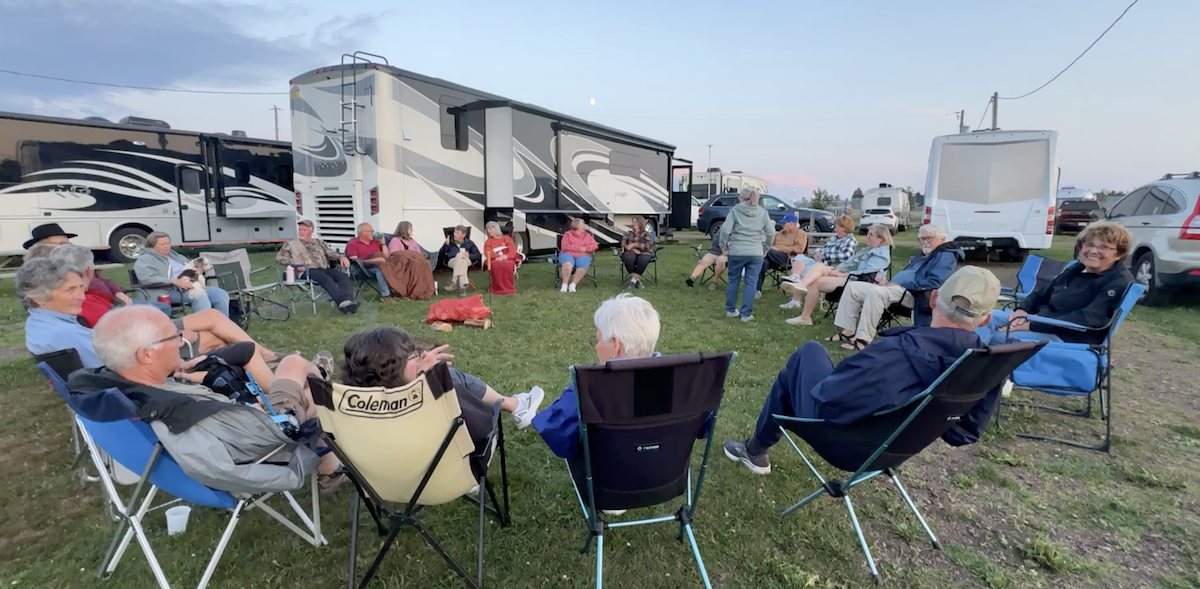
Become a part of the Internet's Best RV Community
Private. Ad Free. No Facebook Nastiness.
RV Travel Tips, Rallies and Meet-Ups, interactive livestreams, exclusive workshops, perks, discounts and Real Help from Real Rvers.