

 Apple Podcasts
 Spotify
 PocketCasts
 RV Parks Fill With Workers. Campers Get Squeezed Out.

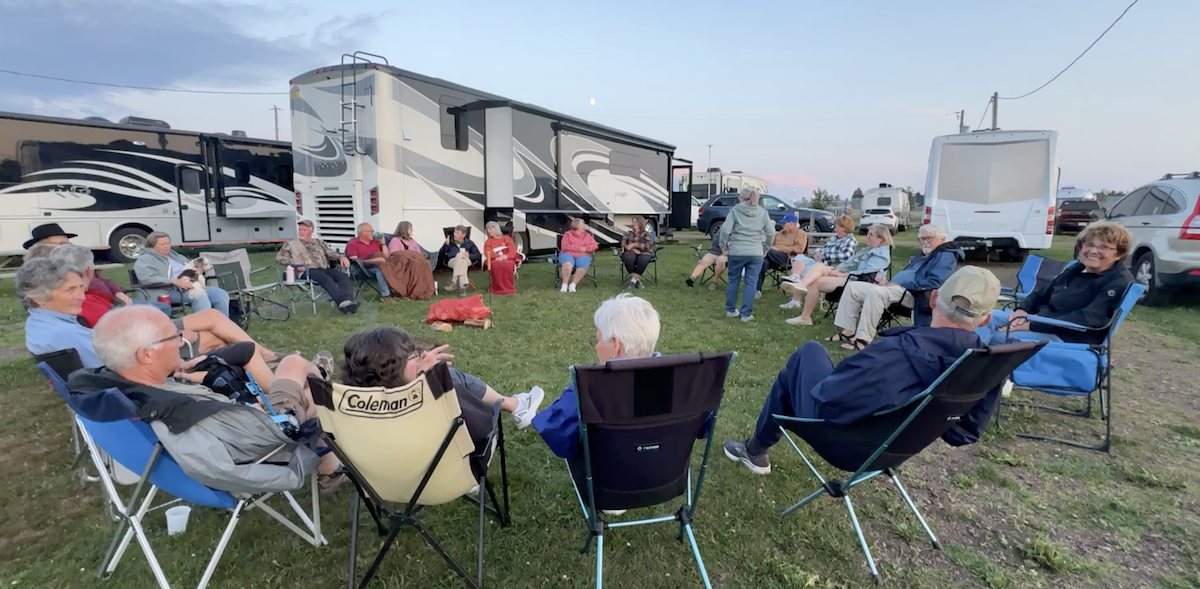
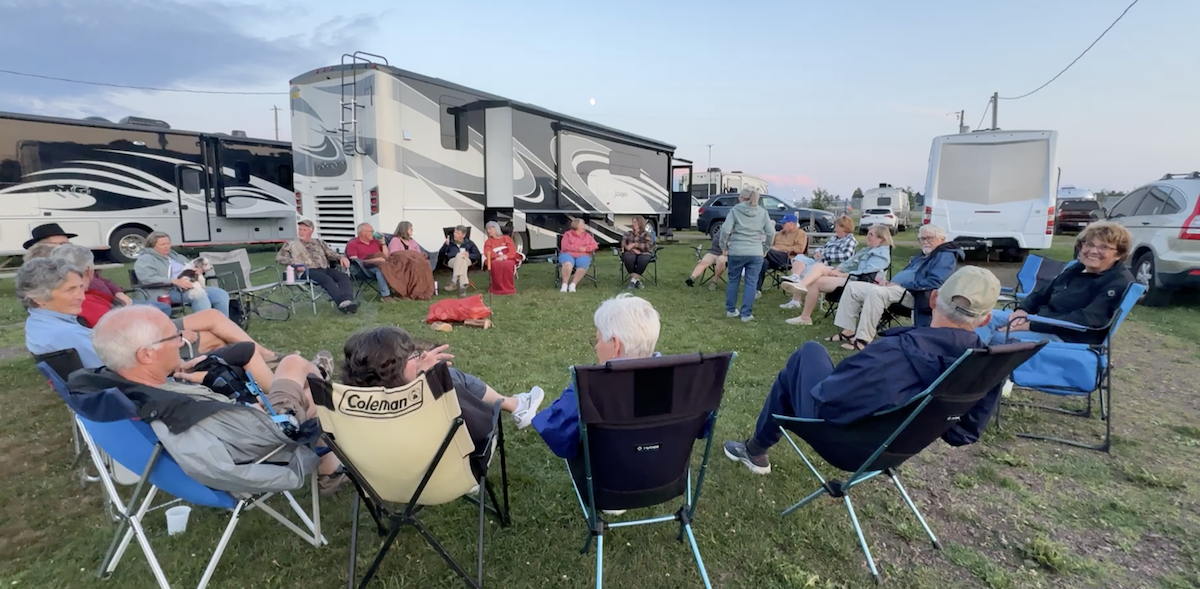
RV parks are quietly turning into industrial worker housing. A $100 billion SpaceX spaceport in Louisiana and a wave of data center construction in Texas and the Midwest are filling campgrounds with long-term crews, and recreational campers are the ones getting squeezed out.
In this week's Monday News Edition:
RVs as work camps. SpaceX announces a $100 billion spaceport in Vermilion Parish, Louisiana, new RV parks are expected to house the construction crews, a Texas park near Abilene advertises 2,300 monthly sites for data center workers, and eastern Iowa campgrounds are already running full year-round.
Monsoon season is doing real damage. Eleven hikers are rescued with hypothermia at Bryce Canyon in August, and about 50 people are airlifted out of the Grand Canyon on Saturday after flash flooding tore through Bright Angel Canyon. Phantom Ranch and the North Kaibab Trail are closed until further notice.
Why all the rockfalls? A large rockfall closes the Zion Canyon scenic drive, a Glacier National Park visitor is killed by a rock that came through his car roof, and researchers explain the link between heat and falling rock.
A Colorado startup wants to cut camper van prices in half. Hunker's removable pod drops into a Ram ProMaster and starts at $55,000, but there is a catch worth knowing about.
Twelve years later, a microchip brings Flor home. A chihuahua missing for 12 years is reunited with her Evanston family after a shelter in Indiana scans her chip, plus what every RVer traveling with a pet should check this week.
LINKS Free daily RV Lifestyle newsletter: https://rvlifestyle.com/newsletter Show notes and full transcript: https://rvpodcast.com RV Community: https://rvcommunity.com The Complete Guide to RVing in Retirement: https://rvlifestyle.com/retirementguide
Become a part of the Internet's Best RV Community
Private. Ad Free. No Facebook Nastiness.
RV Travel Tips, Rallies and Meet-Ups, interactive livestreams, exclusive workshops, perks, discounts and Real Help from Real Rvers.
RV PODCAST NEWS EDITION
Monday, August 31, 2026
Publishes 6 a.m. ET
OPEN
Hello, everyone. I am Mike Wendland, and this is the Monday, Aug. 31 edition of the RV Podcast News Edition.
This is one of two RV Podcast episodes we do every week.
This one publishes at 6 a.m. every Monday with the biggest news stories affecting the RV lifestyle.
Then, on Wednesday, Jennifer joins me for our Stories from the Road edition, where we have interviews, share RV lifestyle tips and travel ideas, and answer your questions.
Now, a word about how I put this show together, because I think it matters.
I am a journalist by training. I spent more than 40 years working for big city newspapers, television stations and networks. In that business you learn very quickly that you do not report anything you cannot source.
Jennifer and I came up in the news business, and old habits die hard. We source our stories, we check the numbers, and we try to separate what actually happened from what the press releases want you to believe happened.
You will find links to every story we report at the very end of the transcript for this episode at RVPodcast.com. Look for the Transcript tab and scroll all the way to the bottom. Go check my work.
Before we get started, let me invite you to sign up for our free RV Lifestyle newsletter.
We publish it every day, and it is filled with RV news, travel inspiration, campground information, practical tips and the stories that matter to people who love this lifestyle.
It is free, and you can sign up at RVLifestyle.com/Newsletter.
Again, that is RVLifestyle.com/Newsletter.
Now, here is the RV news of the week.
STORY 1: YOUR CAMPSITE IS TURNING INTO SOMEBODY'S COMPANY HOUSING
Something is happening to the RV, and almost nobody is talking about it out loud.
It is quietly being turned into industrial worker housing.
Start in Louisiana. On Aug. 25, SpaceX announced a spaceport at Pecan Island in Vermilion Parish, about 50 miles south of Lafayette. Louisiana Economic Development puts the investment at $100 billion. Construction starts in 2027. The first launch is targeted for 2029.
Elon Musk said the company is preparing to build a spaceport that, in his words, "until now, has only existed in science fiction."
Maybe. What we know for certain is that a project like that needs bodies, and bodies need beds.
RVtravel reports that large new RV parks are expected in southern Vermilion Parish to house those workers. Hundreds of construction workers are anticipated beginning next year, and many of them are expected to live in RVs for two or three years or longer.
Parish officials did their homework. They studied how Cameron Parish, Louisiana, and Brownsville, Texas, handled the same kind of surge.
Now go to Texas, where this is no longer a forecast.
Outside Abilene, a place called Elmdale RV Park is marketing itself as purpose-built for long-term workers at the Frontier data center project. Its own website advertises roughly 2,300 monthly campsites, starting at $675 a month.
Twenty-three hundred sites. That is not a campground. That is a small city with sewer hookups.
And in eastern Iowa, it has already changed what campers can get.
Campgrounds around the Cedar Rapids area filled up with crews building a large data center project. Stephanie Chrisman, who runs a pair of RV parks there, told KCRG her parks are "practically 100 percent full" year-round. In past winters they ran 20 to 30 percent.
She said something else that should get your attention.
"There's a lot of campers that are used to having spots over the summer and they're having trouble getting in."
Over the Fourth of July weekend this year, one campground manager reported that 85 percent of the sites were occupied by data center workers.
There is a third piece to this, and RVtravel flagged it last week. The data centers themselves are creeping closer to RV parks. These buildings run cooling equipment around the clock, and noise is the complaint neighbors raise most often.
So what does all of this mean to you?
Three things.
First, if you are traveling through a boom corridor, west Texas, coastal Louisiana, eastern Iowa, central Ohio, book earlier than you think you need to, and expect to pay more. A park with a full lot of monthly workers has no reason to discount a three-night stay.
Second, when you reserve, ask a direct question: is this park hosting long-term construction crews? There is nothing wrong with the answer being yes. Those are working people putting in twelve-hour days, and they are not the problem. But a park running at capacity with monthly tenants is a different product than a campground. Laundry is busier. Showers are busier. Sites turn over slowly, and the one you get may be the one nobody wanted.
Third, be honest about the other side of this. That money builds infrastructure. Somebody is pouring pads, running power and digging sewer. When a project ends, some of those parks convert to real campgrounds and we end up with capacity we did not have before. Brownsville is the test case, and the results there have been mixed.
We have spent this year reporting on an RV industry that cannot sell enough new rigs.
Turns out there is one growth market left. It just happens to be a construction crew.
STORY 2: MONSOON SEASON IS DOING REAL DAMAGE AT BRYCE AND THE GRAND CANYON
We turn now to the weather, because the desert Southwest has had a rough ten days, and two national parks took the worst of it.
On Aug. 24 at 2 p.m., the National Park Service says Bryce Canyon National Park experienced what it called "a severe monsoonal weather event," bringing heavy rain and hail, flooding, lightning, a significant temperature drop and mudslides.
About an inch of rain fell on the Bryce and Tropic area, according to the National Weather Service.
Eleven hikers were rescued from the Bryce amphitheater with hypothermia. They were spread across the Fairyland, Navajo Loop, Peekaboo and Queens Garden trails. Two were hospitalized. The Park Service says one patient was in critical condition at the time of rescue.
Garfield County sheriff's deputies, county search and rescue crews and park rangers all responded together, and county EMS handled the transports.
The town of Tropic issued a precautionary boil water order Tuesday morning after the flooding.
Now here is the part worth sitting with.
This was hypothermia. In southern Utah. In August.
The rim at Bryce sits above 8,000 feet. Add an inch of rain, hail, a sharp temperature drop and wind, and a person dressed for a hot summer hike is in serious trouble in under an hour. It does not require winter. It requires wet, wind and a body that cannot generate heat fast enough.
Most of the people caught in this did nothing wrong except look at a blue sky and dress for it.
And then it happened again, in a much bigger park, two days ago.
On Saturday afternoon, flash flooding tore through Bright Angel Canyon at Grand Canyon National Park. It started around 2:30 in the afternoon, the same window as Bryce.
Roughly 50 people had to be airlifted out of the Phantom Ranch area by helicopter.
No one was hurt, and that is worth saying plainly. The Park Service moved fast and moved everybody. But the numbers tell you how much water came through. Fifty people do not get flown out of the bottom of the Grand Canyon because a trail got muddy.
Phantom Ranch and the entire North Kaibab Trail are closed until further notice. Park officials are asking people to stay out of the closed areas, and the lodge concessionaire is contacting guests about their reservations.
If you have a Phantom Ranch reservation or a rim-to-rim hike on the calendar this fall, check the park's alerts page before you drive to Arizona. Those closures have no announced end date.
So a few things for the rest of us.
First, monsoon season in the desert Southwest runs into September. Check the actual forecast the morning of your hike, not the sky at the trailhead.
Second, carry a layer and a rain shell in the daypack even when it is 90 degrees. It weighs nothing and it is the entire difference in a story like this one.
Third, stay out of narrow canyons and washes when there are storms anywhere in the area, including storms you cannot see. Water arrives from rain that fell miles away.
And fourth, if you are hiking down into a canyon, remember the climb out is the hard part, and you will be doing it wet, cold and tired.
At Bryce, Navajo Loop has reopened. Wall Street and the Bryce Connector were still closed for safety assessment.
Eleven people walked into Bryce Canyon dressed for August, and 50 more needed a helicopter out of the Grand Canyon. The desert had other ideas.
STORY 3: WHY ALL THE ROCKFALLS?
Water is not the only thing coming down on park visitors this summer.
On Monday afternoon, Aug. 25, a large section of cliff let go inside Zion National Park.
It came down between The Grotto and Weeping Rock, sending a plume of dust hundreds of feet across Zion Canyon. Video shows it happening near a shuttle bus. The scenic drive was closed beyond shuttle stop six for the rest of the day and reopened Tuesday morning.
Nobody was hurt. That is luck.
Six weeks earlier, at Glacier National Park, the luck ran out.
On July 11, on the Rimrock section of Going-to-the-Sun Road about a mile west of Logan Pass, a rock fell through the roof of a vehicle and struck the man inside. Rex Schowengerdt, 72, of Missouri, died from his injuries on July 16.
He was not climbing. He was not off trail. He was driving on a park road.
So why does it feel like we are reporting these constantly?
Part of the answer is heat.
Geologists with the U.S. Geological Survey and the National Park Service spent years wiring instruments into cracks behind partially detached granite slabs in Yosemite Valley. What they found is that the daily cycle of heating and cooling makes those cracks open and close by about half an inch. Do that every day for years and the crack works its way deeper, until the slab comes off.
Greg Stock, the Yosemite park geologist, put it plainly. "Summertime rockfalls have been something of a mystery. With this work we now have a plausible explanation for why they happen."
This is not only an American story.
In the Mont Blanc massif in the Alps, researchers have counted 450 rockfalls so far in 2026. The previous record was 300, set in 2022. Ludovic Ravanel, a geomorphologist with the French research agency CNRS, attributes it to degrading permafrost and retreating glaciers taking the pressure off rock faces.
Now let me be careful here, because this is where reporting usually goes sloppy.
Rockfall is normal. It is how canyons get made. No geologist can tell you that one particular rock came down because of one particular hot afternoon. What the research supports is narrower than the headlines: heat is a documented trigger, and a lot of these let go in the hottest hours of the day.
Zion Superintendent Jeff Bradybaugh said it about as well as it can be said. "We urge all visitors to take their safety seriously, remain alert and be mindful that rockfall is a natural and ongoing process in canyon terrain."
For those of us who visit these places from a campground, the practical part is short.
You cannot dodge a rock. You can lower your odds. Do not stop for lunch directly beneath a cliff face. Do not set up chairs and an awning under a canyon wall if there is any other site available. On canyon roads, keep moving instead of parking under the interesting part. And when a park closes a road or a trail, take the closure seriously instead of hunting for a way around it.
The mountain is not out to get you. It is doing what mountains do. It just does more of it when it is hot.
MIDROLL: THE COMPLETE GUIDE TO RVING IN RETIREMENT
Let me take a quick break here.
Retiring into the RV lifestyle looks simple from the outside. Then the real questions start. Which RV actually fits the way you want to travel? What does it cost to run over a year, not over a weekend? How long can you stay out? What changes as you get older, and how do you keep doing this well into your seventies and eighties?
Jennifer and I wrote a guide for exactly those questions. It is called The Complete Guide to RVing in Retirement.
It covers choosing the right RV, budgeting, trip planning, staying healthy and safe on the road, traveling as we age, and building an RV lifestyle that fits the life you actually want to live.
You can find it at RVLifestyle.com/RetirementGuide.
Again, that is RVLifestyle.com/RetirementGuide.
STORY 4: A COLORADO STARTUP WANTS TO CUT THE PRICE OF A CAMPER VAN IN HALF
A Denver company called Hunker says it can put you in a camper van for a fraction of what the market charges.
The founders are Dillon Hansen and Jon Moran, who also run Native Campervans. Hunker is a separate business.
Their product is not a van. It is a pod.
Hunker Pods are removable camper modules, built by a German supplier, that drop into a Ram ProMaster 159 cargo van. The company says installation takes about an hour. Take the pod out and you have a cargo van again.
The price is the headline. RVBusiness reports Hunker Pods will run $55,000 to $78,000 depending on whether the chassis is new or used. A traditional Class B van runs $120,000 to $200,000.
Inside you get a 314 amp-hour lithium battery bank, a 1,200-watt Victron inverter, a Dometic refrigerator, a dual-burner cooktop and a queen bed that comes out of a hydraulic dinette table.
Hansen told RVBusiness the idea came from watching the math stop working. "We were paying these premiums for vehicles, but the earnings didn't continue."
Give them credit. They identified a real problem. People are paying six figures for a vehicle they use six weekends a year, and the removable module is a genuine answer to that.
Now let me do what I do.
The pod carries 7 gallons of fresh water and 7 gallons of gray. That is not a typo and it is not a boondocking rig. Seven gallons is a couple of days of careful use with a campground bathhouse nearby.
Sales do not begin until 2027. There are no units on the road, no owner reports and no track record on warranty claims. A module built overseas raises fair questions about parts and repair time when something fails in Wyoming.
None of that makes it a bad product. It makes it an unproven one.
If you are shopping the small-van end of the market, watch this closely. Ask about water capacity, about who fixes the pod and where, and about what the warranty covers. Then ask to see a finished unit in person before any money changes hands. Do not put a deposit down on a rendering.
A camper you can lift out of the van is a good idea. Now they have to build it.
STORY 5: TWELVE YEARS LATER, A MICROCHIP BROUGHT FLOR HOME
We end this week in Evanston, Illinois.
Twelve years ago, Vanessa Antonino lost her chihuahua. The dog's name is Flor.
Last week, workers at an animal shelter in Gary, Indiana, just across the state line, took in a chihuahua and did the routine thing. They scanned her for a microchip.
The chip came back to Antonino.
A shelter volunteer drove Flor to the Evanston Animal Shelter, and on Wednesday night the two of them were back together after 12 years apart. Antonino's four sons grew up hearing stories about Flor. Now they have met the dog their mother calls her first baby.
We do not know where Flor was all that time. Nobody does.
Here is why this is an RV story.
Anyone who travels with a dog knows the particular fear of an unfamiliar campground. A dog bolts at fireworks, or a slamming door, or a deer. In a place they have never been, with no scent trail home, they run and they keep running. It happens to careful people all the time.
A collar comes off. A tag wears out. A chip does not.
But a chip only works if the registration behind it works, and that is where most of these stories quietly fail. The dog gets scanned, the number comes up, and it leads to a phone that was disconnected six years ago.
So take ten minutes this week and do four things.
First, confirm your pet actually has a chip and find the number. Your vet can scan and tell you.
Second, log into the chip registry and make sure the contact information is current and in your name, not the breeder's or the shelter's.
Third, add a second contact who is not traveling with you, so somebody answers when you are in a canyon with no bars.
And fourth, keep a current photo of your pet on your phone, and know that a lost dog gets transported. Call shelters along your route, not just the one nearest your campsite.
Flor was gone 12 years. What brought her back was a piece of technology the size of a grain of rice and a registration record somebody kept current.
Go check yours.
CLOSE
That is our RV news for this week.
Thanks for being with us. I appreciate the time you spend with this show.
If you have a comment on anything you heard today, or a question you would like me to answer, use the Contact link at RVPodcast.com. It comes straight to me, and I read every one of them.
We will be back with another episode Wednesday, when Jennifer joins me for our Stories from the Road edition, with interviews, RV lifestyle tips, travel ideas and answers to your questions.
If you have not already done so, please sign up for our free RV Lifestyle newsletter. We publish it every day with RV news, travel ideas, campground information, helpful tips and reports from the road. You can sign up for free at RVLifestyle.com/Newsletter.
And if you enjoy this podcast, would you please leave us a rating and a review?
It only takes a moment, but it helps other RVers discover the program. We read those reviews, and we sincerely appreciate every one of them.
One more reminder about The Complete Guide to RVing in Retirement. It covers choosing the right RV, budgeting, trip planning and traveling well as we get older. You can find it at RVLifestyle.com/RetirementGuide.
I am Mike Wendland.
Thanks for listening, and Happy Trails!
SOURCES
Story 1: RVs as worker housing for the SpaceX and data center construction booms
RVtravel, new RV parks expected in Louisiana for SpaceX workers:
https://www.rvtravel.com/rv-parks-expected-louisiana-traditional-rvers
RVtravel, data centers moving closer to RV parks:
https://www.rvtravel.com/quiet-campsite-stay-quiet-data-centers-moving-closer-parks/
RVtravel, Texas RV parks built for data center workers:
Louisiana Economic Development, SpaceX $100 billion Vermilion Parish announcement:
Louisiana Illuminator, SpaceX spaceport details and local reaction:
https://lailluminator.com/2026/08/25/spacex-louisiana-2/
Elmdale RV Park, site count and monthly rates:
KTXS, Abilene approves RV park for data center workers:
KCRG, data center workers filling eastern Iowa campgrounds:
BGR, campground occupancy over the Fourth of July weekend:
https://www.bgr.com/2211244/ai-data-center-boom-unexpected-effect-local-campers/
Story 2: Monsoon damage at Bryce Canyon and the Grand Canyon
FOX 10 Phoenix, about 50 airlifted from the Grand Canyon after flash flooding:
https://www.fox10phoenix.com/news/50-airlifted-from-grand-canyon-after-sudden-flood
CBS News, Grand Canyon evacuations and North Kaibab Trail closure:
AZFamily, dozens rescued from Grand Canyon trails:
https://www.azfamily.com/2026/08/30/dozens-people-rescued-grand-canyon-trails-after-flash-flooding/
SFGATE, hikers rescued at Bryce Canyon:
https://www.sfgate.com/national-parks/article/hikers-rescued-bryce-canyon-22403625.php
St. George News, 11 hikers rescued, National Park Service statement and Tropic boil order:
Salt Lake Tribune, 11 hikers rescued, two hospitalized:
https://www.sltrib.com/news/2026/08/24/11-hikers-rescued-flash-flooding/
Story 3: Why all the rockfalls
SFGATE, national parks rockfall and heat:
https://www.sfgate.com/national-parks/article/national-parks-rockfall-heat-22404672.php
Deseret News, video of the Aug. 25 Zion rockfall and road closure:
Flathead Beacon, Glacier National Park visitor killed by rockfall on Going-to-the-Sun Road:
U.S. Geological Survey, research on heat as a rockfall trigger in Yosemite:
https://www.usgs.gov/news/national-news-release/hot-days-can-trigger-yosemite-rockfalls
Phys.org, record rockfall season in the Mont Blanc massif:
https://phys.org/news/2026-08-summer-triggers-rockfalls-alps-scientist.html
Story 4: Hunker aims at the Class B van market
RVBusiness, Colorado startup Hunker and the Hunker Pod:
https://rvbusiness.com/colorado-startup-hunker-aims-to-shake-up-the-b-van-market/
Story 5: A dog missing 12 years comes home
NBC News, dog missing 12 years reunited with Chicago family:
https://www.nbcnews.com/news/us-news/dog-missing-12-years-reunited-chicago-family-rcna594855
ABC7 Chicago, microchip scanned in Gary, Indiana, leads to Evanston reunion: