



How RV Mail Forwarding Works Plus Our Most Important RV Maintenance Tip



Traveling full-time in your RV doesn't mean your mail has to vanish into thin air. In this episode, we break down exactly how experienced RVers handle mail forwarding so you never miss important documents, packages, or correspondence while you're on the road.
(click the transcript tab for complete notes and resources)
In This Episode:
- How RV mail forwarding services actually work (and which ones to watch out for)
- The real costs and logistics you need to know before signing up
- Tips for managing important mail, bills, and packages while traveling
- Your questions answered: The single most important RV maintenance check you can't afford to skip
- Travel tips from 15+ years of full-time RV living
- And much more!
Whether you're planning your first RV adventure or you're a seasoned traveler looking to streamline your mail system, this episode gives you the practical, no-nonsense guidance you need.
EPISODE RELEASED: February 11, 2026
Got RV questions? Drop them in the comments below, and we might answer them in an upcoming episode!
CONNECT WITH US:
- Join RVCommunity.com for exclusive content and member benefits
- Subscribe to our podcast for weekly RV news and stories from the road
- Follow our travels and get authentic RV lifestyle advice
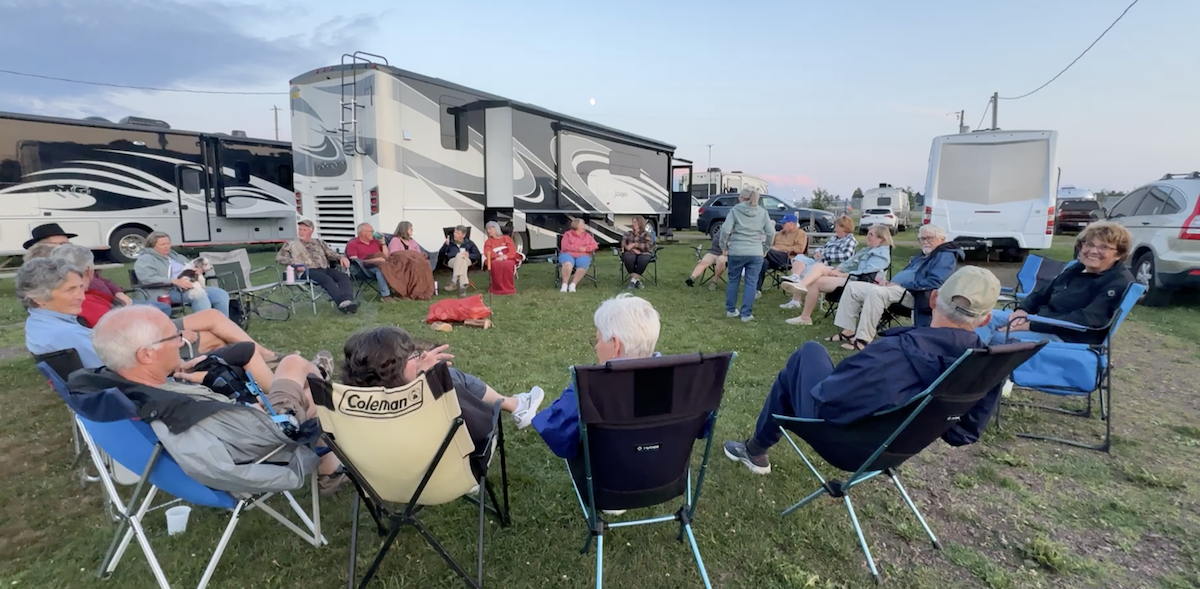
Become a part of the Internet's Best RV Community
Private. Ad Free. No Facebook Nastiness.
RV Travel Tips, Rallies and Meet-Ups, interactive livestreams, exclusive workshops, perks, discounts and Real Help from Real Rvers.
This is Episode #582 of the RV Podcast.
And this week on the podcast:
In this episode’s conversation, we’ll learn all about RV Mail Forwarding. If you travel by RV and still need your mail to show up on time and not disappear into a black hole, our conversation of the week explains exactly how smart RVers make mail forwarding work.
Plus, we’ll share travel tips, answer your RV Questions and much more. This episode is being released on Wednesday, February 11, 2026
Hello everybody I'm Mike Wendland
And I'm Jennifer Wendland and this is the RV Podcast: Stories from the Road edition, and you can find complete shownotes for this episode at RVPodcast.com, our central content hub for everything we do, podcasts, blogs, videos, and our RV Community.
We also want to remind you is you have a comment or question about anything you hear in this podcast, use our Voicemail feature or drop us a note. You can find ways to do both at RVPodcast.com
We have been getting a ton of great feedback from last week’s live, interactive RV travel workshop, and honestly, these monthly sessions have become one of the most fun things we do. The live questions, real-world scenarios, and back-and-forth with fellow RVers make every workshop feel more like a conversation than a class.
We are excited about the next one coming up on February 12, all about How to Get Your RV Ready for the New Camping Season. We will walk through de-winterization step by step, show you how to properly sanitize your freshwater system, and cover the maintenance checks you should do now to make sure your RV is road-ready for your 2026 travel adventures.
The workshop is free for members of our private RVCommunity.com, and for everyone else, it is just $10 for this live event. Space is limited, and we actually had to turn people away from the last workshop, so do not wait.
You can get all the details and sign up now at RVPodcast.com/workshop.
Right after we finished last week’s workshop, we hopped into the Beast and headed up to our Southwestern Michigan home from Florida’s sunshine. Over a foot of snow on the ground greeted us on our return. What a shock.
We came here to celebrate birthdays with family. Mine was Sunday. Jen’s is tomorrow, Thursday, if you’re listening to this on the day we released this episode. We have some doctor appointments and then, the first of March, we’re heading back to Florida, and we’ll stay until spring and all that Michigan snow melts.
We left our fifth wheel in Florida. No sense in hauling it back north, only to turn around and head right back south again in just a few weeks.
RV CONVERSATION OF THE WEEK
One of the trickiest parts of the RV lifestyle has nothing to do with driving, hookups, or campgrounds. It is mail.
If you travel full-time, or even part-time for months at a stretch, you still have to deal with bills, legal documents, prescriptions, packages, jury notices, DMV letters, insurance paperwork, and yes, the occasional piece of mail you actually need right now.
That is where mail forwarding comes in.
Today, we are talking with Kirk Simmons, the founder of MyRVMail.com, a company that specializes in mail forwarding designed specifically for RVers and travelers.
In this conversation, Kirk breaks down how modern mail forwarding really works, not just the basics, but the behind-the-scenes details that matter. We visited MYRVMai’s headquarters n Florida the other day and saw how mail is received, scanned, stored, forwarded, or securely shredded, and how you can decide what happens to each piece, even when you are parked in the middle of nowhere.
We also cover the real problems mail forwarding solves, like maintaining a legal domicile, staying compliant with banks and government agencies, protecting your privacy, avoiding missed deadlines, and not having your important mail pile up at a friend or relative’s house.
If you have ever wondered how RVers handle mail on the road, or if you are considering extended travel and want to get this right from the start, this is a conversation you will want to hear. We were so impressed that we got a MyRVMail account for ourselves.
BREAK 1 - RV Overnights
Hey, quick question. Are you getting a little worn out on paying top dollar for crowded RV parks?
We were too. And last year, we stumbled onto something that completely changed how we travel, RVOvernights.com.
One of our favorite stays was at a bison ranch in Indiana. I mean, real bison, right outside our RV. Massive animals, absolutely beautiful. And that is just one example. They have wineries, farms, museums, even a lavender field. The kind of places you would never, ever find in a typical campground directory.
What makes it easy is their website. You just pull up the interactive map, see what is available along your route, and book your overnight. Done. No guessing, no digging around.
And these are not just random parking lots. These are authentic, memorable experiences with real people all across the US and Canada. Best part, the whole thing costs just $49 for an entire year.
Right now, they are also hooking up our listeners with a special deal. You can get 40% off when you use the promo code RVLDEAL.
After more than 15 years on the road, I do not throw around the phrase game changer lightly, but this truly is one. Head to RVLifestyle.com/rvovernights and use promo code RVLDEAL to save 40%.
That is RVLifestyle.com/rvovernights. Don’t forget the promo code RVLEAL to save 40%.
RV QUESTION OF THE WEEK
Answer: Great question, and I'm going to give you an answer that might surprise you: checking your tire pressure. I know, I know - it sounds basic, right? But here's the thing - improper tire pressure is the number one cause of RV tire failure, and a blowout on the highway can ruin your trip, damage your rig, and potentially put you in serious danger.
Here's what most RVers don't realize: RV tires lose about 2 PSI per month just sitting there, and temperature changes can swing your pressure by 10 PSI or more. You should be checking your tire pressure every single morning before you hit the road, and at least weekly if you're parked for a while.
And I'm not talking about kicking the tires or using that little pencil gauge from the gas station. Invest in a quality digital tire pressure gauge - they run about 20 to 30 dollars - and check your tires when they're cold, meaning before you've driven or before the sun has been beating down on them.
Look up your tire's maximum PSI rating on the yellow sticker on the RV, and inflate to that number for RVs. Don't go by what your truck tires need - your fifth wheel or travel trailer tires are carrying tremendous weight and need the pressure recommended by the RV manufacturer. Also, don't go by the maximum on the tire sidewall. The yellow sticker on the RV itself is based on your unit and the load it is rated to carry.
You don’t want to learn this lesson the hard way with a blowout. Make it part of your routine. Takes five minutes and could save you thousands in damage and a whole lot of headache.
Also, you should have a TPMS (Tire Pressure Monitoring System. Believe me, this ris one of the smartest investments you can make for your RV. Let me explain why.
First, a TPMS gives you real-time monitoring while you're driving down the highway at 65 miles per hour. You could pick up a nail in Nebraska, and instead of discovering it when your tire blows 50 miles later, your TPMS alerts you the second that pressure starts dropping. You can pull over safely, assess the situation, and potentially save that tire before it's destroyed.
Second, it monitors temperature. This is huge. An overheating tire is in danger of failing, period. Your TPMS will alert you to dangerous temperature spikes caused by underinflation, overloading, or a failing structure - problems you'd never catch with a manual pressure check back at the campground.
Third, and this is important for those of us pulling fifth wheels or travel trailers, you can't see those tires while you're driving.
Now, a good TPMS system runs anywhere from 200 to 500 dollars depending on how many tires you're monitoring. Yes, that's real money. But compare that to the cost of a single tire replacement - RV tires can run 180 to 300 dollars each (much more for bg motorhomes) - plus the potential damage from a blowout that could easily cost thousands in bodywork, and suddenly that TPMS pays for itself.
I recommend systems that monitor both pressure and temperature, have loud alerts you can actually hear over road noise, and use sensors that are easy to check and replace.
As far as which ones, we can recommend two brands: The two systems that consistently come out on top in the RV community are the the TST 507 and the TireMinder i10.
Personally, we use the TST 507 on our Brinkley fifth wheel, and it's been absolutely bulletproof. It's got a 4.5-inch color LCD screen that's easy to read in any lighting condition, flow-through sensors so you can add air without removing them, and it can monitor up to 26 tires, which is way more than most of us need. The big selling point? Reliability. I've talked to RVers who've had their TST systems running flawlessly for over a decade. It runs about $300 to $400, depending on how many sensors you need, comes with a repeater for long rigs, and has a three-year warranty with USA-based customer support. The sensors use replaceable CR2032 batteries, so when they die in a couple years, you're spending two bucks, not replacing the whole sensor.
The Tireminder i10 is a little less expensive. We have no experience with it, but it’s got similar features to the TST - flow-through sensors, signal booster included, three-year warranty. Some folks really like TireMinder's customer service and their lifetime support. They also make a smartphone-based version called the Smart TPMS, but I'll be honest - I've heard mixed reviews on that one. Some people love it, others have had connectivity issues. If you go TireMinder, stick with the i10 with the dedicated monitor.
We’ll put Amazon affiliate links in the shownotes for both products for you to check out. But avoid the budget systems. I see systems on Amazon for $150 or so, and you know what? You get what you pay for. False alarms, weak signals, sensors that die after a year. With something as critical as tire monitoring, this isn't the place to pinch pennies.
Bottom line: a TPMS doesn't replace manual checks, but it gives you peace of mind and early warning when you need it most - when you're miles from nowhere doing 65 on the interstate.
Meanwhile..
If you are looking for more than just tips and tricks, if you want real connection with people who actually live the RV lifestyle, that is exactly what RVCommunity.com is all about.
It is a private, ad free community built specifically for RVers who want reliable information, honest answers, and genuine friendships, without the noise, arguments, and algorithms of social media. Inside, you get access to our live workshops every month, the RV Lifestyle Masterclass, exclusive member content, rallies, mini meetups, and ongoing conversations where experienced RVers help real RVers.
This is a place where questions get answered, friendships form, and the RV lifestyle gets easier and more fun.
You can learn more and join us at RVCommunity.com.
That’s it for this week. Dont forget, we release two episodes of the RV Podcast each week, on Mondays - when we focus on RV Industry and camping news - and Wednesdays - our Stories from the road edition. Please subscribe on your favorite podcast apps and remember, you can find all 682 episodes antme at RVPodcast.com
Till the next time…
Happy Trails!