


The RV Homelessness Crisis - Plus Tiffin turmoil, National Parks, & 2026 Travel



This week's RV Podcast News Edition tackles five stories that cover a lot of ground, starting with a topic the rest of the RV media won't touch: the growing RV homelessness crisis.
From Michigan lawmakers debating whether campgrounds can serve as housing solutions, to San Francisco banning large vehicles from city streets, to the quiet erosion of overnight parking at places like Cracker Barrel, this issue is reshaping public policy in ways that affect every RVer on the road.
We also dig into a major CNBC investigation revealing how RVs have become a housing safety net in Silicon Valley, where even full-time workers are living in aging rigs on public streets because they have no other option.
On the good news front, the National Park Service has officially dropped timed-entry reservation requirements at Yosemite, Arches, and Glacier for 2026. If those parks have been on your list, the reservation window is gone. We break down what that means practically and what to expect when the summer crowds arrive.
We also have the full story on Leigh Tiffin's sudden resignation from Tiffin Motorhomes and his move to luxury dealer group NIRVC. He finally broke his silence this week, but the timeline tells a more complicated story: a 20-month negotiation happening behind the scenes, a plant closure affecting 140 workers, and Thor quietly consolidating control over what was once a true family brand.
And we close with a look at why 2026 is shaping up to be one of the biggest RV travel years on record - and why you need to make sure your rig is ready before the campgrounds fill up. Our free Spring Prep Workshop is March 12th at 7 PM Eastern. Details and your free Spring Maintenance Book are at RVLifestyle.com/workshop.
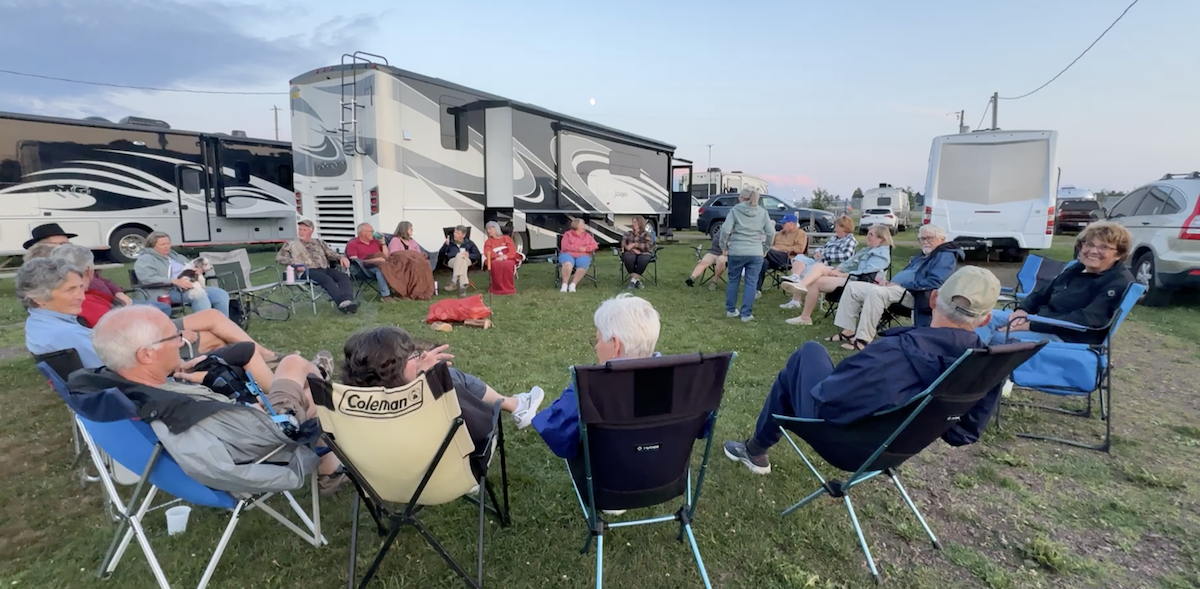
Become a part of the Internet's Best RV Community
Private. Ad Free. No Facebook Nastiness.
RV Travel Tips, Rallies and Meet-Ups, interactive livestreams, exclusive workshops, perks, discounts and Real Help from Real Rvers.
RV News Podcast for Feb. 23, 2026
Hello RV Lifestyle family. It is Monday, February 23rd, 2026, and this is your RV Podcast News Edition - the show where we cut through the noise, dig into what is actually happening in the RV industry, and bring you the stories that matter to the way you live, travel, and plan your time on the road.
I am Mike Wendland, and we have a packed show for you today - five stories that cover a lot of ground.
Before we jump in, a quick note on how we do things here. We are journalists. That means every story we bring you today is sourced. We are not just reading press releases, and we are not passing along campfire rumors. When we make a claim, we have a source behind it - a news article, a government filing, a forum thread, an official announcement. And every single one of those sources is listed in the show notes for today's episode. You can find them at rvpodcast.com . If something we say today sparks a question, or you want to dig deeper on any of these stories, that is where to go. We believe you deserve to know where the information is coming from, and we make it easy to follow the trail yourself.
That is the journalism difference. And after 15 years of doing this, it is still the thing we are most proud of.
Alright. Let's get into the news. There is a lot to cover this morning, and we are going to start with a story that .
Story 1: When Home is a Parking Spot - The Growing Crisis of RV Homelessness
We’re going to talk about something that almost nobody in the official RV industry will touch. Not the manufacturers, not the big dealer groups, not the trade associations. You won't find a panel discussion about it at any RV industry conference. You won't see it mentioned in the Go RVing marketing campaigns. It won't appear in the cheerful show reports from Tampa or Louisville. But it is reshaping public perception of RVs in ways that could affect every single one of us.
It is the RV homelessness crisis. And it is real, it is large, and it is getting worse.
There is a story that has been building for years in the RV world, and it is now impossible to look away from. Deteriorating RVs parked on city streets, camped in public spaces, showing up at rest stops and even in campground parking areas. People living in broken-down rigs with nowhere to go. And this issue is now driving legislation, changing policies at businesses we rely on, and reshaping how the broader public thinks about RVs and RVers.
Let's get into it.
Michigan: Pulling in Opposite Directions
Right here in the Midwest, my home state of Michigan is at the heart of this debate this week, and there are two very different stories happening simultaneously.
On one side, state Representative Rachel Smit, a Republican from Shelbyville, has introduced House Bill 5430, which would allow campground stays longer than the current six-month limit under the Michigan Health Code. Under the bill, extended stays, and in some cases even permanent residency, would be allowed at campgrounds within 50 miles of communities dealing with declared emergencies, worker shortages, or tight rental markets. Smit has pointed to real, sympathetic use cases: utility linemen deployed to northern Michigan for nine months after last year's major ice storm, traveling nurses serving rural hospitals with no nearby housing, disaster relief workers with nowhere else to stay. The bill remains in committee right now, but it is drawing serious debate.
The concern from opponents is not political. It is practical. Michigan campground water and sewer systems were designed for seasonal use. In northern Michigan, frost lines can go four feet deep. Converting a seasonal campground to year-round residential use means major infrastructure upgrades, and not every campground operator can afford that. Still, the bill is alive, it is current, and it reflects how seriously some lawmakers are taking the housing crunch.
At the same time, the Michigan Department of Transportation has proposed rules going the other direction entirely. MDOT wants to make it a misdemeanor to park at any state rest area for more than two days. Those rules would cover 61 rest areas, 82 roadside parks, 267 carpool lots, 23 scenic turnouts, and 14 welcome centers across the state. MDOT says most of its facilities already have long-term residents, some staying for weeks or months. Advocates say the proposed rules would criminalize homelessness. MDOT says the rules apply equally to everyone. Both arguments have merit, and that tension is playing out in states all across the country.
The Rest of the Country
California is the most dramatic example. San Francisco counted 437 large vehicles being used as dwellings on city streets as of May 2025. That number had climbed from 474 in the summer of 2024 to 612 by June 2025. Mayor Daniel Lurie pushed through legislation passed 9 to 2 by the Board of Supervisors in July that restricts parking for any vehicle over 22 feet or 7 feet tall to just two hours citywide. Residents could apply for a special permit exempting them for six months, but they had to have been on the city's radar before May to qualify.
By November, the crackdown was already hitting snags. At least 80 unpermitted large vehicles remained on city streets. A 15-year-old was at school and an 18-year-old was at a job interview when the trailer they lived in was towed. At least one permit was issued to a non-homeless apartment dweller who simply wanted a place to park his camper van between weekend trips. The program is a mess in practice, even if the intent was reasonable.
Los Angeles County went a different route: it launched a Pathway Home RV Pilot at a Crenshaw parking lot in late 2024, providing legal parking, case management, and wraparound services for up to 14 RVs at a time, with the goal of moving people toward permanent housing. It is small, but it is a working model. Down in Carlsbad, the answer was a flat ban: the city has issued more than 34 vehicle camping citations, 77 oversized vehicle parking citations, and towed 12 vehicles since March 2025 alone.
Oregon is still sorting out a 2021 law that limits how cities can enforce camping bans. Florida passed a statewide law requiring counties and municipalities to ban camping in public spaces, and as of January 1st this year, residents and business owners can sue municipalities if homelessness enforcement is deemed insufficient. Cities from West Virginia to Wyoming are adopting anti-camping ordinances. The National Homelessness Law Center tracked more than 100 new camping ban laws across the country in 2024 alone, with another 40 pending. Some include vehicle living in the restrictions; some do not. But the trend is clear and it is accelerating.
Cracker Barrel: What We Know
I want to address Cracker Barrel directly, because there has been a lot of confusion. I reached out to Cracker Barrel, and they confirmed to me: there has been no policy change. Overnight parking remains a store-by-store decision based on local ordinances, lot size, and layout. That is the official position, and it has not changed.
But here is the ground-level reality. Online campsite review platforms are full of recent reports from RVers finding homeless individuals camped in or around Cracker Barrel lots at night. Multiple travelers have reported feeling unsafe. At some locations, individual managers have posted their own "No Overnight Parking" signs. When enough managers make that call, the informal tradition dies regardless of what corporate says. Walmart went down this road in many urban markets over the last decade, driven by years of resident complaints about adjacent homeless activity. Cracker Barrel is feeling that same pressure at an increasing number of locations.
Corporate policy is one thing. What happens in each parking lot is another. Always call ahead.
The Bigger Angle: The Industry Created This Opening
Here is something worth sitting with. The RV industry itself has been actively marketing four-season and full-time living capability for years. Brands like Arctic Fox, Northwood, Outdoors RV, Grand Design, and Oliver Travel Trailers openly advertise their rigs as built for year-round living. The problem is there is no industry-wide standard for what "four-season" actually means. Every manufacturer defines it differently. Some rigs marketed that way can handle serious winters. Others struggle below 40 degrees. But the messaging to the public is clear: an RV can be a real home.
But that same message has reached people who see a used RV as their only housing option. A 20-year-old Class C that barely runs is technically a four-season vehicle if it has a furnace. And for someone with no other option, it becomes the answer to a housing crisis that has no other solution in sight.
Private Land: The Zoning Obstacle Course
Now there is a growing number of people trying to do this the right way. They are buying their own land, setting up a private RV retreat, and trying to live or let others live legally in RVs on their own property. The problem is that zoning law is a maze, and it almost always wins.
Most jurisdictions do not have a dedicated RV park zoning category. A proposed private RV retreat typically has to fall under "campground," "recreational use," or get pushed through as a special use permit. Many local codes restrict full-time RV living on residential land unless the property is zoned for mobile homes or mixed-use. Even if you own an acre of land, you may be prohibited from living in an RV on it permanently. You need proper utility connections, septic approval, and building code compliance for anything called a dwelling. Maryland, for example, requires a minimum of one acre and still does not allow an RV as a permanent primary residence. California requires specific permits that are rarely granted except for hardship situations.
Some developers who have tried to build legitimate private RV communities have discovered mid-process that the zoning classification they need does not even exist yet in their county. One campground developer documented going through a public hearing process only to be told to wait while the city invented a new zoning category. This stuff is genuinely hard, even for people trying to play by the rules.
What This Means for the RV Community
The bottom line here is that public perception of RVs is being shaped right now, and not primarily by us. It is being shaped by city councils dealing with encampments, by residents frustrated with deteriorating rigs parked on their streets, and by businesses navigating a problem they never signed up for.
The worst outcome for our community is that policymakers treat all RV living the same way. That campgrounds face new restrictions because legislators conflate recreational camping with homeless encampments. That rest stops become harder to use. That Cracker Barrel lots disappear as overnight options.
The best thing the legitimate RV community can do is stay loud, stay engaged in local policy conversations, and make sure there is a clear distinction between people using RVs as intended and a housing crisis that has landed, sometimes literally, in our community's lap. These are two very different things, and the people writing the rules need to hear from us to understand that.
Sources by Topic for this story
Michigan Campground Extended Stay Legislation (HB 5430)
Bridge Michigan: https://bridgemi.com/michigan-government/are-campgrounds-a-solution-to-michigan-housing-crunch-some-lawmakers-think-so/
Woodall's Campground Magazine: https://woodallscm.com/some-mich-lawmakers-looking-to-parks-as-housing-solution/
RV Business: https://rvbusiness.com/some-mich-lawmakers-look-to-parks-as-housing-solution/
Modern Campground: https://moderncampground.com/usa/michigan/michigan-bill-would-allow-year-round-campground-living-to-ease-housing-crisis
Michigan MDOT Rest Stop Restrictions
Bridge Michigan / WCMU Public Radio: https://bridgemi.com/michigan-government/michigan-seeks-to-limit-rest-stop-stays-critics-fear-criminalizing-homelessness/
San Francisco RV Crackdown
CNN (July 2025): https://www.cnn.com/2025/07/22/us/homeless-rv-ban-san-francisco-hnk
SF.gov official plan: https://www.sf.gov/strategy-to-address-vehicular-homelessness-and-restore-public-spaces
SF Standard (November 2025): https://sfstandard.com/2025/11/06/sf-rv-homeless-permit-crackdown-lurie/
KQED: https://www.kqed.org/news/12062202/this-is-our-home-san-francisco-families-in-rvs-brace-for-new-city-crackdown
California and National Trends
CalMatters (September 2025): https://calmatters.org/housing/homelessness/2025/09/homeless-enforcement-cars-rvs/
Stateline / National Homelessness Law Center data: https://stateline.org/2025/01/27/many-more-cities-ban-sleeping-outside-despite-a-lack-of-shelter-space/
NPR / Grants Pass ruling: https://www.npr.org/2024/12/26/nx-s1-5199103/homeless-camping-bans-grants-pass
Los Angeles County RV Pilot Program
LA County Homeless Services: https://homeless.lacounty.gov/news/la-county-launches-pathway-home-rv-interim-housing-pilot-program/
Smart Cities Dive / AB 2525: https://www.smartcitiesdive.com/news/los-angeles-rv-encampments-homeless-california-law-ab2525/728516/
Cracker Barrel Overnight Parking
Jalopnik (October 2025): https://www.jalopnik.com/1997481/cracker-barrel-overnight-rv-parking/
The Travel (official Cracker Barrel statement): https://www.thetravel.com/cracker-barrel-new-overnight-stay-policy-rvers/
Four-Season RV Marketing and Full-Time Living
Let's RV (March 2025): https://letsrv.com/truth-about-four-season-travel-trailers/
RV.com: https://www.rv.com/rv/four-season-rvs-winter-wonders/
Private RV Land and Zoning Challenges
RV Legal on residential property: https://www.recnationstorage.com/blog/is-rv-parking-on-residential-property-legal/
CRR Hospitality / zoning overview: https://crrhospitality.com/blog/understanding-rv-park-legal-regulations-what-you-need-to-know/
RV Park Zoning Industry Analysis: https://www.analytics.loan/post/u-s-rv-park-industry-trends-analysis-2025
Now closely related to our lead story, is story #2. Itcuts a little differently, and it deserves our attention even though it is uncomfortable.
STORY 2: CNBC SHINES A LIGHT ON A DARKER SIDE OF RV LIVING IN SILICON VALLEY
Now closely related to our lead story, is story #2. Itcuts a little differently, and it deserves our attention even though it is uncomfortable.
CNBC this week published a major investigative piece on how RVs have become a housing safety net in Silicon Valley, and the picture it paints is sobering. Along industrial streets, behind warehouses, and in residential neighborhoods across the Bay Area, thousands of residents are living in the only form of housing they can afford: RVs. As rents have soared and California's chronic housing shortage has deepened, even full-time workers are being pushed out of traditional homes and into makeshift ones on wheels.
It gets more troubling from there. A shadow rental market has taken hold across the Bay Area, where individuals - some people are calling them "vanlords" - are renting out aging RVs to people with few other options. Renters pay hundreds of dollars a month to sleep in a vehicle parked on a public street, with no written leases and no tenant protections.
In Santa Clara County - home to Apple and Google and some of the most expensive zip codes in the country - the share of individuals sleeping in vehicles has jumped from 18% in 2019 to 37% last year.
San Jose has tried to respond. The city operates the Berryessa Safe Parking Site, with space for 86 RVs, run by a local nonprofit and funded by a city grant. The park opened in 2025 and already has a full waiting list. Residents are required to work with case managers toward finding permanent housing as a condition of staying there.
Why does this matter to our audience? Because how society views RV living matters to all of us. When RVs appear in national media primarily as symbols of a housing crisis, it shapes public perception, campground policy, municipal regulations, and ultimately the welcome mat extended to those of us who choose this lifestyle freely. We have to be aware of the full picture - and we should care about the people in it who did not choose it.
For regular RVers - people like you and me who are traveling this country and choosing this lifestyle freely - the blowback is already being felt. Cities and counties around the country are enacting rules that make it harder for RV owners to obtain legal parking spaces, with both short-term and long-term travelers running into restrictions driven entirely by the homeless encampment problem. Overnight parking bans, length restrictions, campgrounds turning away full-time RVers, and stricter rules on public lands are all consequences of a regulatory environment that can no longer tell the difference between someone on vacation and someone who has nowhere else to go.
That distinction is getting harder to make, and not just for city council members. It is getting harder at campgrounds, at Walmart parking lots, at rest areas, at BLM land. The growing number of people living in RVs out of desperation has changed the way those places look at all of us. Every time a park ranger sees a beat-up rig with a family that clearly has not moved in months, they respond with a policy that catches everyone. Every time a neighborhood complains about an RV encampment, another city writes an ordinance. Every time an ordinance passes, somebody else's freedom on the road shrinks a little.
The RV industry's silence on this issue is not just tone-deaf. It is strategically shortsighted. The same housing affordability crisis that is driving people into RVs out of desperation is the flip side of the same coin that makes RVs attractive to people who choose the lifestyle. The more the country associates RVs with urban blight and unhoused families, the harder it becomes to defend the access, the parking freedoms, and the cultural goodwill that voluntary RV travelers depend on. You cannot spend 15 years telling America that RV life is wonderful and aspirational and then act surprised when the regulatory and public perception consequences of the crisis land on your customers.
The problem deserves an honest conversation. Not virtue signaling. Not a task force. Not a line item in the Go RVing budget. An honest, adult reckoning with the fact that the vehicle we love has become a symbol of housing failure for millions of Americans, and that the industry that profits from selling those vehicles has a stake in being part of the solution - even if the solution is uncomfortable and even if it costs something.
We do not have easy answers here. Nobody does. But we think our audience deserves to know the full picture. That has always been the deal with this podcast.
Source for this story: CNBC - https://www.cnbc.com/2026/02/20/how-rvs-became-silicon-valleys-housing-safety-net.html RV Business summary - https://rvbusiness.com/cnbc-how-rvs-became-silicon-valleys-housing-safety-net/
CNBC SHINES A LIGHT ON A DARKER SIDE OF RV LIVING IN SILICON VALLEY
STORY 3: National Parks Drop Timed Entry Reservations
Last week we told you about the confusion surrounding the National Park Service and whether it would continue timed-entry reservation systems at some of the country's most popular parks. Well, we now have our answer.
The NPS announced this week that Yosemite, Arches, and Glacier National Parks will drop their seasonal timed-entry reservation requirements for 2026. The decision follows what the agency called a comprehensive evaluation of traffic patterns, parking availability, and visitor use during the 2025 season. Acting Assistant Secretary Kevin Lilly put it plainly: "Our national parks belong to the American people, and our priority is keeping them open and accessible."
Yosemite Superintendent Ray McPadden backed up the decision with data, saying the park analysis found that most weekdays maintained available parking, stable traffic flow, and visitation levels within operational capacity. The parks will instead rely on real-time traffic monitoring, active parking management, additional staffing at key intersections during peak periods, and improved visitor information systems. Rocky Mountain National Park, by the way, will still keep its timed-entry system from late May through mid-October, so that one is not changing.
Now, here's where it gets interesting. Some conservation groups are unhappy. The National Parks Conservation Association called the decision "chaos over conservation," and predicted traffic jams and overflowing parking lots. Here's the thing, though: these are the same parks whose own superintendents and on-the-ground professionals looked at real data and concluded the season-wide reservation requirement was not the most effective tool. The NPS did not make this decision casually. They crunched the numbers.
It is worth noting that when Yosemite dropped reservations back in 2023, visitors did face nearly three-hour wait times to enter the park. So the concern is not entirely without basis. But the parks have had time to learn from that experience and say they have better management tools in place now. The 2026 season will be the real-world test.
For RVers, the bottom line is good news: if you have been wanting to visit Yosemite, Arches, or Glacier this summer, you no longer need to plan around a reservation window. The NPS does recommend visiting on weekdays, arriving early, and being flexible about exploring less-crowded areas of the parks.
Sources - Story 2: National Parks Drop Timed Entry
National Park Service announcement coverage: https://thehill.com/homenews/state-watch/5744269-some-national-parks-nix-reservations-fees-entry/
Conservation group reaction: https://www.nationalparkstraveler.org/2026/02/update-major-destination-national-parks-drop-timed-entry-reservations
Arches local coverage (Grand County context): https://moabsunnews.com/2026/02/18/arches-national-park-drops-timed-entry-reservations-for-2026/
AFAR overview with conservation group concerns: https://www.afar.com/magazine/yosemite-arches-national-parks-drop-reservations
Story 4 LEIGH TIFFIN BREAKS HIS SILENCE - AND THE STORY BEHIND THE STORY KEEPS GETTING BIGGER
Last week on this podcast, we told you the RV industry was stunned by the sudden, no-notice resignation of Leigh Tiffin from Tiffin Motorhomes, the company his grandfather Bob Tiffin founded. Well, just as we predicted, Leigh has landed on his feet - and at a very prominent address. He is the new President of National Indoor RV Centers, better known as NIRVC, the high-end motorhome dealer with locations in Dallas, Atlanta, Las Vegas, Nashville, and Phoenix. And this week he broke his silence, sitting down with RV Business to explain his decision.
Here's the thing. We appreciate that Leigh finally spoke up. But the interview was, to put it charitably, a lot of words that didn't say very much. He called leaving Tiffin "absolutely gut wrenching" and said the decision "comes down to a matter of the heart." He insisted it was "not about running from anything - it's running toward a phenomenal personal opportunity." That opportunity, he says, is NIRVC's ambitious plan for an initial public offering in the coming years. Brett Davis, the founder and CEO of NIRVC, has been clear that he has big ambitions for the company to go public, and Leigh called that "an extremely unique career opportunity that was very compelling and a big part of the decision."
Fine. An IPO is exciting. But the folks on the RV forums weren't buying the full spin, and frankly, you don't have to read between too many lines to understand what's really going on here.
Here's what we know. The NIRVC announcement confirmed this deal had been nearly 20 months in the making, which means Leigh Tiffin was in talks with NIRVC while he was still running Tiffin Motorhomes and publicly championing Thor's acquisition. Forum members on iRV2 noted what many of us were already thinking: no one abruptly walks away from a family legacy business - effective immediately, no successor named - just because a dealer group's IPO sounds exciting. As one longtime Tiffin owner put it, "I agree there has to be more to the story. No one abruptly steps away from a family business as president for an 'opportunity.' I wonder if there was conflict between Thor and Tiffin leadership and Leigh had enough."
Now look at what Thor did immediately after the resignation was announced. Rather than name a Tiffin insider as interim president, Thor turned the keys over to Jayco President Ken Walters to assist Tiffin's leadership team through the transition. That is a significant signal. It means Thor is consolidating control under its own corporate management structure - exactly what critics of the 2020 acquisition always warned would happen. The family brand that Bob Tiffin built over decades is, step by step, becoming just another division managed from Elkhart.
And then came the news that really tells the story. Just two days after Leigh's resignation was announced, it emerged that Tiffin Motorhomes had filed three closure notices with the Alabama Department of Workforce on February 5 - days before the resignation became public - affecting 140 workers at its Winfield facility, with layoffs set to begin May 12. Thor later clarified that the Winfield plant is closing entirely, with only 30 to 40 workers transferring to Red Bay to join a new Class C motorhome production line launching in May. A law firm has already launched an investigation, looking at whether Tiffin violated the federal WARN Act by failing to give workers the required 60-day notice before the mass layoff hit.
So let's put the full picture together. Leigh Tiffin had been quietly negotiating his exit for nearly two years. Plant closure notices were filed February 5th. His resignation was announced February 11th. The Winfield closure news became public February 13th. That is not a coincidence - that is a controlled sequence of events. And Leigh's carefully worded interview, full of praise for Thor and warm words about Tiffin's bright future, reads more like a departure agreement than a candid conversation.
The irony is rich. Leigh Tiffin is going to work for NIRVC, one of the country's premier luxury Class A motorhome retailers - selling, in many cases, the exact coaches that Tiffin and the former Entegra brands produce. NIRVC owner Brett Davis has been building something impressive, and Leigh's industry relationships and credibility will serve them well. Forum regulars noted: "Tiffin's loss is NIRVC's gain." Hard to argue with that.
What remains unclear is what Tiffin Motorhomes looks like going forward. The founding family is still present - Bob Tiffin remains involved, Leigh’s father, Van Tiffin, stays on as Senior Advisor of Manufacturing - but the president's chair is empty, a Jayco executive is minding the store, a plant is closing, and the workers who built those coaches are looking for new jobs. Whatever Leigh Tiffin says about running toward opportunity, the people left behind in Red Bay and Winfield aren't running anywhere.
We will keep following this one. It is one of the bigger stories in the industry right now.
Leigh Tiffin's Resignation - Official Announcements
Thor Industries Press Release: https://www.prnewswire.com/news-releases/thor-industries-announces-resignation-of-leigh-tiffin-from-tiffin-motorhomes---tiffin-family-to-remain-actively-engaged-302685540.html
RV Business - Thor Announces Leigh Tiffin's Resignation: https://rvbusiness.com/thor-announces-leigh-tiffins-resignation-from-tiffin-motorhomes/
Tiffin Motorhomes Official Statement: https://tiffinmotorhomes.com/blog/leadership-changes/
RV News: https://www.rvnews.com/leigh-tiffin-resigns-family-to-remain-engaged/
Camper Report: https://camperreport.com/thor-industries-announces-resignation-of-tiffin-motorhomes-president-leigh-tiffin/
CamperFAQs: https://camperfaqs.com/leigh-tiffin-resigns-immediately-from-tiffin-motorhomes-confirms-next-move
Leigh Tiffin Joins NIRVC
RV Business Q&A Interview with Leigh Tiffin: https://rvbusiness.com/qa-video-leigh-tiffin-explains-decision-to-join-nirvc/
Jayco and Ken Walters Taking Over Tiffin Transition
Stock Titan - Thor Industries Announcement: https://www.stocktitan.net/news/THO/thor-industries-announces-resignation-of-leigh-tiffin-from-tiffin-1w22pxk0wtkv.html
Morningstar - Thor Press Release: https://www.morningstar.com/news/pr-newswire/20260211dc85947/thor-industries-announces-resignation-of-leigh-tiffin-from-tiffin-motorhomes-tiffin-family-to-remain-actively-engaged
Entegra Coach Transition to Tiffin (Background)
RV Business - Entegra Coach to Transition to Tiffin: https://rvbusiness.com/entegra-coach-to-transition-class-a-diesels-to-tiffin/
RV Pro: https://rv-pro.com/news/jaycos-entegra-coach-transitions-class-a-diesels-to-tiffin/
Jayco's Walters Addresses Entegra Owners: https://rvbusiness.com/jaycos-walters-addresses-owners-at-entegra-homecoming/
Winfield Plant Closure and Layoffs
Lagniappe Mobile - RV Company Closure: https://www.lagniappemobile.com/news/alabama/rv-company-closure-will-cost-140-jobs/article_67dd549d-6465-4c77-9aeb-e0f50e43d638.amp.html
Franklin County Times - Tiffin to Produce New Line: https://www.franklincountytimes.com/2026/02/18/tiffin-motorhomes-produce-new-line/
Strauss Borrelli WARN Act Investigation - Winfield: https://straussborrelli.com/2026/02/17/tiffin-motorhomes-winfield-alabama-warn-act-investigation/
Strauss Borrelli WARN Act Investigation - Red Bay: https://straussborrelli.com/2026/02/17/tiffin-motorhomes-red-bay-alabama-warn-act-investigation/
Industry Forum Reaction
iRV2 Forums - Leigh Tiffin Resigns Thread: https://www.irv2.com/threads/leigh-tiffin-resigns.2186199/
iRV2 Forums - Page 2: https://www.irv2.com/threads/leigh-tiffin-resigns.2186199/page-2
iRV2 Forums - Orphaned Again (Entegra owners): https://www.irv2.com/threads/orphaned-again.2186265/
STORY 5: 2026 IS SHAPING UP TO BE A MASSIVE YEAR FOR RV TRAVEL - IS YOUR RIG READY?
Let's talk about what is heading our way this spring and summer, because the data is telling a pretty clear story - and it should light a fire under every one of us to make sure our rigs are road-ready before the crowds hit.
The numbers first. 2025 was the second-highest year for camping on record, with 82.4 million Americans camping nationwide, including 2.6 million first-time campers. And RVers are driving that wave. More than 52 percent of all campers surveyed chose to do at least one trip in an RV or trailer, making it the single most popular form of camping in the country. More than half of those same campers said they had trouble booking a site because campgrounds were already full.
Now layer on what 2026 is bringing. The FIFA World Cup, America's 250th anniversary, and the Route 66 Centennial are all landing in the same summer. Outdoorsy is already reporting a 15 percent year-over-year jump in summer 2026 bookings, and the early-season data shows spring break reservations leading the way, with most trips falling within 150 miles of home. Campgrounds are going to fill faster than they have in years. The competition for sites this spring and summer will be intense.
Here is the uncomfortable truth that sits right in the middle of all this good news: every year, thousands of RVers dust off their rig after a winter in storage and hit the road without giving it a proper spring checkup. And every year, some of those trips end early - or end badly - because of something that could have been caught with an hour of attention before they left. A dead battery. A water line that cracked over the winter. Tires that look fine but are dangerously under-inflated. Slide seals that dried out and are now letting water in. Generator that hasn't turned over since October.
With campgrounds booking up faster than ever and the best travel season in years just weeks away, this is not the time to wing it on your spring prep.
That is exactly why we put together something that has never been included in one of our workshops before. On March 12th at 7 PM Eastern, we are hosting a free live interactive workshop called Getting Your RV Ready for Spring Travel. I will walk you through a complete spring prep checklist - the same one we use on our own RVs - covering everything from roof seals and water systems to tires, batteries, propane, and getting your safety systems back up to speed. You can ask questions live. We will stay until every question is answered.
If you are a member of RVCommunity.com, this workshop is completely free - it is included in your membership. Not a member yet? You can grab a ticket for just ten dollars at RVLifestyle.com/workshop and right now, every single registration - member or not - gets you an instant download of our brand new Spring Maintenance Book for RVers, a $19.95 value, yours for free the moment you sign up.
The season is coming fast. The campgrounds are filling up. The only question is whether your rig is going to be ready when it's time to roll.
Grab your spot and your free book at RVLifestyle.com/workshop
Sources:
The Dyrt 2026 Camping Report: https://thedyrt.com/magazine/press/camping-report/
RV Business - The Dyrt's 2026 Camping Report: https://rvbusiness.com/the-dyrts-2026-camping-report-uncovers-camping-trends/
Outdoorsy 2026 Booking Data: https://rvbusiness.com/outdoorsy-rvs-having-a-moment-due-to-huge-2026-events/
RV Lifestyle Spring Workshop - https://rvlifestyle.com/workshop
And that is going to do it for this Monday News Edition of the RV Lifestyle Podcast. Five stories this week that cover a lot of ground - from the RV Homelessness mess to what happens when a big corporation takes over a family brand, to the very real and very exciting travel season heading our way this spring and summer. Again, if are not ready for that season, remember - oir interactive workshop March 12th, 7 PM Eastern. Get your spot at RVLifestyle.com/workshop and grab your free Spring Maintenance Book while you are there.
As always, every story we covered today is fully sourced. We do not ask you to take our word for anything. The show notes, with every link and every source we used to build these stories, are waiting for you at rvpodcast.com. Go check the work. Follow the trail. That is what journalism is supposed to look like, and after 15 years of doing this, it is still the standard we hold ourselves to.
We will be back Wednesday with our Stories from the Road edition - the show where we slow down, get away from the industry news, and talk about what this life actually feels like when you are living it. Jennifer and I have some things to share from our recent travels, and we think you are going to enjoy it.
And hey - if something we said today sparked a thought, or you have a question, or you just want to weigh in on any of these stories, we want to hear from you. You can write to us or leave us a voicemail - yes, a real voicemail, we actually listen to every one - at rvpodcast.com. Your voice is part of this community, and this show is better when you are part of the conversation.
Until Wednesday, safe travels, stay curious, and we will see you down the road.