

 Apple Podcasts
 Spotify
 PocketCasts
 It's Official: An RV Buyers Market - But Don't Get Fooled by the "Deals"

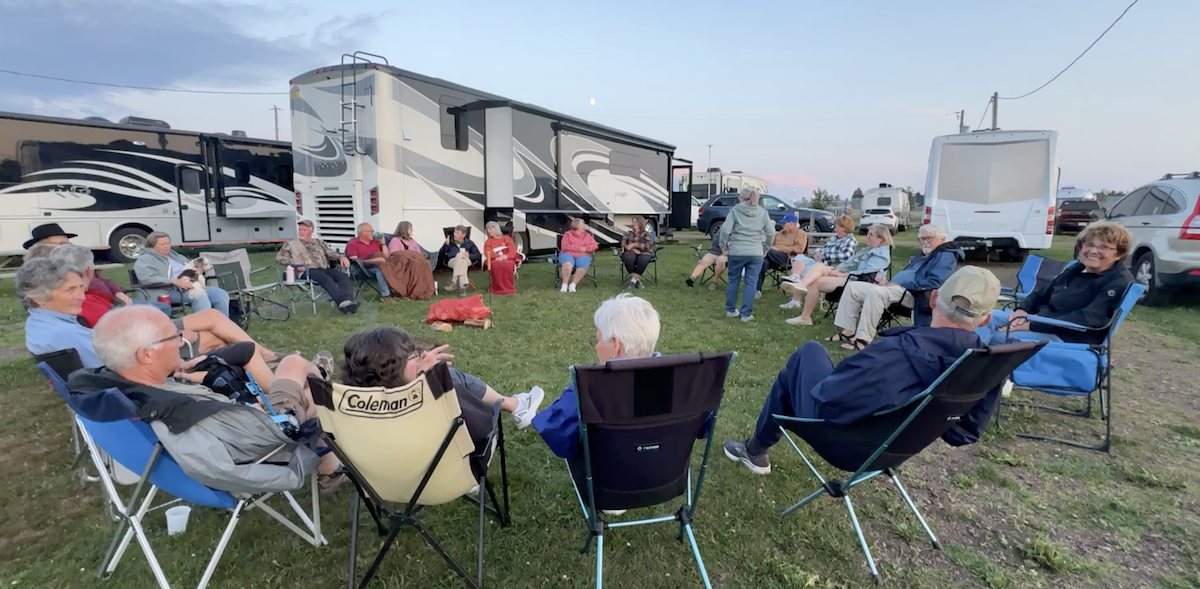
It is officially an RV buyer's market. New RV sales are falling, dealer inventories remain high, and manufacturers are cutting forecasts. For RV shoppers, that means something we have not seen in quite a while: real negotiating leverage.
But a buyer's market does not automatically mean every RV is a good deal.
In this week's RV Podcast News Edition, we dig into what is happening at RV dealerships, why so many 2026 models remain unsold, what buyers should be paying attention to with financing, and how to make sure a huge advertised discount really is a bargain. We also look at why the arrival of the new 2027 models could put even more pressure on dealers to move older inventory.
Also this week:
- America's Largest RV Show is coming to Hershey, with the new 2027 RVs arriving while dealers are still trying to clear unsold 2026 inventory.
- Wildfire danger is growing across the West, bringing campground closures, campfire bans and some important evacuation lessons for RV travelers.
- The Farmers' Almanac has issued its 2026-27 winter forecast. We take a somewhat skeptical look at just how much RV travelers should trust it.
- Quicksand in a National Park? A 22-year-old hiker sank shoulder-deep into glacial mud at Glacier National Park and needed four friends to pull her out.
If you are shopping for an RV, traveling through wildfire country, planning a trip to Hershey, or just trying to stay on top of what's happening in the RV lifestyle, we've got a lot to talk about this week.
And remember: We source our news stories. You'll find links to the original reporting and additional information on the show notes page at RVPodcast.com. Look for the Transcript tab and scroll to the bottom.
Subscribe and join us every Monday for the RV Podcast News Edition, and every Wednesday when Jennifer joins me for Stories from the Road, with RV tips, questions, advice and conversations about the RV lifestyle.
REMINDER: There are just two days left to save 20% on our new ebook, The Complete Guide to RVing in Retirement. The early-bird discount ends Wednesday, August 12. Get it at https://RVLifestyle.com/RetirementGuide
Become a part of the Internet's Best RV Community
Private. Ad Free. No Facebook Nastiness.
RV Travel Tips, Rallies and Meet-Ups, interactive livestreams, exclusive workshops, perks, discounts and Real Help from Real Rvers.
RV Podcast News Edition August 10, 2026
Hello, everyone. I'm Mike Wendland, and this is the Monday, August 10 edition of the RV Podcast.
Before we get started, I want to give you an important heads-up. There are just two days left to save 20 percent on our new ebook, The Complete Guide to RVing in Retirement.
Jennifer and I created this guide for people who want to make the most of their freedom, their time and their travels in the second half of life. It covers choosing the right RV, budgeting, trip planning, staying healthy and safe on the road, traveling as we get older, and building an RV lifestyle that fits the life you want to live.
The special early bird discount ends Wednesday, August 12. You can get the guide now at RVLifestyle.com/RetirementGuide
One other quick note before we begin. We came up in the news business, and old habits die hard. We source our stories. Every story we report includes links you can follow for more information and to check the original reporting for yourself.
You will find those links on the show notes page for this episode at RVPodcast.com. Look for the Transcript tab and scroll all the way to the bottom.
All right, let's get started with this week's RV news.
STORY 1: WE'RE MAKING THE CALL, IT IS OFFICIALLY AN RV BUYER'S MARKET. BUT THAT MAY NOT REALLY MEAN A GOOD DEAL.
We begin this week with an important declaration for anyone thinking about buying a new RV.
We're making the call: It is officially a buyer's market.
We do not say that casually. But when you look at declining shipments, weakening retail sales, cautious dealer orders, aged inventory and growing pressure to move RVs off dealer lots, the evidence has become too strong to ignore.
The RV Industry Association has sharply lowered its forecast for 2026. Back in the spring, it projected that manufacturers would ship approximately 349,000 RVs to dealers this year.
The new median forecast is just 314,000 units.
That would be an 8.2 percent decline from the 342,200 RVs shipped in 2025. It also represents a reduction of 35,000 units from the industry's spring forecast.
And Camping World, the country's largest RV dealership chain, is even more pessimistic.
In its second-quarter report released July 29, Camping World lowered its forecast for total new RV retail sales in 2026 to between 290,000 and 310,000 units. At the midpoint, that would be a 15 percent drop from last year.
There is an important distinction between those numbers. The RV Industry Association counts wholesale shipments, meaning RVs shipped from manufacturers to dealers. Camping World is forecasting retail sales, meaning RVs actually purchased by consumers.
They are different measurements, but both are sending the same message: Fewer people are buying new RVs, and the industry expects the weakness to continue.
Camping World's new RV unit sales fell 16.4 percent during the second quarter compared with a year earlier. Its same-store new RV sales were down 16.3 percent. The company says demand weakened during May and June, normally some of the most important months of the RV selling season, and remained soft in July.
Camping World also acknowledged that dealers across the industry may still have too much inventory for the current level of demand. The company says it is taking a conservative approach to replacing the RVs it sells and has been working to clear older used units and previous-model-year new RVs from its own lots.
The manufacturers are seeing the same slowdown.
THOR Industries, the parent company of Airstream, Keystone, Jayco, Entegra, Heartland and numerous other brands, reported that sales in its North American towable division fell 24.6 percent in its latest quarter. Towable shipments were down 25 percent, while gross profit in that division dropped 48.5 percent.
Winnebago has also reduced its financial forecast, citing weak towable demand, elevated fuel costs, higher-priced RVs and dealers that are deliberately keeping inventories lean.
Higher interest rates are a major part of this. Financing an RV that costs $75,000, $100,000 or more has become much more expensive. Household budgets remain strained, fuel prices are affecting travel decisions, and many consumers are simply postponing a discretionary purchase this large.
So what should an RV loan rate be right now?
As of Aug. 8, borrowers with excellent credit can find advertised RV loan rates starting at approximately 6 to 7 percent.
Alliant Credit Union, for example, is advertising rates as low as 6.74 percent for a 10-year loan, 7.24 percent for 12 years, 7.49 percent for 15 years and 7.74 percent for 20 years.
Good Sam is advertising rates beginning around 6.49 percent for its most qualified borrowers. LendingTree reports that new RV loans currently average approximately 7.5 percent, while used RV loans average about 7.8 percent.
Based on those numbers, a buyer with excellent credit and a substantial down payment should be looking for an annual percentage rate somewhere between 6 and 7.5 percent.
An offer between 7.5 and 9 percent may still be reasonable, depending on the borrower's credit, the age of the RV, the size of the down payment and the length of the loan.
But once the rate climbs above 9 percent, buyers should slow down and shop elsewhere. A rate of 10, 11 or 12 percent may erase much of the savings represented by a dealer's advertised discount.
Buyers with weaker credit may legitimately receive higher offers, but they need to consider whether postponing the purchase and improving their credit would be the better financial decision.
And be sure you are comparing the APR, not merely the interest rate. The APR includes certain lender fees and gives you a more accurate picture of what the financing actually costs.
The length of the loan matters just as much. RV loans commonly run from 10 to 20 years. Extending the loan lowers the monthly payment, but it greatly increases the total interest and makes it more likely that you will owe more than the RV is worth.
For example, financing $100,000 for 15 years at 7 percent produces a payment of about $899 a month and approximately $61,800 in total interest.
At 10 percent, the payment rises to about $1,075 a month, and the total interest approaches $93,500.
That is more than $31,000 in additional interest on the same RV.
Before accepting dealer financing, get preapproved by at least one bank or credit union. Then ask the dealer whether it can beat that APR without adding fees, extending the term or changing the negotiated price of the RV.
A buyer's market should give you leverage on both the RV price and the financing. Do not surrender the savings on one side of the deal by overpaying on the other.
Put all of that together with the traditional late-summer push to clear inventory before the next model year arrives, and buyers have more negotiating power than they have had in quite a while.
But let me add an important warning.
A buyer's market does not automatically make every RV a good buy.
The biggest trap is focusing only on the advertised discount. A dealer may advertise $30,000, $40,000 or even more off the manufacturer's suggested retail price. But that MSRP may bear little relationship to what the RV was realistically expected to sell for.
A huge markdown can also conceal an RV that has been sitting outdoors for a year or longer, accumulating weather exposure, battery deterioration, tire aging and possible water intrusion before anyone has taken it camping.
Trade-ins are another place where dealers can recover the discount. You may negotiate thousands off the new RV but receive thousands less than expected for your current rig.
So if you are shopping now, negotiate each part of the transaction separately.
First, get the complete out-the-door price in writing. That means the final price including freight, preparation fees, documentation charges, dealer-installed accessories and every other required charge.
Second, arrange your financing before visiting the dealership. Compare the dealer's offer with a bank or credit union, and look at the total amount you will repay, not only the monthly payment.
Third, negotiate the trade-in separately from the new RV. Know the approximate wholesale and private-sale value of your current rig before the dealer makes an offer.
Fourth, check the RV's actual manufacture date, not just its advertised model year. Find out how long it has been on the lot and whether it has been used at RV shows or for customer demonstrations.
Fifth, compare identical models at several dealerships. Search nationally for the exact brand, floor plan and model year. Ask every dealer for its best written out-the-door price so you can compare real numbers.
And finally, insist on a thorough inspection.
A discounted RV with water intrusion, improperly sealed components, electrical problems, appliance failures or slide issues can quickly become the most expensive bargain you have ever purchased. Whenever possible, hire an independent certified RV inspector before signing the final papers.
Be prepared to walk away. In a buyer's market, another RV and another deal will almost certainly come along.
We believe August 2026 may be one of the better times in recent years for a knowledgeable, well-prepared buyer to negotiate on a new RV, particularly a travel trailer or fifth wheel.
But the key words are knowledgeable and well-prepared.
Do not buy simply because the dealer says the discount ends tonight. Do not let a low monthly payment hide the real cost. Do not confuse a big markdown with genuine value. And do not be afraid to tell the dealer that the numbers simply are not good enough.
Yes, it is officially an RV buyer's market.
Now buyers need to make sure they use that advantage wisely.
STORY 2: HERSHEY PREPARES FOR 2027 RVS WHILE 2026 MODELS REMAIN UNSOLD
Is it just us, or is this summer going by awfully fast?
The RV industry's attention is already turning toward America's Largest RV Show, coming to Hershey, Pennsylvania, Sept. 16 through Sept. 20.
The show is expected to feature nearly 1,500 RVs from approximately 40 manufacturers. The displays cover an area equal to about 33 football fields and attract close to 60,000 visitors.
Hershey is traditionally where manufacturers unveil new floor plans, features and model-year changes. This year, consumers will be among the first to walk through the new 2027 RVs.
But the 2027 models are arriving at an awkward time.
As we reported in our first story, new RV sales have slowed sharply, and dealers are still sitting on large numbers of unsold 2026 models.
Every new 2027 RV delivered to a dealership requires space and financing. Dealers commonly use what are known as floor-plan loans to finance their inventory, so an RV that remains unsold continues costing the dealer money.
That means dealers need to clear space. They can discount the remaining 2026 models, order fewer 2027 units or carry both model years and hope sales improve.
For consumers, the question is this year’s model or next year’s? And most choose next because next is newer and most people think newer is better. Not necessarily.
Sometimes a new model year brings an improved floor plan, upgraded electrical system, better suspension or important new features. Other times, the changes amount to different fabrics, colors and graphics.
If the differences are minor, a properly inspected 2026 RV with a substantial discount may be the better value.
And remember no matter what the signs at Hershey say, a show price is not automatically the lowest price. Get the complete model number, options and out-the-door price in writing. Then compare it with prices from other dealers before signing anything.
The Hershey show runs from 9 a.m. to 7 p.m. Wednesday through Saturday and from 9 a.m. to 5 p.m. Sunday. The RVs are displayed outside around the Giant Center, while parts, accessories and campground vendors are located inside and around the arena.
Hershey is always one of the RV industry's biggest events. But this year, the most interesting story may not be the arrival of the 2027 models.
It may be how deeply dealers are willing to discount the 2026 models still sitting in their way.
STORY 3: WILDFIRE RESTRICTIONS SPREAD ACROSS WESTERN CAMPGROUNDS
RVers traveling through the West are being warned to check fire restrictions before lighting a campfire, or even before heading to their campground.
New fire restrictions went into effect Aug. 7 across Olympic National Park and Olympic National Forest in Washington state.
All campfires are now prohibited, including fires in established campground fire rings. The ban also applies to charcoal grills and anything else that produces ash.
Properly operated gas and propane stoves may still be used, but campers should check the rules for their specific campground before cooking outdoors.
At North Cascades National Park, campfires and charcoal are also banned throughout the park complex. Gas and propane stoves, grills and lanterns are permitted for cooking, provided there is no flammable material within three feet of the appliance.
Wildfires have also forced campground and park closures elsewhere in Washington.
Twenty-Five Mile Creek State Park was completely closed after authorities ordered a Level 3 evacuation because of a nearby wildfire. Level 3 means leave immediately. Campers should not wait to pack everything perfectly or assume they will receive another warning.
This is one of the particular challenges RV travelers face during wildfire season. Evacuating a tent camper or passenger vehicle can happen fairly quickly. Getting a large motorhome or fifth wheel out of a crowded campground takes more time.
Smoke can also make travel dangerous long before a fire reaches a campground. It can reduce visibility, worsen breathing problems and obscure the direction from which a fire is approaching.
RVers should identify at least two possible routes out of a campground. Do not unhitch and scatter equipment around the site if a wildfire is burning nearby. Keep your tow vehicle fueled, store important medications and documents where they can be grabbed quickly, and sign up for local emergency alerts.
Do not depend exclusively on an app or a campground host to warn you. Cell service may be weak, campground offices may be closed, and conditions can change rapidly.
The other important warning involves campfires.
A campsite may have a fire ring even when fires are prohibited. The presence of that fire ring is not permission to use it. Restrictions can change after you arrive, sometimes within hours.
Check the National Park Service, U.S. Forest Service, state park or county fire website for the area where you are camping. Also look for signs at campground entrances and talk with the host or ranger.
Violating a fire ban can bring a substantial fine. More importantly, one spark from a campfire or charcoal grill can start a fire that threatens lives, homes and entire campgrounds.
Summer is not over, and neither is wildfire season. If you are traveling in the West, check fire conditions every day, not only when you make the reservation.
STORY 4: THE FARMERS' ALMANAC HAS PREDICTED WINTER AGAIN, SORT OF
The Farmers' Almanac has released its winter forecast for 2026 and 2027, and because RV travelers are always interested in the weather, we feel duty-bound to tell you what it says.
We also feel duty-bound to tell you that you should probably not plan your winter RV trip around it.
The Almanac says the coming winter will be a season of "snow, sleet and surprises."
That is a pretty safe prediction for winter. Somewhere in the United States, it will snow. Somewhere else, it will rain. Some places will be cold, and everyone will eventually be surprised.
But let's break down the regional forecast.
For the southern tier of the country, from Southern California and the Desert Southwest through Texas, the Gulf Coast and the Southeast, the Almanac expects an active storm track and above-normal precipitation.
That could mean frequent rainstorms, muddy campgrounds and occasional surges of cold air. If cold air and moisture arrive at the same time, the Almanac says some of those areas could receive sleet, freezing rain or even heavy, wet snow.
The southern Rockies may receive particularly good mountain snowfall.
Across the West, northern Plains, Upper Midwest and Great Lakes, temperatures are expected to average close to normal. But the Almanac says those regions could still experience sudden cold snaps, snow squalls, strong winds and short bursts of bitter cold.
In other words, it may be normal, except when it is cold, snowy, windy or not normal.
The northern Plains and Upper Midwest could also be drier at times, particularly when storms concentrate farther south. But brief periods of intense snow and cold will remain possible.
The Northeast gets the most complicated prediction of all.
Coastal communities could receive rain or mixed precipitation. Inland areas could receive rounds of heavy, wet snow, particularly in January and February. Small changes in temperatures or storm tracks could turn rain into sleet, sleet into freezing rain or a little snow into a major storm.
That is all true. Unfortunately, it is also true during almost every winter in the Northeast.
The Pacific Northwest can expect what the Almanac calls a "changeable and somewhat less dependable snow season."
So, travelers in that region should prepare for the possibility that conditions may change and that the weather may not be dependable. We believe longtime residents of the Pacific Northwest may have already suspected this.
The broad message is that the South will be wetter, the North will experience quick bursts of cold and snow, the Northeast will get a little of everything, and the Northwest will be unpredictable.
Which raises an obvious question: How does the Farmers' Almanac know all this six months in advance?
The publication says it uses a proprietary formula developed in 1818. It reportedly considers solar activity, sunspot cycles, the position of the moon, tidal forces and historical weather patterns. The exact formula is kept secret.
The forecast is prepared by someone identified as Caleb Weatherbee. But the Almanac acknowledges that Caleb Weatherbee is not the forecaster's real name. It is a pseudonym passed from one Almanac forecaster to another over the generations.
So we have a secret forecaster using a secret formula to predict individual winter storms months before they happen.
What could possibly go wrong?
The Farmers' Almanac says its regional forecasts are 80 to 85 percent accurate. But that number comes from the Almanac itself. Independent evaluations have generally found that these long-range predictions perform much closer to chance.
There is also a big difference between a weather forecast and a seasonal climate outlook.
NOAA's Climate Prediction Center does issue legitimate seasonal outlooks months in advance. But those are probability forecasts. They might show that a region has an increased chance of being warmer, cooler, wetter or drier than average over a three-month period.
NOAA does not pretend to know that a particular region will get a major snowstorm during the third week of January. The atmosphere is too complex, and specific snowfall amounts and storm tracks cannot be reliably predicted months in advance.
That does not mean the Farmers' Almanac is useless. It is fun. It has weather folklore, gardening information, recipes, calendars and enough possible winter outcomes to give everyone something to discuss around the campfire.
But as a travel-planning tool, its winter forecast belongs somewhere between a groundhog seeing its shadow and your grandfather saying his knee hurts, so a storm must be coming.
The wording is broad enough to cover almost any eventual outcome. If the South is wet, the prediction was right. If there is a cold snap, the prediction was right. If the Northeast gets rain, snow, sleet or freezing rain, the prediction was right. And if the Pacific Northwest weather changes, that was predicted too.
That is not exactly a scam. Let us call it meteorological entertainment with an excellent publicity department.
For RV travelers, the practical advice is much simpler.
Use the Almanac to start a conversation, but use the National Weather Service to plan your trip. Check the forecast repeatedly as your departure approaches, monitor conditions along your entire route, and be prepared to delay or reroute when winter weather threatens.
And if you are heading south this winter, bring rain gear. If you are staying north, bring a snow shovel. If you are going to the Northeast, bring everything.
There. We just produced our own long-range winter forecast, and we did not even need Caleb Weatherbee.
STORY 5: HIKER SWALLOWED SHOULDER-DEEP BY MUD AT GLACIER NATIONAL PARK
We end this week's RV news with a frightening story from Glacier National Park that sounds like something out of an old adventure movie.
A 22-year-old woman says she was suddenly swallowed by mud, sinking almost instantly from her feet all the way up to her shoulders.
It happened near Johns Lake, northeast of Lake McDonald, while Hannah Murphy was hiking with four friends. The group was following an easy, two-mile trail around the lake when they took a small offshoot to get a better view and take some pictures.
Murphy stepped a short distance off the trail onto what appeared to be flat, solid ground. She said it looked a little muddy, but there was no standing water and nothing to suggest that it was dangerously unstable.
Then, without warning, the ground gave way beneath her.
Murphy told SFGATE that she sank into mud so deep that she could not feel the bottom. Within seconds, she was trapped up to her shoulders. She could not grab onto anything, and the mud was so thick that she had nothing solid against which she could push.
In one of the strangest details of the story, Murphy said the purse she was carrying may have helped save her. It became lodged across the surface of the mud and acted almost like a flotation device, helping prevent her from sinking even farther.
Fortunately, Murphy was not alone. Her four friends were able to grab her and pull her out. She later said she does not believe she could have escaped by herself.
The incident actually happened on June 19, but Murphy's account received widespread attention after it was reported on Aug. 6.
At first, she thought she had fallen into quicksand. Glacier National Park officials say there is no true quicksand in that park. What trapped her was probably glacial mud or silt. This extremely fine material can appear stable on the surface but lose its strength when someone steps onto it.
But quicksand is a documented hazard in some other National Park Service locations. The Park Service specifically warns visitors about quicksand at places including Navajo National Monument and Rainbow Bridge National Monument. Water-saturated sand that behaves like quicksand can also occur near streams and springs in Alaska's Kobuk Valley National Park.
Quicksand is rarely the bottomless pit portrayed in movies, but it can trap a person's legs, make movement extremely difficult and become dangerous when someone is alone, exhausted or threatened by rising water.
Glacial mud can present a similar danger. It can behave almost like a liquid while also creating powerful suction around a person's legs and body. Panicking and struggling can make escape even more difficult.
Park officials say unstable mud can occur near lakes, wetlands, riverbanks and other areas shaped by glacial activity. These patches may not be marked, and they may look no different from the ground surrounding them.
Murphy escaped without serious physical injuries, although she said the experience was terrifying. She is now urging other visitors to stay on marked trails and avoid hiking alone.
And that is the larger lesson for all of us who visit national parks from our campgrounds. Most accidents do not begin with someone attempting an obviously dangerous stunt. They often begin with one seemingly harmless decision: stepping a few feet off the trail for a photograph, walking onto a wet rock or getting a little too close to an animal.
Conditions in the national parks can change in an instant. Stay on the established trail, keep children and pets close, and whenever possible, hike with someone else.
For Hannah Murphy, having four friends nearby may have made the difference between a frightening story and a tragedy.
That's our RV news for this week.
Remember, this is one of two new RV Podcast episodes we release every week. On Mondays, I bring you the latest RV news. Then on Wednesdays, Jennifer joins me for Stories from the Road, where we share practical tips, answer your questions and talk about the many different aspects of the RV lifestyle.
If you enjoy the podcast, please take a moment to follow or subscribe and leave us a review on your favorite podcast app. Those reviews really do help other RV travelers discover the show.
And one final reminder: The 20 percent early bird discount on The Complete Guide to RVing in Retirement expires this Wednesday, August 12. You can get it now at RVLifestyle.com/RetirementGuide .
I'm Mike Wendland. Thanks for listening, and we'll see you down the road.
Happy Trails!
SOURCES
STORY #1: IT’S A BUYER’S MARKET-
RV Industry Association, revised 2026 wholesale shipment forecast
https://www.rvia.org/rv-roadsigns-quarterly-forecast
RV Industry Association, original spring forecast of 349,000 shipments
https://www.rvia.org/news-insights/2026-rv-wholesale-shipments-rise-modestly
Camping World, second-quarter results and revised forecast of 290,000 to 310,000 new retail sales
https://investor.campingworld.com/press-releases/press-release-details/2026/Camping-World-Holdings-Inc--Reports-Second-Quarter-2026-Results/default.aspx
THOR Industries, fiscal 2026 third-quarter results
https://ir.thorindustries.com/investor-resources/press-releases/press-release-details/2026/THOR-INDUSTRIES-ANNOUNCES-FISCAL-2026-THIRD-QUARTER-RESULTS/default.aspx
Winnebago Industries, fiscal 2026 third-quarter financial results
https://investor.wgo.net/phoenix.zhtml?c=85260&p=irol-IRHome
Alliant Credit Union, current RV loan rates
https://www.alliantcreditunion.org/borrow/recreational-vehicle-loans
Good Sam Finance Center, current RV loan rates
https://loans.goodsam.com/
LendingTree, average new and used RV loan rates
https://www.lendingtree.com/auto/rv/
STORY #2: Hershey RV Show
https://www.largestrvshow.com/
https://www.largestrvshow.com/attend/show-layout/
https://www.visithersheyharrisburg.org/events/americas-largest-rv-show/
STORY #3 WESTERN WILDFIRES -
https://www.nps.gov/noca/learn/news/august-7-north-cascades-fires-update.htm
https://parks.wa.gov/about/news-announcements/alerts
STORY #4: THE FARMERS' ALMANAC HAS PREDICTED WINTER AGAIN, SORT OF -
Complete Farmers' Almanac forecast
NOAA Climate Prediction Center
STORY #5: HIKER SWALLOWED BY MUD - https://www.sfgate.com/national-parks/article/mud-hiker-glacier-national-park-22373559.php?utm_source=chatgpt.com