

July 20, 2016
Episode 97: What the RV Industry Can Learn from Pokémon GO


In this Episode of the podcast we talk about thePokémon GO phenomenon and what the RV industry can learn from it about community, getting people outdoors and creating relationships built around shared experiences. Less than a month after its release, the game has surpassed Twitter and Facebook in daily usage. Visit any park or outdoor space and you'll see people of all ages engaging with the game and each other. Jennifer and I talk about it this week in the podcast, noting the good things we have seen as we've been traveling this week. Plus we have lots of listener tips and suggestions, questions and answers and a terrific off-the-beaten-path report. Click the player to Listen Now or scroll down through the show note details and resources and click the player below to start listening. When you see a time code hyperlink, you can click it to jump directly to that segment of the podcast. [spp-player] Lessons from Pokémon GO [spp-timestamp time="2;18"] You have surely seen the phenomenon by now. People of all ages and sexes shambling along, staring intently at their phones, stopping intermittently to excitedly swipe, or tap, or just shout excitedly at their screens before moving on. No matter how strange, self-absorbed, or entirely out of place these people may seem, they all have one thing in common: They’re catching Pokémon. Pokémon GO attracts more than 21 million daily active users in the United States, making it the biggest mobile game in US history. To play, users must physically navigate through 3D space in order to find and capture virtual monsters hidden in the real world, but seen through an augmented reality layer displayed on their smartphone’s screen. We are not gamers. But over the past week, Jennifer and I have been delighted to see so many people - particularly families - outside, interacting with each other, smiling, laughing, relating and having fun. And that is good, very good. For Pokémon Go has a noticeable social effect on its players —one which has seen people from across any number of demographic lines come together to share in the real thrill of the game’s virtual hunt. We downloaded the game. And the other night, walking along a beachfront park in Fort Walton Beach, FL, I stopped one of the three dozen players we saw wandering the park with us and asked him to show me how it works. He was a young kid, maybe 16 or 17. He was delighted to explain how to play. A few minutes later, I stopped a family: A Mom, Dad and two of their early teenaged kids. "We've never done anything like this," said the Dad. "We're having a ball. We haven't spent this must time together in a long time." Across social media, players have begun chiming in with their own stories of bonding with strangers while walking outside and playing the game. What’s more, not only is the game bringing together strangers who might otherwise never have met—it isalso be good for their health. Since its release, users have been posting screenshots of their step-counting apps to document how the game has upped their physical activity. So what does this have to do with RVing? Shared experiences. Community. The Outdoors. The very thing that appeals to so many about RVing. People are starved for those things. The RV lifestyle meets those needs much more than a smartphone video game. So, like we try to do with our Roadtreking Blog and Podcast, the industry needs to focus on the lifestyle, the experience, the community benefits of RVing. The biggest lesson to learn is this: If you have a great product, you can use it to unite people rather than divide them into categories of demographic data points. This part of the podcast brought to you by RadPower Bikes , an electric bike manufacturer offering direct to consumer pricing on powerful premium electric bikes. Our Whereabouts We're on Okaloosa Island in Fort Walton Beach, FL. As we were recording this episode, Bo, our Norwegian Elkhound, decided he needed some attention. So he jumped up and started niping at Jennifer. I took the photo of him above. Like a little kid, he wanted in on whatever we were doing! JENNIFER'S TIP OF THE WEEK – Cooking in Your RV [spp-timestamp time="9:40"] If you love to cook, you can still prepare fabulous meals in your RV kitchen. Just use a few common sense RV cooking tips to create wonderful meals the entire family will love. Plan Ahead. This is one of the most important elements of RV cooking. You can make sauces, stews, soups, and other side dishes ahead and freeze them, then you just need to warm them up for dinner. Make mixes ahead of time. If you're going to make bread, measure out all the dry ingredients into a plastic bag, and then simply add the wet ingredients when you're ready to bake. The same goes for pancakes, waffles, breading mixes, and other types of flours and mixes. Measure them out ahead of time, then you only have to mix and cook in the kitchen, and you don't have to carry around all the different ingredients, taking up space in your small RV pantry. Marinate meats and vegetables ahead of time. You can transport meats and vegetables in their marinades in plastic bags. When you're ready to cook, they're already marinated, which saves you another step along the way. Plan to grill several meals, or at least grill some of the items on the menu, to help free up space in the kitchen. Cook pastas and other starches at least part way at home, and then put them in a plastic bag. That way, all you have to do is warm them up, rather than wait for water to boil and cook. As you travel in your RV, you'll devise your own RV cooking tips to help you save time and energy in your RV kitchen! Do you have a tip for me? It can be anything at all about the RV lifestyle, camping or traveling. Use the “Leave Voicemail” link at Roadtreking-dot-com. I love hearing from our listeners… so don’t be shy. The tip of the week is brought to you by Good Sam, the world's most popular RV organization, now celebrating its 50th year. LISTENER QUESTIONS OF THE WEEK: [spp-timestamp time="16:43"] Listener Mar Ellen asks about the problem of biting black and stable flies. She saw Mike’s reports on the flies that plague visitors in the Upper Peninsula of Michigan. Summer is black fly season. It’s also stable fly season. Both species torment folks up there every summer. Technically, Black flies are small, dark flies with a humped back that can give a painful bite. Unlike a mosquito (which sucks up blood through a proboscis), black flies slash the skin and lap up the pooled blood. Stable flies have dark stripes on their back and a checkerboard-like pattern on the top of their abdomen. A distinguishing feature of the sable fly, visible to the naked eye, is the distinct stiletto-like proboscis of the stable fly which extends forward beyond the head. This sharply pointed beak is used to pierce the skin and draw blood. I really can’t tell you which is which, or which is worse. In my book, the two are equally evil. In July along the Lake Superior shoreline, you'll find them everywhere – on the beach, in the woods, at the campground. Below is a video that I did gives you a sense of what to expect if you’ll be visiting the area. If camping, get some fly traps or fly strips. That seems to catch a few hundred every day. You’ll still get bit, but maybe not as much. Other tips: Wear light colored clothing Wear long pants or jeans (they tend to bite the most below the knees, especially around the ankles) Protect your pets (they bite dogs, too) Use an insect repellent like Bugzilla intended for biting flies. Listener Sampson heard us talking on Episode about entering GPS coordinates and he offers another suggestion that works on a smartphone with Google Maps. Check the shownotes page for this episode… radtreking.com/97 Here’s official instructions from Google on how to search for and get GPS coordinates. E-Mail from Listeners: Hi Mike and Jennifer, Well, we did it, our 2017 CS Adventurous XL is going into production this week and we should take delivery in August! We are so excited to begin our Roadtreking adventures. I am trying to get organized so that when our RV arrives we will be ready to hit the road. Your podcasts and the Roadtreking FB pages have been a wonderful source of information. In episode 96 you covered mattress pads again. We too are having the drop down cabinet installed in our RT so we will have similar storage. I have ordered a king RV Superbag and am on the hunt for a mattress pad. I'm like you Jennifer, I want the bed put away every day to increase living space and keep things looking tidy. In the podcast you mentioned 1 1/2 in foam "pads". Do you have multiple smaller pads? I am just wondering how bulky and heavy even a thin king pad would be. We rented an RS last spring to try out class B living and the bedding option in the rental was cumbersome and needed to be stuffed under the wardrobe cabinet that extended over the couch each morning. I really want to be able to stuff all the bedding in the cabinets above the bed. Hope to see you around the Lakes Region of NH sometime! Thanks, Lynne We bought two twin sized 1.5 inch foam pads that go on top of the sofa. We can't remember where we bought them. Mike thinks REI. Jennifer thinks Bed Bath & Beyond. We roll them up tight and they stow in that drop down cabinet. Any wider pad - they come in 2 inch and 3 inch sizes - would be to bulky to stow in a Class B RV like we have. Peter and Judy ask: “Hi Mike, We own an 2015 Agile RoadTrek. The back of the RV gets excessively warm as we drive down the road. The air conditioning unit from Mercedes-Benz seems to have no effect on cooling beyond the two front seats. We recently read that it is OK to run your propane generator and the cabin air conditioning unit while your RV is running down the road. Is that a safe practice? Peter & Judy” Yes. Most RVers I know indeed do run the generator on the road to run the house A/C,
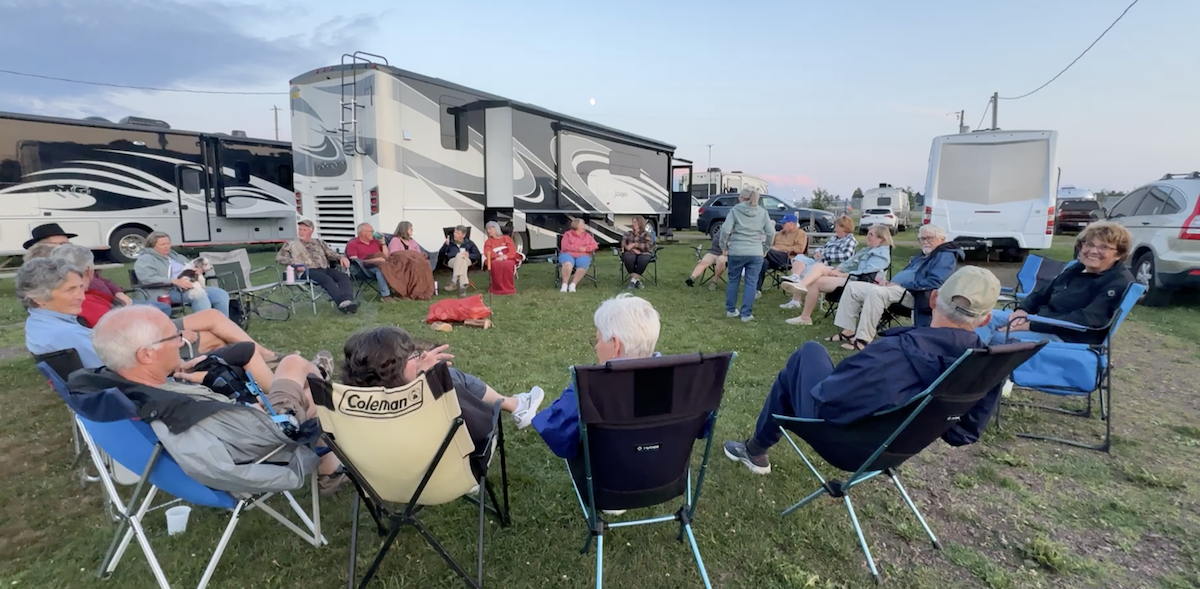
Become a part of the Internet's Best RV Community
Private. Ad Free. No Facebook Nastiness.
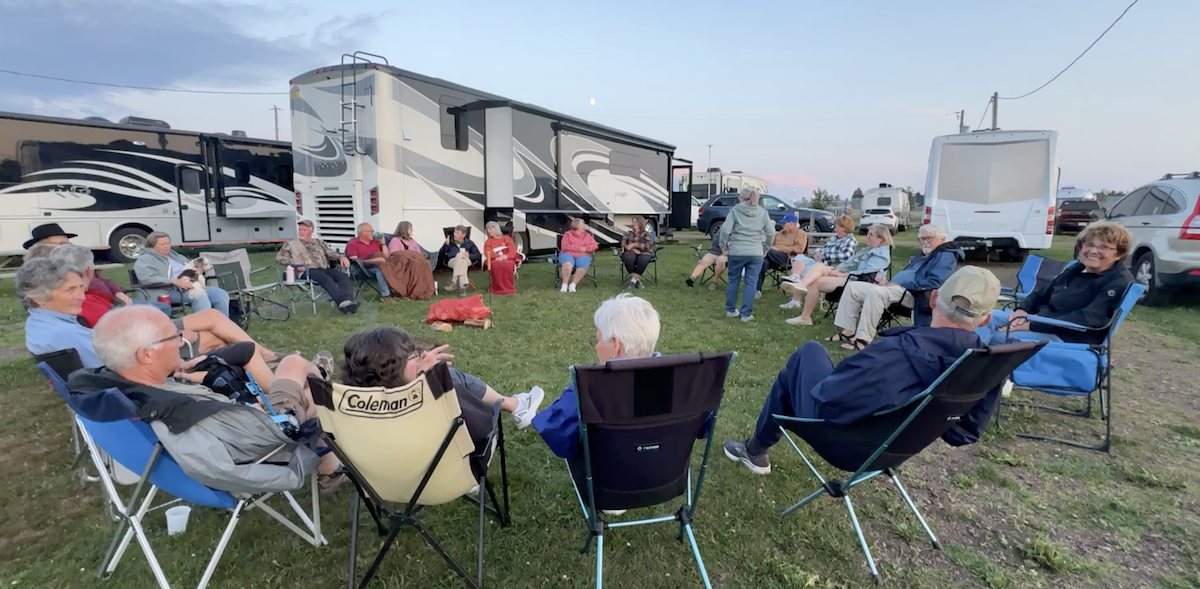
RV Travel Tips, Rallies and Meet-Ups, interactive livestreams, exclusive workshops, perks, discounts and Real Help from Real Rvers.