


Feb. 22, 2017
Episode 128: Tiny Tick – Major Menace



With warmer weather, we are spending more and more time outdoors again and that means more exposure to a tiny creature that poses big problems. I’m talking about ticks, a biting, blood-sucking bug not much bigger than a pinhead. But they are nothing to take lightly. Ticks are everywhere, increasing in numbers, and spreading a serious illness called Lyme Disease. You need to listen to our interview his week with a top expert on tick infestation and Lyme Disease, a very real threat to any RVer who spends a lot of time outdoors. Also this weeks, lots of tips, listener questions, RV News of the Week, the RV Calendatr and an off the beaten path report Click the player below to Listen Now or scroll down through the show note details. When you see a time code hyperlink, you can click it to jump directly to that segment of the podcast. [spp-player] Show Notes for Episode #128 2/22/17 of Roadtreking - The RV Lifestyle Podcast: JENNIFER'S TIP OF THE WEEK We’ve talked before about a great product called Reflectix, an insulating product that comes in rolls and can be easily cut to fit inside and around your RV’s windows. Most recently, we used it on a winter camping trip in Michigan’s Upper Peninsula and it did a great of keeping our Roadtrek motorhome warm by preventing the inside heat from escaping through the windows. But you can also use Reflectix in the summer to keep your air-conditioned coolness in, and the outside heat…out! A listener named Tom tells us the Reflectix should be applied on the outside of the window, not the inside. Don’t put inside the window because it would reflect too much heat onto the window and could damage the glass. Mount it outside, with stick on Velcro, just as Tom suggests! [spp-timestamp time="8:45"] And be sure to send me your tips and suggestions for the RV lifestyle. You can use the “Leave Voicemail” link at Roadtreking.com. Just click it and then use the built-in microphone on your computer or mobile devise to record a message to me. You can do it over as many times as you want, until you are satisfied. And then you just click a button and it comes right to my email inbox. I love hearing from you! Jennifer's tip of the week is brought to you by RadPower Bikes (www.RadPowerBikes.com_… an electric bike manufacturer offering direct to consumer pricing on powerful premium electric bikes. Now with free shipping! LISTENER QUESTIONS OF THE WEEK: Joyce has air in her water lines and wants to know how to get it out [spp-timestamp time="12:42"] Bill saw our recent Videoblog about our trip south and through Nashville and wants to know how to beat rush hour traffic in big cities [spp-timestamp time="14:40"] And Bob asks about amateur radio and RVing. [spp-timestamp time="18:05"] Sponsoring this part of the podcast is Van City RV in St. Louis, and their Partner Dealerships Creston RV in Kalispell, Montana, and Wagon Trail RV in Las Vegas. Bringing You the largest Inventory of class B’s from three locations. PET TIP OF THE WEEK What could be worse than losing your pet while on an RV trip? [spp-timestamp time="23:26"] Bo's collar with name and phone number engraved on it It happens and it happens much too often. Our pets can be stressed and confused in new environments and be frightened by those unfamiliar surroundings. Do you know that lack of identification means as few as 14% of pets ever find their way home after getting lost? So for starters, always have your pets wear a collar with ID. Our Bo has his name and our phone number engraved on his collar, We don’t have to worry about a metal tag getting snagged and falling off. But there’s even a better way: Microchipping. About the size of a rice grain, a microchip is inserted under the skin in less than a second. It needs no battery and can be scanned by a vet or an animal control officer in seconds. If your pet gets lost and is taken to a vet clinic or animal shelter, your pet will be scanned for a microchip to reveal his unique ID number. That number will be called into the pet recovery service, and you will be contacted using the contact information on file with your pet's microchip. The average cost to have a microchip implanted by a veterinarian is around $45, which is a one–time fee and often includes registration in a pet recovery database. The American Humane Society estimates that one in three pets will become lost at some point during their life. Having your pet microchipped provides peace of mind that your beloved companion will never wander unknown. This part of the podcast is brought to you by Dozers Dental Chews, an all natural and healthy treat your dog will love. Available direct through Amazon INTERVIEW OF THE WEEK – Tiny Tick, Major Menace With warmer weather, we will soon be spending more and more time outdoors again and that means more exposure to a tiny creature that poses big problems. I’m talking about ticks, a biting, blood-sucking bug not much bigger than a pinhead. [spp-timestamp time="28:25"] Ticks are in the spider family and there are hundreds of different kinds of ticks in the world. Many of them carry bacteria, viruses or other pathogens that cause disease in humans and/or animals. Ticks are everywhere, increasing in numbers, and spreading a terrible illness called Lyme Disease. More than 300,000 people in the U.S. come down with Lyme Disease each year. To help us understand just how serious the problem is, what we can do to prevent being infected, we talk to Dorothy Leland, from LymeDisease.org. Whenever you plan outdoor activities this summer, she suggests simple steps can help reduce your risk of getting Lyme disease: Wear long sleeves and pants and tuck your pants inside your socks. Lightcolored clothing will make it easier to spot ticks. Don't wear open-toed shoes and sandals. Use insect repellents containing .5 percent permethrin or 20 to 30 percent DEET. Be sure to follow the instructions on the label. Walk down the center of mowed trails to avoid brushing against grass and shrubs. At the end of each day, carefully inspect yourself, children and pets and remove any attached ticks. Tick bites are painless so you probably won't feel it if you're bitten. Remove attached ticks with thin-tipped tweezers by grasping them as close to the skin as possible and pulling straight up. Be careful not to squeeze the tick. It may contain infectious fluids. Clean the site with rubbing alcohol or skin disinfectant. Wash and dry all clothing. Ticks can survive a wash cycle but can't withstand an hour in a hot dryer. Check with your doctor and watch for early symptoms of Lyme disease. For information on how to remove a tick, go here. The interview of the week is brought to you by http://sunshinestatervs.com/, where every new or used Roadtrek motorhome is delivered to the customer free, anywhere in the country RV NEWS OF THE WEEK: Three stories this week...[spp-timestamp time="50:09"] Wild gray wolf population in American southwest growing, according to new report. Read more Primitive camping at Perdido Beach in northwest Florida temporarily banned because of Road through Arches National Park will close at night to all traffic from March through This portion of the podcast is brought to you by Alde the only name in heat that you need to know for your RV TRAVELING TECH TIP: Steve Van Dinter By Steve Van Dinter Verizon Wireless With your “always on the go lifestyle” staying connected couldn’t be more important. It’s how you share your story with listeners, keep up with family and friends, and no doubt stay on top of bills. [spp-timestamp time="55:50"] And I’m sure there are plenty of listeners who use their mobile connection for entertainment as well as streaming radio. In fact, the average smartphone user is seeing their data usage grow about 60 percent a year! Think about that! That’s why I’m excited to tell you that if you’re done with data limits, Verizon has the plan for you! Last week we announced Verizon Unlimited, the unlimited plan you want on the network you deserve. It couldn’t be more simple – unlimited calling, texting and data – just $80 for a single line or $45/line for a family of four. The plan also comes with 10GB of free 4G LTE hotspot – after that it’s unlimited at 3G speeds. And if you roam into Canada or Mexico – no worries. Calling and texting are still free and you can use up to 500MB of 4G data per day there without charge. After that it’s unlimited at 2G speeds the rest of the day. One other thing I’d like to clarify – Verizon will not throttle you on this plan. There’s been some confusion. What happens is if you have already used 22 GB on a particular line during your current billing cycle AND you are on a cell site that is congested at that moment, your download may be temporarily queued behind other Verizon customers. This may result in slightly slower download speeds for a period of time, maybe as long as stopping at a traffic light, or as long as being caught in rush hour traffic. But once congestion on the particular cell site clears up, you will go back to 4G LTE speeds - even if you have used more than 22 GB. More information is at verizonwireless.com. This part of the podcast is brought to you by Verizon, which operates America’s most reliable wireless network, with more than 112 million retail connections nationwide. OFF THE BEATEN PATH REPORT - Texas Ghost Towns [spp-timestamp time="58:43"] Patti and Tom Burkett By Tom and Patti Burkett Big Bend in Texas is not one of our most visited national parks but it’s certainly not off the beaten path. Even though this area of the Southwest is extraordinarily dry and rocky, it’s not without its rewards for the sharp-eyed and patient traveler. Half an hour west of the park you’ll find a ghost town called Lajitas. During its heyday it was home to many of the miners that worked the cinnabar mines in the area. This town, however, is known for it’s most famous resident,
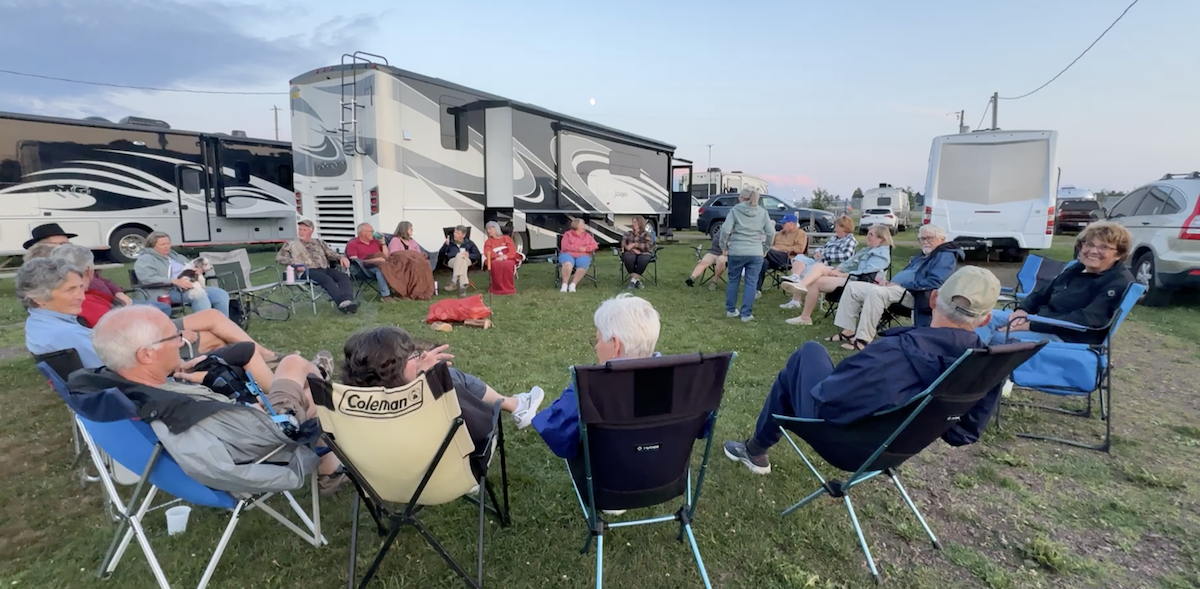
Become a part of the Internet's Best RV Community
Private. Ad Free. No Facebook Nastiness.
RV Travel Tips, Rallies and Meet-Ups, interactive livestreams, exclusive workshops, perks, discounts and Real Help from Real Rvers.