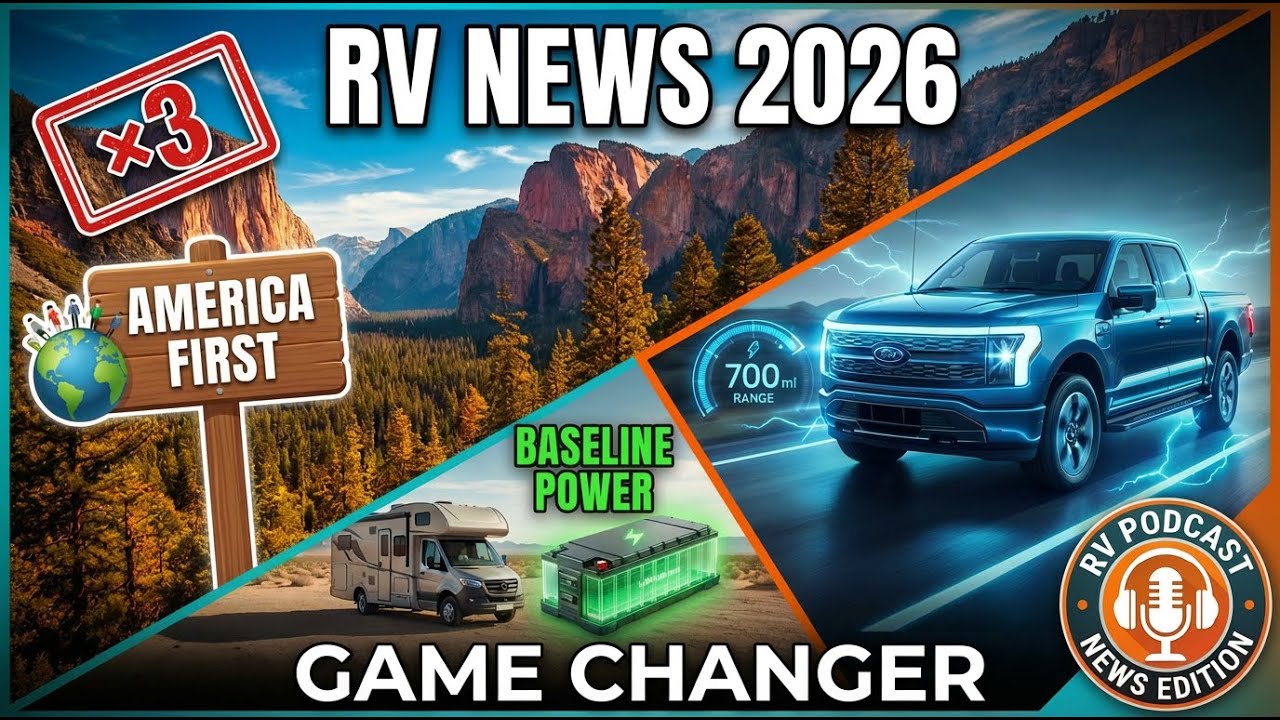
Ford's 700-Mile Range Extender: A Game Changer for Electric RVs?
Electric vehicles (EVs) are rapidly changing the automotive landscape, and the RV market is no exception. One of the most significant hurdles for electric RV adoption has been range anxiety – the fear of running out of battery power before reaching a charging station.
Ford's innovative 700-mile range extender concept, initially designed for the F-150 Lightning, offers a promising solution to this challenge. This technology has the potential to revolutionize the electric RV market, making long-distance travel more feasible and appealing to RV enthusiasts.
In this blog post, we will delve into Ford's range extender, exploring how it works and its potential impact on electric RVs. We'll discuss how it could alleviate range anxiety and transform the RV market. If you found this topic interesting, be sure to check out our latest episode, RV News Weekly: Top 5 Stories Shaping Your 2026 RV Season, where we briefly touched upon this exciting development. Now, let’s dive in!
Introduction: The Future of Electric RVing is Here
The RV industry is on the cusp of a major transformation, driven by the growing demand for sustainable and eco-friendly travel options. Electric RVs offer a compelling alternative to traditional gas-powered models, promising quieter operation, reduced emissions, and lower fuel costs. However, the limited range of current electric RVs has been a significant barrier to widespread adoption. This is where Ford's 700-mile range extender comes into play.
The concept of electric RVing isn't entirely new, but its practical application has been limited by the constraints of battery technology. Early electric RV prototypes and conversions often suffered from short ranges and long charging times, making them unsuitable for long-distance trips. This has led many RVers to remain skeptical about the viability of electric RVs for their travel needs. However, with advancements in battery technology and innovative solutions like Ford's range extender, the future of electric RVing looks brighter than ever.
Imagine being able to travel across the country in an electric RV without constantly worrying about finding the next charging station. Picture a world where RV parks are equipped with fast-charging infrastructure, allowing electric RVs to quickly replenish their batteries and continue their journeys.
This is the vision that Ford's range extender is helping to make a reality. By significantly increasing the range of electric vehicles, this technology has the potential to unlock the full potential of electric RVs and pave the way for a more sustainable and enjoyable RVing experience.
Ford's 700-Mile Range Extender: A Closer Look
Ford's 700-mile range extender is not a traditional engine but rather an onboard generator that recharges the vehicle's battery while in motion. This approach allows the vehicle to travel significantly farther than it could on battery power alone, effectively eliminating range anxiety. The range extender is designed to be compact and efficient, minimizing its impact on the vehicle's weight and cargo space.
The core component of the range extender is a small gasoline engine that drives a generator. This generator produces electricity, which is then used to recharge the vehicle's battery pack.
The engine is designed to operate at a constant speed, maximizing its efficiency and minimizing emissions. In the case of the F-150 Lightning, the range extender is expected to be housed in the truck's bed, taking up minimal space while providing a substantial boost in range. This makes it a practical addition for those who need the utility of a truck bed for cargo, tools, or in this case, RV-related gear.
One of the key advantages of Ford's range extender is its flexibility. The vehicle can operate solely on battery power for shorter trips, taking advantage of the lower running costs and zero emissions of electric driving. When longer distances are required, the range extender can be engaged to extend the vehicle's range to up to 700 miles.
This dual-mode operation makes the vehicle suitable for a wide range of driving scenarios, from daily commutes to cross-country adventures. This is particularly crucial for RVers, who often embark on long and varied journeys.
While Ford has initially focused on integrating the range extender into the F-150 Lightning, the technology could be adapted for use in other electric vehicles, including RVs. Imagine an electric RV equipped with a range extender, capable of traveling hundreds of miles between charging stations. This would open up new possibilities for electric RVing, allowing travelers to explore remote areas and enjoy the benefits of electric driving without the limitations of range anxiety.
How the Range Extender Works
The operation of Ford's 700-mile range extender is relatively straightforward. When the vehicle's battery level drops below a certain threshold, the range extender automatically kicks in, starting the gasoline engine and generator. The generator then produces electricity, which is used to recharge the battery pack. This process continues until the battery is fully charged or the driver manually turns off the range extender.
The range extender is designed to be seamless and unobtrusive. Drivers can monitor the battery level and range extender status through the vehicle's infotainment system. The system also provides information on fuel consumption and estimated remaining range.
In some configurations, the range extender might also be manually activated even when the battery level is high, allowing the driver to "top off" the battery in anticipation of demanding driving conditions, such as steep inclines or towing heavy loads.
One of the key design considerations for the range extender is efficiency. Ford has optimized the engine and generator to minimize fuel consumption and emissions. The engine is designed to operate at a constant speed, which is the most efficient way to generate electricity. The generator is also highly efficient, converting a large percentage of the engine's power into electricity. This results in a range extender that is both powerful and fuel-efficient.
In addition to its primary function of recharging the battery, the range extender can also provide supplemental power to the vehicle's electrical system. This is particularly useful when towing a heavy load or driving in challenging terrain.
The extra power can help to maintain the vehicle's performance and prevent the battery from being drained too quickly. For RVs, this is a critical feature, as they often tow trailers or carry heavy loads of equipment and supplies.
Addressing Range Anxiety in Electric RVs
Range anxiety is one of the biggest obstacles to the widespread adoption of electric RVs. RVers are accustomed to traveling long distances, often through remote areas where charging infrastructure is limited. The fear of running out of battery power in the middle of nowhere can be a major deterrent to switching to an electric RV.
Ford's 700-mile range extender offers a compelling solution to this problem. By significantly increasing the range of electric vehicles, the range extender eliminates the need to constantly worry about finding the next charging station. RVers can travel with confidence, knowing that they have a backup source of power in case they run low on battery. This peace of mind can make electric RVs a much more attractive option for long-distance travelers.
In addition to extending the vehicle's range, the range extender can also provide a safety net in case of unexpected events. For example, if a charging station is out of service or there is a power outage, the range extender can be used to keep the vehicle running until the issue is resolved. This can be particularly important in remote areas where help may not be readily available.
Of course, the range extender is not a perfect solution. It still requires gasoline, which means that it is not a zero-emission technology. However, it is a significant improvement over traditional gas-powered RVs, which produce much higher levels of emissions. The range extender allows RVers to enjoy the benefits of electric driving for shorter trips, while still having the option of extending their range when needed.
As charging infrastructure continues to improve, the need for range extenders may diminish. However, in the near term, they offer a practical and effective way to address range anxiety and make electric RVs a more viable option for long-distance travel. The combination of battery power and a range extender provides the best of both worlds – the efficiency and environmental benefits of electric driving, with the peace of mind of extended range.
The Impact on the RV Market: A Game Changer?
Ford's 700-mile range extender has the potential to be a game changer for the RV market. By addressing range anxiety, this technology could unlock the full potential of electric RVs and accelerate their adoption by RV enthusiasts. Electric RVs offer a number of advantages over traditional gas-powered models, including lower fuel costs, reduced emissions, and quieter operation. However, until now, the limited range of electric RVs has been a major obstacle to their widespread adoption.
If Ford's range extender proves to be successful, it could inspire other manufacturers to develop similar technologies for electric RVs. This could lead to a new generation of electric RVs that are capable of traveling long distances without the need for frequent charging stops. This would make electric RVs a much more attractive option for RVers who enjoy exploring remote areas and embarking on long-distance adventures.
The adoption of electric RVs could also have a positive impact on the environment. RVs are known for their high fuel consumption and emissions, which contribute to air pollution and climate change. By switching to electric RVs, RVers could significantly reduce their environmental impact and help to create a more sustainable future. While the range extender uses gasoline, it's a far more efficient and cleaner approach compared to traditional RV engines. This offers a middle ground for those looking to reduce their carbon footprint without fully committing to pure electric.
However, there are also some challenges that need to be addressed before electric RVs can become mainstream. One of the biggest challenges is the lack of charging infrastructure in many RV parks and campgrounds. RV parks need to invest in fast-charging stations to accommodate the growing number of electric RVs. This will require significant investment, but it is essential for the long-term viability of electric RVing.
Another challenge is the cost of electric RVs. Electric RVs are currently more expensive than traditional gas-powered models. This is due to the high cost of batteries and other electric components. As battery technology improves and production costs decrease, the price of electric RVs is expected to come down, making them more affordable for a wider range of RVers. Government incentives and tax credits could also play a role in making electric RVs more accessible.
Despite these challenges, the future of electric RVing looks bright. With innovative technologies like Ford's 700-mile range extender, electric RVs are becoming more practical and appealing to RV enthusiasts. As charging infrastructure improves and costs come down, electric RVs are poised to revolutionize the RV market and create a more sustainable and enjoyable RVing experience.
Conclusion
Ford's 700-mile range extender is a significant step forward in addressing range anxiety, a major concern for electric RV adoption. By providing a reliable backup power source, this technology can make electric RVs more practical for long-distance travel. While not a perfect zero-emission solution, it offers a more sustainable alternative to traditional gas-powered RVs and paves the way for a future where electric RVing is the norm.
The potential impact on the RV market is substantial, as it could accelerate the transition to electric RVs and encourage further innovation in the field. As charging infrastructure improves and the cost of electric RVs decreases, we can expect to see more and more RVers embracing electric vehicles for their adventures. Ford's range extender is just one piece of the puzzle, but it's a crucial one that can help unlock the full potential of electric RVing.
If you're interested in learning more about the latest developments in the RV industry, including Ford's range extender and other exciting innovations, be sure to check out our latest episode, RV News Weekly: Top 5 Stories Shaping Your 2026 RV Season. We cover all the top stories shaping the RVing world, from new technologies to emerging trends and everything in between. Thanks for reading, and happy RVing!

Why Campground Fees Are So High, and What RVers Can Do About Them