

April 14, 2021
2021 Camping Crisis: They’re shutting down boondocking


Across the country, officials are shutting down boondocking areas in many areas because of growing problems with vandalism, litter, and even human waste. Blame it on a combination of homeless encampments in some areas and inconsiderate campers who fail to clean up after themselves and keep clean campsites. But the result is the same, frustrated state, federal, and local officials in charge of public lands once open to dispersed camping, are closing them down rather than fight what they see as a losing battle. But the people who lose the most are those who like to boondock in wilderness areas, campers who do follow the rules but now find themselves with fewer and fewer places to enjoy off the grid camping on public land. For RV Podcast Episode 349, we talk with an expert in free camping spots, Kyle Brady, publisher of the Drivin and Vibin Website. Kyle has been closely tracking the growing list of closed boondocking locations and has lots to share. You can listen to the entire RV Podcast episode in the player below. Or keep scrolling down for an edited transcript of our interview. Why are authorities shutting down boondocking? This is a reason why authorities are shutting down boondocking For starters, consider these recent stories about the shutting down of boondocking areas: In Oregon, Trash, Human Waste, Forces Authorities on Oregon to Shut Down Dispersed Camping In Utah overnight camping has been banned in Middle Fork because of trash, vandalism and rowdyism Popular Colorado area closed to dispersed camping Those are just three examples. There are many more, from all over the US. We talk about the trend in-depth with Kyle Brady. Here is an edited transcript of our interview: Mike Wendland: Kyle Brady joins us right now. Hey, Kyle. How are you doing? Kyle Brady: Very good, Mike. Thank you so much for having me on today. Mike Wendland: Kyle, you are the guy when it comes to finding free camping spots and all these dispersed spots. You've been a specialist in that. And I know you are disturbed and have been keeping track. They're shutting down boondocking. What's going on. They are shutting down boondocking indefinitely Kyle Brady: We have seen so many reports over the last six months, and even the more specifically, in the last three months of these sites getting shut down indefinitely. And it's just becoming a problem because so many more people are out there on the road. And I guess these sites are seeing more usage than they've ever seen before. Mike Wendland: I get email, and I bet you do too, from people saying, quit telling everybody where to go boondocking. Is that part of the problem? I don't know. Kyle Brady: Well, yeah. You know what? I get those same emails and nothing that we share isn't available on camping websites. So there are huge resources out there. And that is part of the problem, that everyone now knows about free camping. But to me, it is all of our land. They are shutting down boondocking on public land in many areas It's government land that's paid with tax dollars. And it's there for us to recreate on. So I don't, by no means, think we should keep it a secret to people because people should be encouraged to go out there and camp and connect with nature. But I feel like there are a few points that are being missed seriously, and that's teaching people proper etiquette, whether that's the manufacturers or the dealers teaching them what it is, what boondocking etiquette is. But then also we see this huge homelessness problem across America. That's a totally different issue when it comes to the sites being closed down, but that affected equally. Mike Wendland: Where are the sites being shut down, and what are they shutting them down for? I've read all sorts of horror stories about what they find when some of these people leave. Reasons for shutting down boondocking Kyle Brady: Totally. We've seen a lot of these shutdown on the Western side of the U.S. In Utah, Nevada, Arizona. These are where we're seeing them happen at a much faster rate. They're getting shut down for misuse and basically littering, so that's one of the biggest things. You see mattresses. You see, in the worst-case scenario, human waste. The problem of shutting down boondocking is nationwide garbage abandoned in wilderness areas results in shutting down boondocking areas But also, just signs that no one cleaned up their campsite is one of the biggest reasons why people are or why the government's closing down these campsites. But even as eastern as Natchez, Mississippi is where we've seen some closures happen, most popularly at the Natchez Visitor Center, which is a huge spot for boondockers who are traveling across the country to stop at, because they were offering free water, free power. And you're sitting up on this bluff, overlooking the Mississippi River. It's beautiful, but now it's been shut down overnight camping just because of misuse, too much trash. Homeless encampments are resulting in shutting down boondocking areas Mike Wendland: But now that problem in Natchez and some of the others around the country seem to be more tied to homelessness, people living in cars. We've seen at the Ocala National Forest in Florida, folks sleeping under tarps, on mattresses, long-term homeless encampments. How much of these are from that, do you think? Kyle Brady: Yeah. I mean, I would say at least 50%, if not more of the ones that we're seeing being shut down, it's because of this homelessness issue. Usually, these are areas that are located within one to three miles from a small town. This way, people without a home can camp out there, but they can still have access to a town. But obviously, this causes the boondocking sites to be shut down. So it's hard to address that issue because no RVer could fix that issue. But these sites are still being shut down because of homelessness issues. So rather than focusing on those, I'd like to focus on the ones that are out in the middle of the desert that are being shut down, because people are partying out there, and there's just broken glass everywhere. So that is the problem with homelessness, though. The actions of inconsiderate RVers are the cause for shutting down boondocking Mike Wendland: It is, but at least half of the areas closing are because of people who are out there camping. We were up along the Lake, Michigan shoreline early this fall in one of the U.S. Forest Service camping sites. They've closed it up early because somebody had gone in and just trashed it, left their fire burning and just walked away. Fortunately, the Ranger saw it and was able to put it out. Obviously, let's assume that most RVers and most boondockers are pretty responsible people. It's like pet owners. Only a few pet owners cause a problem. But what can we do as RVers when we were in a boondocking area and we see this going on or evidence of it? How can the actions of RVers prevent the shutting down of boondocking areas? Kyle Brady: Yeah. So, I mean, a few things we can do, obviously, leave no trace. I imagine everyone listening to this podcast is leaving no trace because they are responsible campers. The next thing we can do is leave it better than we found it. So, that means bringing an extra trash bag in. And I know it's a crummy job sometimes to pick up someone else's trash, but it does do a lot for the camping community to keep these campsites open. And honestly, the third thing that we can do is report incidents when we see it happening. If we see an encampment that's been there for well over two weeks, it's important to at least make the Rangers aware of that. They probably already are, but if they hear enough people reporting that, they'll hopefully do something about it before a site gets closed down. Mike Wendland: And the other issue that is out there is people overstaying the 14-day limits. Kyle Brady: Yes. Mike Wendland: Is that showing up in some of these places as well? Are you hearing concerns about that? Kyle Brady: Some concerns about that. Usually, again, it goes back to the homelessness side of it. Most campers, most travelers don't want to stay anywhere longer than 14 days. So as far as RVers go, it's not a problem on that end of it. But just the homelessness side of it is where we see that. Mike Wendland: Just kind of a slightly different aspect out there, but you must be seeing it at Drivin' & Vibin' as well. So many people say I'm going to go full time. I'm going to sell everything and go full time. Kyle Brady: Yeah. Mike Wendland: And they haven't really. One of our concerns is they haven't really counted the cost of all of that. Kyle Brady: Yeah. New RVers and full-timers are finding it difficult to find a campsite Mike Wendland: And they get out there, they encounter maybe a little frustration finding a campsite and they leave. Or they're out there, their money runs out and boondocking is all they have. How does the industry handle that? I mean, the industry is selling RVs, selling them like crazy. There's some responsibility there, I think, isn't there, to educate people about this? Kyle Brady: Totally. It is one of the most frustrating things. I mean, so on LinkedIn, I like to go on LinkedIn to see what the industry is up to. It's where we can see what the people at Winnebago Forest River, all the brands are doing. And all I see day after day is celebrating how many RVs they're selling. And I think that's great for their business, and it's awesome that people want to get out there and explore.
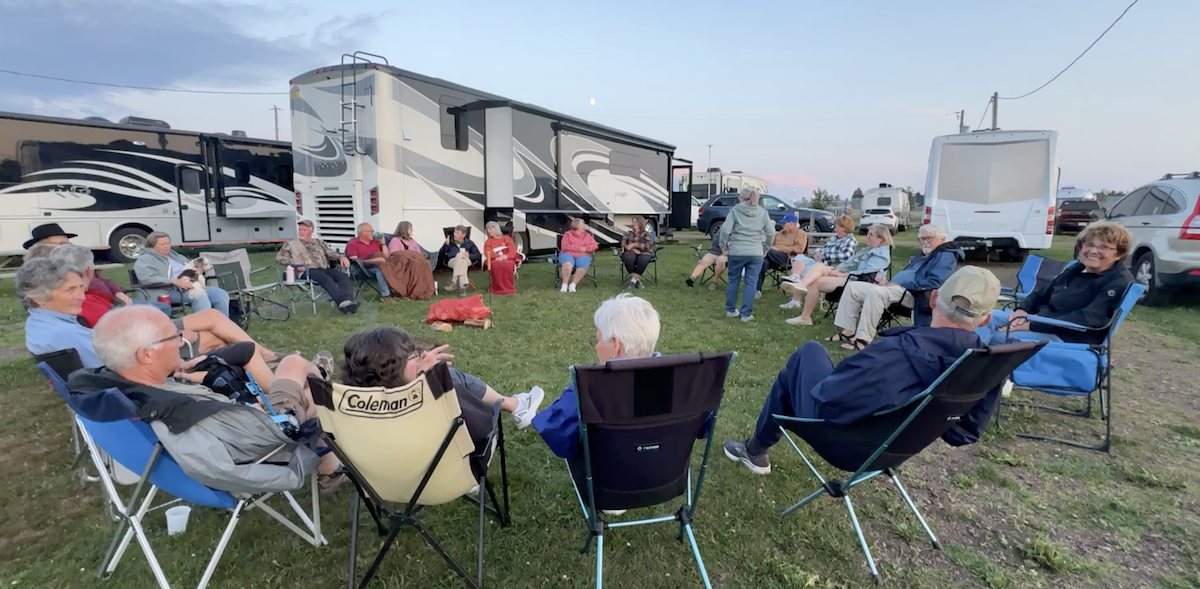
Become a part of the Internet's Best RV Community
Private. Ad Free. No Facebook Nastiness.
RV Travel Tips, Rallies and Meet-Ups, interactive livestreams, exclusive workshops, perks, discounts and Real Help from Real Rvers.